Tampilkan postingan dengan label religion in the press. Tampilkan semua postingan

Selasa, 05 Juli 2011

Rick Perry, Come On Down!

Paul Harvey

Amy Sullivan reports (HT Charles Marsh), in a piece for Time, that Tony Perkins (of the Family Research Council), David Barton (you know who he is), and John Hagee (he's not dead yet, evidently, despite the 2008 debacle) teamed up on a phone call a few weeks ago to express their displeasure with the current crop of Republican primary candidates -- either because they're not conservative enough, or they're not the right kind of religious conservative (i.e. they're Mormon), or they're not "southern enough," or they're just flakes (i.e. Gingrich and self-immolating campaign). Huckabee's not around, so enter their dream candidate, Rick Perry, who fits the bill on all fronts. Read all about it here. And then follow up with some more background information on all this by Sarah Posner here. And there's reporting on Perry's strategic breaks with his fellow Texan George W. Bush here.

Just a bit from Amy Sullivan's piece:

So, come on down, Rick Perry! He may be the favorite by default, but the Texas governor is also a terrific match for the Christian Right. Sarah Posner of Religious Dispatches recently outlined Perry’s social conservative bona fides and they’re impressive:

  • **Signed a gay marriage ban into law at a Christian school in Fort Worth with evangelical heavyweights Tony Perkins (Family Research Council), Rod Parsley (Ohio mega-church pastor), and Don Wildmon (American Family Association) in attendance

  • **The Sunday before his 2006 re-election, Perry attended Cornerstone Church and sat by the side of controversial pastor John Hagee (in 2008, John McCain had to reject Hagee’s endorsement after critics pointed out the pastor’s many extreme statements, including calling the Catholic Church “the whore of Babylon”)

  • **Supported and was a primary beneficiary of the Texas Restoration Project, an effort to increase the electoral involvement of conservative pastors

All of this, however, pales beside Perry’s current project–a Christian all-day prayer event called “The Response” on August 6 in Houston. The governor is sponsoring the event along with the American Family Association, which is footing the estimated $1.5 million tab for the gathering. The Response is intended for Christians only, although one spokesman said that if people of other faiths attend, he hopes they will see the light and “seek out the living Christ” for their lives.

Luckily for us, Historianess will be attending the all-day prayer event on the 6th (hey, it's local, it's free, and it's air conditioned), and giving us live updates. Or not :)

Jumat, 24 Juni 2011

We Don't Have to Call it "Holy War": Historicizing Michelle Bachmann


Janine Giordano Drake

Is it just me, or does coverage these days of Michelle Bachmann these days sound like it was ripped right out of the journals of H.L Mencken in the hot Tennessee summer of 1925? Writes Rolling Stone Magazine this week in an article entitled, "Michelle Bachmann's Holy War,"

"Bachmann is a religious zealot whose brain is a raging electrical storm of divine visions and paranoid delusions. She believes that the Chinese are plotting to replace the dollar bill, that light bulbs are killing our dogs and cats, and that God personally chose her to become both an IRS attorney who would spend years hounding taxpayers and a raging anti-tax Tea Party crusader against big government. She kicked off her unofficial presidential campaign in New Hampshire, by mistakenly declaring it the birthplace of the American Revolution. "It's your state that fired the shot that was heard around the world!" she gushed. "You are the state of Lexington and Concord, you started the battle for liberty right here in your backyard.... And later,

Bachmann's entire political career has followed this exact same pattern of God-speaks-directly-to-me fundamentalism mixed with pathological, relentless, conscienceless lying. She's not a liar in the traditional way of politicians, who tend to lie dully, usefully and (they hope) believably, often with the aim of courting competing demographics at the same time. That's not what Bachmann's thing is. Bachmann lies because she can't help it, because it's a built-in component of both her genetics and her ideology. She is at once the most entertaining and the most dangerous kind of liar, a turbocharged cross between a born bullshit artist and a religious fanatic, for whom lying to the infidel is a kind of holy duty."

Now, I know one could argue that it is Bachmann herself who is channeling William Jennings Bryan. She is not only bold, audacious, and self-assured, but she is right when she says that she is not alone in her cultural gripes. Sure- she participated in the homeschooling and "Christian school" movement, an odd practice for the moderns of the East Coast. However, this is not such an unusual circumstance in America's heartland. She fights an unspokenly regional and religious culture war, a war about principles, a war driven by nostalgia for a world gone by. Outwardly, though, she yearns for power in Washington. Even though she doesn't make a good impression on the media, she draws crowds. She talks about God openly and confidently, maintaining an audience I'm quite sure is divided between political supporters and lovers of spectacle. We could go on and on here, especially in discussing the Third Party Politics, the struggle for Bryan's nomination to the Democratic Party in 1896, and the way jeremiads figure in American political rhetoric.

However, I am not really surprised at Bachmann for taking this approach to politics. She has learned from history that icons in the Bryan mold may not win presidencies but do have the power to reconstruct party platforms. Bryan may have spelled the end of the Populist Party, but he brought many key points of Populism to the Democratic Party, and many of those eventually came to pass.

Who I am surprised at is the contemporary, secular humanist media that has not found a way to move beyond its 1920s predecessors. H. L Mencken reported in 1925,

The Scopes trial, from the start, has been carried on in a manner exactly fitted to the anti- evolution law and the simian imbecility under it.... The rustic judge, a candidate for re-election, has postured the yokels like a clown in a ten-cent side show, and almost every word he has uttered has been an undisguised appeal to their prejudices and superstitions. The chief prosecuting attorney, beginning like a competent lawyer and a man of self-respect, ended like a convert at a Billy Sunday revival. It fell to him, finally, to make a clear and astounding statement of theory of justice prevailing under fundamentalism.

In 2011, Rolling Stone, calls Bachmann a "zealot," "pathological," and a fundamentalist. We are told that Bachmann is

crazy — crazy in the sense that she's living completely inside her own mind, frenetically pacing the hallways of a vast sand castle she's built in there, unable to meaningfully communicate with the human beings on the other side of the moat, who are all presumed to be enemies.

There is no mention of the history of Protestant Fundamentalism and its overlap with politics. No mention of the cultural and political shoulders she stands on. We are simply told to have fear. If this is all that the triumph of liberal, secular, scientific and widespread public education can show for us after 90 years of Clarence Darrows in our midst, the problem is not Michelle Bachmann.

I'd like to make Rolling Stone and other media outlets some recommendations for their news commentary. For some background on the religious and political history of Populism, perhaps starting with the works of Robert McMath, Joe Creech and Michael Kazin. Consider the history of Fundamentalism and its role in politics, perhaps starting with Joel Carpenter, George Nash, Leo Ribuffo, Darren Dochuk, and Preston Shires. For more on the politics of family within conservative Christian circles, start with Betty DeBerg, Bethany Moreton and Natasha Zaretsky.

And, I invite others to join me in naming more good books that help define the shoulders that Bachmann stands upon. Rolling Stone, has the news not reached you yet?: Even if evolution is not the law of the land in every public school in America, Science eventually won in twentieth century America. And not just the hard sciences, but the social sciences. We don't have to think of the next presidential election as a Holy War unless we want to. In fact, to call it holy war-- to accept the fight on those terms--is, if you ask me, to lose the war that is actually being waged.

Minggu, 05 Juni 2011

Rejoice and Shout: A Journey through Gospel Music History

Paul Harvey

The new documentary Rejoice and Shout premieres this week. It’s a documentary featuring black gospel performances over a full century, from the Dinwiddie Colored Quartet in 1902 to some contemporary stars. The film has gotten a lot of nice write-ups; the link takes you to the film's website, where you can learn more about it. Here in flyover land probably will have to wait until it moves from the “save” to the “queue” part of my Netflix list. A little bit from the NPR segment on the documentary:

Director Don McGlynn, a veteran of the music documentary genre, wanted to trace gospel from its earliest roots to its current incarnation in the music world. The film even plays the first known recording of gospel music, a record made in 1902 by the Dinwiddie Colored Quartet.

The New York Times published a substantial review of the film here; a little excerpt:

This historical survey of the genre draws heavily on the extensive archives of its producer, Joe Lauro, and is grounded in the work of two experts: Anthony Heilbut, who wrote the classic book “The Gospel Sound: Good News and Bad Times,” and Bil Carpenter, whose “Uncloudy Days: The Gospel Music Encyclopedia” chronicles the lives and careers of more than 650 gospel figures. Their analyses are supplemented by the observations of Jacquie Gales Webb, the host of a popular radio program. Mr. Heilbut’s approach is primarily scholarly and historical, and Mr. Carpenter’s is more sociological and political. Smokey Robinson, who introduces the film and offers its closing observations, sets its praiseworthy tone

If anyone wants to read the whole review but is shout out by the Times firewall, let me know and I’ll send to you.

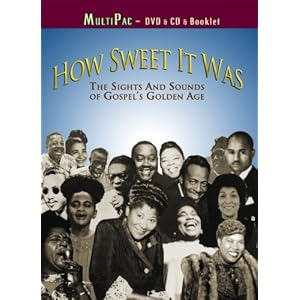
I will be interested to see how it compares to my recent favorite in the genre of gospel documentaries, How Sweet It Was: The Sights and Sounds of Gospel’s Golden Age. This one comes as a documentary and a CD, and it features some astounding older clips; the DVD is basically a strung-together version of those full clips, so not really a “documentary” but more of a compilation. Anyway, I’m looking forward to Rejoice and Shout; if anyone reading this living around a real city gets a chance to watch it, feel free to post your thoughts here.

While you're waiting to see Rejoice and Shout, here's a great clip on Youtube that can be seen in its entirety on How Sweet it Was, for your enjoyment: The Meditation Singers doing "Sanctified Lord."

Rabu, 25 Mei 2011

How Oprah Became a Messiah: Prophet and Profit

Paul Harvey

As Oprah departs, to much media coverage, let us turn once more to our contributor Kathryn Lofton for a summing up of "What is Oprah"?

K. Lofton's book Oprah: Gospel of an Icon, has engendered a lengthy, multi-part, fascinating set of responses from numerous other scholars at Immanent Frame, and on the occasion of Oprah's departure from the network airwaves, Lofton's reflections on her career and meaning in the context of American religious history can be found at CNN Belief Blog, in the Los Angeles Times, in the New York Daily News, and in the Washington Post. Over at Killing the Buddha, Nathan Schneider also provides these links as well as a link to his own interview with Lofton, and gives his own thoughts, here.

Perhaps the easiest place to connect in to all this discussion is at the piece at the CNN Belief Blog, where our valued colleague writes:

As she departs from her ritual slot, there will be a vacuum for some. Yet if history has taught us anything, it is that the void will not be left gaping for long. “The false messiah is as old as the hope for the true Messiah,” wrote Jewish theologian Franz Rosenzweig. “He is the changing form of this changeless hope.”

Oprah represented humanity’s ceaseless interest in spiritual responses to personal problems. We now live in her world: one of first-person confessions, required makeovers, and spiritual consumption.

The measure of her consequence will be not in whether or not she mattered to you, but whether the world you occupy looks more like hers than you know.

Kamis, 12 Mei 2011

Jim Wallis, Sojourners, the LGBT Ad, and the Trials of Progressive Christianity

Hey, it's a good week here at the blog. Please welcome our new contributor Brantley Gasaway! Brantley is an assistant professor in the Department of Religion at Bucknell University. His book on the history of the progressive evangelical movement since 1965 is under contract with UNC Press and should appear in 2012. Brantley's post below concerns the recent controversy over a progressive Christian stalwart and the LGBT community. Welcome to Brantley! We look forward to many more posts from him.

Why Jim Wallis and Sojourners Rejected the LGBT Ad

Jim Wallis is no stranger to controversy. As head of
the progressive Christian organization Sojourners, Wallis has been the leading representative of evangelical progressivism over the past four decades. Throughout his career, Wallis has insisted that his "biblical" and "prophetic" political engagement is neither conservative nor liberal--a position captured in the title of his 2005 best-selling God's Politics: Why the Right Gets It Wrong and the Left Doesn't Get It. Nevertheless, his more liberal politics and refusal to prioritize culture war issues such as abortion and same-sex marriage have long drawn the ire of the Religious Right. Because Wallis has attempted to promote an evangelical alternative to their movement, his most sustained and strident opposition has come from Christian conservatives.

But not this week.

Wallis and Sojourners are facing a hailstorm of criticism from religious and secular liberals for refusing to run a video ad from Believe Out Loud, a group describing itself as "a trans-denominational movement that promotes LGBT-inclusion in the Christian church." In the video, a lesbian couple and their son enter a church but face silent hostility from the congregation as they search for a seat. Yet the minister at the front of the sanctuary greets them with a warm "Welcome--everyone" and helps seat the family. The ad concludes with the words: "Open Your Heart. Break the silence." In a written statement explaining their rejection, Sojourners stated: “I’m afraid we’ll have to decline. Sojourners position is to avoid taking sides on this issue. In that care [sic], the decision to accept advertising may give the appearance of taking sides.” Religious and political progressives are responding with incredulity, disillusionment, and outrage (see the coverage here and here at Religion Dispatches). Many have charged Wallis and Sojourners with hypocrisy for claiming to represent progressive causes and to promote justice but refusing to take a stand for LGBT rights.

Yet even prior to this present controversy, Sojourners' responses to homosexuality (and abortion--but that requires separate treatment) have made them uncomfortable and on occasion unwelcome partners with more liberal Christians who otherwise share their vision for social justice. Sojourners magazine did not address homosexuality as a matter of either Christian ethics or public policy until 1982, over a decade after its inception as the Post-American. In an editorial entitled “A Matter of Justice,” publisher Joe Roos outlined the magazine’s interpretation of homosexuality as a civil right but religious wrong. “While we do not believe that Scripture condones a homosexual lifestyle,” Roos explained, “we do believe that homosexuals, like anyone else, deserve full human rights” that are not “conditional upon agreement over sexual morality.” Churches can privilege heterosexuality within their own communities, he argued, and thus Sojourners welcomed but did not affirm gay and lesbian Christians. But within “the public arena,” Roos insisted that “the first Christian duty is to love”—an act that need not entail approval but “must always include justice.” And justice, he concluded, required Christians to defend the full civil rights of gays and lesbians.

In 1985, Sojourners reiterated this position. Despite confusion that stemmed from empathetic relationships with gays and lesbians, the editors remained convinced that “a clear biblical word” did “not condone homosexual practice.” Yet they rejected any "attempt to deny them their God-given humanity and their civil rights.” The editors endorsed an accompanying article by popular evangelical author Richard Foster in which he wrote that the Bible clearly "views heterosexual union as God’s intention for sexuality and sees homosexuality as a distortion of this God-given pattern.” While Foster acknowledged the reality of a homosexual orientation, he compared such orientation to “clubfootedness”—a “distortion of God’s intention” that deserved empathy rather than condemnation from Christians.

A backlash, similar to the current one, immediately ensued. In addition to self-identified gays and lesbians who felt “betrayed,” a significant protest came from a group more liberal Christian leaders who not only supported Sojourners' comprehensive commitment to justice but also regularly contributed to the magazine. Among those jointly signing a critical response were prominent Catholic peace activist Daniel Berrigan; celebrated social justice advocate William Sloane Coffin, Jr.; theologian Walter Wink; and leading evangelical feminist Virginia Mollenkott. In a lengthy letter, the group challenged the relevance of biblical condemnations of homosexuality; argued for left-handedness rather than clubfootedness as an analogy for homosexual orientation; and appealed to “the reality of deep and abiding love between two gay persons” as evidence that God also intended homosexuals to express their particular “gift of sexuality.” To these authors, affirmation of homosexuality represented a basic “question of justice.”

While Sojourners responded to these criticisms by reiterating a commitment to defending the civil rights of gays and lesbians but regarding homosexual practice as unacceptable for Christians, Wallis and other editors seemed chastened. The intensity of this criticism from ecumenical Christian supporters clearly shaped the magazine’s subsequent coverage. Rather than promoting its controversial welcoming but not affirming position for Christians, Sojourners declared itself committed to a "dialogue" on the issue while unequivocally supporting LGBT civil rights. Thus, for example, the July 1991 issue of Sojourners carried a forum dedicated to "The Need for a Better Dialogue in the Churches on Gay and Lesbian Sexuality" but only included authors who "share a commitment to justice and human rights for all, regardless of sexual orientation." Likewise, in 1999 Sojourners published " a dialogue on the church and homosexuality" between Tony Campolo (who believes "that the Bible does not allow for same-gender sexual intercourse or marriage") and his wife Peggy Campolo (who "believes that within the framework of evangelical Christianity, monogamous gay marriages are permissible"). Most important, Sojourners muted its coverage of LGBT issues in comparison to the urgency or frequency with which it addressed issues of poverty, peace, racial and gender justice, or environmental stewardship.

The current controversy reflects this background. While the video ad itself seems only to advocate a welcoming position, Believe Out Loud promotes "LGBT equality in the church and in broader society" that includes both ordination and marriage equality for LBGT individuals. Sojourners likely believed that accepting this ad without any "dialogue" around these issues would imply endorsement--a concern that Wallis expressed in a 2008 interview with Christianity Today after feeling remorse for accepting ads from Human Rights Campaign, another organization promoting LGBT rights. Indeed, both the blog post from Sojourners' communication director and Wallis's own statement on "Sojourners' Mission and LGBTQ Issues" emphasize Sojourners' history of supporting LGBT civil rights and their commitment to promoting dialogue among Christians who disagree theologically on affirming same-sex practice. Wallis admitted that Sojourners' "core mission concerns" are focused on "matters of poverty, racial justice, stewardship of the creation, and the defense of life and peace" and not debates about justice for LGBT individuals.

Thus, the disillusionment of religious and political liberals among Sojourners' supporters is understandable. Many who define full equality for LGBT individuals as vital to social justice are angered. Few find credible Wallis's and Sojourners' desire to promote social justice but allow for different standards within the church. And many would even question Wallis's ostensible commitment to LGBT civil rights since he supports civil unions rather than same-sex marriage.

Ultimately, this controversy illustrates why the progressive evangelical movement has remained small over the past four decades. Leaders like Wallis, Ron Sider, and Tony Campolo have been too politically progressive for most evangelicals but too theologically conservative for most political liberals. Wallis may consider his political positions "prophetic," but he no doubt wishes they would remain more popular.

Kamis, 05 Mei 2011

Glory Hallelujah: While Barton Marches On, Historians Live to Fight Another Day

Paul Harvey

By popular demand, I feel compelled to post this link to today's New York Times piece about the political influence of self-styled historian David Barton, and to this link to Barton 's appearance on the Jon Stewart show (and for a critique of it, see here). He puts on his best public face for Stewart, but sheds it when throwing out the red meat about the Terrible Oppression Visited on American Christians for his WallBuilders' radio audience and other friendly venues, as discussed here and here among many other places. Perhaps most to the point here, his relentlessly entrepreneurial streak has elevated him from fringe to center, and given him an impressive political power base as the house historian for any number of potential presidential candidates. To which I can only say: that is so not awesome!

Forthcoming soon will be my co-blogmeister Randall Stephens' book The Anointed: Evangelical Truth in a Secular Age (co-authored with Karl Giberson), in which a series of evangelical experts in "history" (Barton), "science" (Ken Ham) and other fields, who collectively constitute one of those mathematically possible alternative universes that the string theorists are always theorizing and talking about, are analyzed and set within context.

But in truth, Barton's ideological entrepreneurialism, and the pointless debates on trivialities that he has provoked (did Washington say so help me God -- who the hell cares, and who knows, maybe Jesus actually said "blessed are the cheesemakers'" as Monty Python speculated, is my answer), has just kind of worn me out, and I'd much rather call attention to real historians working on matters of scholarly/intellectual interest who also have a public voice and cache, and who engage the deepest and most transcendent issues with scholarly substance.

To that end, here's a story about historian and Harvard President Drew Gilpin Faust's Jefferson Lecture, about war and its fascinations from Homer to Bin Laden.

Ms. Faust traced what she called "the seductiveness of war" to its location on the "boundary of the human, the inhuman, and the superhuman," and the possibility it offers of transcending "the gray everyday" of life. "Stories of war are infused with the aura of the consequential," she said in her talk, "Telling War Stories: Reflections of a Civil War Historian."They're also as difficult to tell as they are compelling. She described how writers and soldiers throughout history have tried to describe the experience of war, only to find it slipping away from them. "There remains a fundamental untellability and unintelligibility about war," she said, which only makes it more powerful as a subject.

For American History readers, Faust will be best known most recently for her work This Republic of Suffering: Death and the American Civil War, discussed on our blog and reviewed here. Historian David Blight provides a fuller context for and a wonderful appreciation of Faust's scholarly career here.

Partly my attention to Faust's work came from the immediate political context of the jingoism of the Bin Laden celebrations set alongside the massive death and destruction of the last ten years -- a seemingly inevitable, if unsettling, part of how war stories unfold.

But more of it came from thinking of selecting works for next year's Civil War/Reconstruction class, as we enter the 150th anniversary. Over at Civil War Memory, Kevin Levin reflects on Faust's address, expresses his ambivalent feelings about war re-enactments, and quotes from part of Faust's address:

And yet. Two months from now, we will again witness a reenactment of the Battle of Bull Run. Tens of thousands of participants and spectators are expected, for the enthusiasm to refight the Civil War has only grown in the fifty years since the centennial observances. Most of the costumed soldiers and camp followers will have read extensively about the war; they will wear garments accurate to the last button and stitch; they will use period weapons and canteens and knapsacks, for authenticity is the watchword of the thriving reenactor culture. They will in these myriad details get history just right. But what will they understand of war? Will this reenactment do any more to acknowledge the war’s purposes and politics and their continuing significance than did the reenactments of fifty years ago? Will its celebratory mood and mode acknowledge what Frederick Douglass declared he would never forget: “the difference between those who fought for liberty and those who fought for slavery”? Will the reenactors tell only an old “battle piece” of courage and glory and how sweet and proper it is to die? Will we in this historic sesquicentennial — to be observed at a time when Americans are involved in real conflicts in three sites across the globe— forget what a heavy responsibility rests on those whoseek to tell the stories of war?
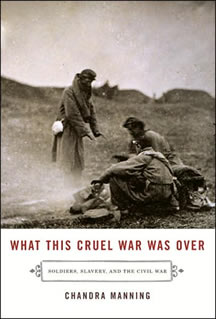
The last time I did this course, I paired Faust's Republic of Suffering with another powerful book, Chandra Manning's What This Cruel War Was Over: Soldiers, Slavery, and the Civil War Kevin Levin usefully reviews it here; a useful contrast is his take on Gary Gallagher's The Union War, posted here); taking the two works together (Manning and Gallagher, I mean) gives one a good rundown on recent debates on how Americans of the time gave meaning to the war.

The result of the pairing of Faust and Manning -- one about the impossibility of a "good death" during the war, and the other about the larger socio-political meanings people gave to the sacrifices on both sides, was some of the most powerfully engaged student discussions I had ever seen, because the works compelled a profound consideration of the question Edward J. Blum raised in his review of Faust: was there ultimately a transcendent meaning in all this death? Was there life that emerged from the death-haunted republic of suffering? Was war a force that gave Civil-War era people meaning, and if so, how does that affect our perceptions of contemporary wars?

Eric Foner raises many of these same questions in his review of Gary Gallagher's new book The Union War in last Sunday's New York Times Book Review. In some contrast to Manning and a number of other contemporary historians, who see a significant shift in soldiers' attitudes through the course of the war, Gallagher argues that emancipation "always 'took a back seat' to the paramount goal of saving the Union. Most Northerners, he says, remained indifferent to the plight of the slaves. They embraced emancipation only when they concluded it had become necessary to win the war. They fought because they regarded the United States as a unique experiment in democracy that guaranteed political liberty and economic opportunity in a world overrun by tyranny." In effect, this was a war about the nation-state, with emancipation a somewhat accidental by-product. Gallagher and Manning both rely on an extensive body of research (including in the regimental newspapers, not often used by other historians) which brings in first-hand evidence from the soldiers (and their homefront supporters). Weighing that evidence, and trying to determine what represents the views of "many" or "most" soldiers, becomes one of the central points of contention here. I'm no expert on any of this, but the discussion raised has been terrific.

Foner challenges Gallagher's view by asking, essentially, what was this cruel war over? He concludes:

Before the war, slavery powerfully affected the concept of self-government. Large numbers of Americans identified democratic citizenship as a privilege of whites alone — a position embraced by the Supreme Court in the Dred Scott decision of 1857. Which is why the transformation wrought by the Civil War was so remarkable. As George William Curtis, the editor of Harper’s Weekly, observed in 1865, the war transformed a government “for white men” into one “for mankind.” That was something worth fighting for.


The "something" that was worth fighting for became the crux of the student discussions in my class (and countless other Civil War classes around the country, of course), and provided some moments of intellectual transcendence (and fierce debate). Barton et al aside, there's hope yet for the public presentation of serious history, including those which which centrally involve religious themes of meaning, purpose, violence, and the sacred.

Minggu, 24 April 2011

New York Rock Star Jesus Christ Opens Gates to Heaven

Paul Harvey

Today's NY Times features a cornucopia of religion for your Easter
Sunday. To start, our new contributor David Stowe's "Jesus Christ, Rock Star," looks at why religion was once part of popular music, how the divide between "rock" and "Christian" music happened, and why that divide may be in the process of lessening (plus just for fun a link accompanying the article takes you to Barry McGuire's Eve of Destruction, a song that opens Todd Gitlin's capacious survey The Sixties: Years of Hope, Days of Rage):

Despite being a rare bright spot in an industry facing difficulties, music with explicit religious content has been largely segregated from non-religious pop music, both in terms of radio stations and audiences — so much so that it even has a name, contemporary Christian music.

This wasn’t always the case. For much of pop music history, religious themes had an uncontroversial place at the top of the charts, a presence most clearly felt in the late ’60s and early ’70s. But over the next decades, the politicization of faith, relying in part on the surge of youth into the country’s churches, turned religious themes into a forbidden zone for secular musicians.

Then you can hop over to John Leland (great name!), "The Evangelical Squad," which looks at evangelical entrepreneurs in some unlikely places in the NYC area, including the East Village. A brief excerpt, with a nod to Tony Carnes's Journey through NYC Religions which we blogged about here before:

But the church and its expansion into the East Village highlight a concerted groundswell of middle-class, professional evangelicals in Manhattan, an area many churches once shunned as an epicenter of sin. It is the place, many now believe, to reach the people who influence the world.

Though much attention has been paid to New York’s boom in immigrant churches, in recent decades the number of English-speaking evangelical churches south of Harlem has grown tenfold, to more than 100, said Tony Carnes, a researcher and founder of the online journal A Journey Through NYC Religions, who has studied New York churches since the 1970s. Without fanfare, the newcomers have created networks to pay for new churches and to form church-planting incubators, treating the city as a mission field.

"Because the institutions are new, Mr Carnes added, the city has become “like a Silicon Valley of church-planting. “You can come here, try new ideas, fail and start again,” he said. “It’s a hot area where failure isn’t a disgrace.”

Finally, our good friend Lauren Winner appears in the Book Review section, reflecting on all the recent brouhaha over Rob Bell's Love Wins. She writes of the long-lived yin-and-yang of exclusivity versus universalism in evangelical thought, including in the nineteenth century with Elizabeth Stuart Phelps's The Gates Ajar.

Lauren concludes:

So, too, Rob Bell is articulating the concerns of a generation of Christians schooled in toleration, whose neighbors and coworkers and siblings are Muslim or Buddhist or agnostic, a generation whose pluralist social commitments are at odds with theological commitments to limited salvation. Bell speaks for those Christians who take the Bible seriously but can’t imagine their secular friends aren’t going to heaven, too. He speaks for that woman in the pew who can’t bear the thought of spending eternity apart from her atheist brother. The tweeting gatekeepers of conservative evangelicalism may also share these concerns, but for them, the solution is to convert the unbelieving neighbor.

Rabu, 20 April 2011

Ferocious Morality and the Infinite Jest of Solitude: Two Etudes on David Foster Wallace

Paul Harvey

By chance a couple of fine pieces about David Foster Wallace passed my way over the past few days; and more than just about Wallace (and appropriate for the wide-ranging and philosophical/quasi-religious writer), they suggested to me an awful lot to reflect on about the nature of love, companionship, solitude, and the “endlessly interesting hazards of living relationships.”

First is David Masciotra’s “The Ferocious Morality of David Foster Wallace,” at popmatters.com (HT Scott Poole). The first part of this essay focuses on Wallace’s short non-fiction essays, where I have connected with him most, the fiction being just a little too bewildering for me to take in:

Wallace examines how the entertainment ethic is corrosive and destructive to an important, and perhaps sacred, part of the human experience. He did it with subtlety, humor, and complex insight. He wasn’t a fire-and-brimstone preacher, but it’s impossible to read [his essays] . . . without mourning the damage inflicted on sexuality, animal rights, and politics by the popular belief that nothing is intrinsically important, that nothing is sacred, and that everything is fair game for measurement according to the market-driven calculation of the lowest common denominator in the entertainment for entertainment’s sake world of decision-making.

Wallace’s application and assignment of dignity was the polar opposite of big business, big government, and big media. The bathroom attendant’s life [in a short story collection] was boring, inglorious, and at times, humiliating, but it might benefit us to consider how his life may be more respectable that that of a brilliant millionaire. It’s a very Christ-like worldview that places someone that everyone walks by in a room built to hold and deposit human waste at the moral center and a contemporary superstar at the periphery.

But an essay that struck me with tremendous force is the piece by Jonathan Franzen in last week’s New Yorker, “Farther Away: ‘Robinson Crusoe,’ David Foster Wallace, and the Island of Solitude" (the link is just a short summary and a few nice quotes; you'll need to get the mag. to read the whole).

I’m not particularly a Franzen fan or follower, so I expected to skim this particular piece, be a bit amused and annoyed as I often am by his shorter pieces, and then move on, little affected one way or another.

Instead, I was moved, nearly to tears, by Franzen’s tale of secluding himself on the island far off the coast of Chile which inspired Daniel Defoe’s Robinson Crusoe. What appears at first to be a light New Yorker comic adventure tale (novelist meets wilderness, pratfalls ensue, wilderness wins, novelist learns that wilderness not all cracked up to be) soon leads to some fascinating explorations of the origins of the novel, and the novel’s connections to both psychological solitude and group entertainment – “the self had become an island, and now, it seemed the island was becoming the world.” These reflections then take Franzen to grappling with his unresolved feelings and anger over how and why his novelist-friend Wallace “killed himself in a way calculated to inflict maximum pain on those he loved most.” Somehow, the three tales of physical, historical, and psychological solitude come together into a powerful whole.

Franzen makes sense of Wallace’s final act in part through thinking about the role of the devil in The Screwtape Letters (which, according to Franzen, was one of Wallace’s favorite works, a surprise to me), and also “The Grand Inquisitor” of Dostoevsky. Only the kinds of internal dialogues carried on by the part of Wallace that Franzen “distrusted” could have taken “the person away from us and made him into a very public legend”; and only “in the act of making that legend Wallace could satisfy his own self-loathing “hunger for career advantage”; and yet, “because it would represent a capitulation to the side of himself that his embattled better side perceived as evil,” the act further confirmed “the justice of his death sentence.” The terrible irony was that “to the extent that each of us is stranded on his or her own existential island . . . we gratefully seized on each new dispatch from that farthest-away island that was David,” even despite the “near-perfect absence, in his fiction, of ordinary love,” replaced instead by “characters scheming to appear loving.”

The first piece is a fine exploration of how, in Wallace's view, "everyone serves something" (his take on Bob Dylan's "Gotta Serve Somebody."). The second piece chilled and moved me more than anything I've read this year, or just about in any year. Franzen's reflections on the part of his friend that he distrusted made me remember, sadly, these sentences, from a 2008 commencement address of Wallace's which got widely reprinted:

The really important kind of freedom involves attention and awareness and discipline, and being able truly to care about other people and to sacrifice for them over and over in myriad petty, unsexy ways every day.

That is real freedom. That is being educated, and understanding how to think. The alternative is unconsciousness, the default setting, the rat race, the constant gnawing sense of having had, and lost, some infinite thing
.

Kamis, 07 April 2011

Glenn Beck and Paul Revere: The Two Horsemen of the Apocalypse Retire

Paul Harvey

I know many of you were SO excited last Friday when you saw that Glenn Beck had signed up to be a contributing editor here. Well, a lot has changed in the last week. As you doubtless know, Beck's show on Fox is coming to an end a bit later this year. But much more importantly than that, he is resigning from being a contributor to RiAH. So sad, but we'll wish him all the best. He sent along this explanation for both actions to the Wall Street Journal (sorry, not sure if this is a free link or behind a paywall, but here's the money quote):

Beck said he took a job at Fox News two years ago because he felt “if I could prove my case that something wicked this way was coming, something in America was wrong, America would listen, and they have.”

Beck said that Paul Revere “got off the horse point at some point and fought in the revolution and then he went back to silversmithing.” “I believe we’re heading into deep and treacherous waters,” Beck said about America”s future. He said he is developing other content for Fox for TV and other media. “I will continue to tell the story and I’m going to be showing you other ways for us to connect. But I have other things to do.

"Fox is one of the only places you'll find the truth. Spread the word," he said in concluding his remarks announcing the end of his show and the end of his RiAH contributions. Unlike Paul Revere and his Raiders, Beck is not actually returning either to silversmithing or to producing classic early 70s AM hits such as "Cherokee Nation," but reportedly back to other television shows, probably through his own network.

For a full-length analysis of this new development in religion, consumerism, and the media, I have only one question: Where have you gone, Kathryn Lofton, a nation turns its lonely eyes to you (and more seriously just for a second, the link takes you to a wonderful observer-participant reflection posted at Immanent Frame on K. Lofton's Oprah: Gospel of an Icon, by Daphne Brooks of Princeton University).

But back to our story, here is the video announcing Beck's change of plans:


For those who want a reprise of pretty much all of the major themes that Beck has followed in his pursuit of truth, you can find them here, channeled through Jon Stewart (ht John Fea):

Rabu, 30 Maret 2011

Contributors in the News

Paul Harvey

A brief note on some of the doings of our contributors here at RiAH.

First, John Fea is busy on a speaking schedule in support of his new book Was America Founded as a Christian Nation?On part of that tour he appeared at the Virginia Festival for the Book, and his panel there is now up on the C-SPAN website (it was shown on C-SPAN 2, that harvest of riches for book geeks everywhere).

Contributor Jon Pahl has been traveling the world, engaging in interfaith dialogues, currently in Jakarta. You can follow his travels at his blog, linked above.

Chris Jones is celebrating surviving his comprehensive exams, not to mention making plans to be a father! Congratulations to Chris. Also on the graduate school front, contributor Heath Carter, whose excellent article about "scabbing ministers and striking saints" in the 1894 railroad strike recently appeared in American Nineteenth Century History, has been awarded the Charlotte Newcombe Dissertation fellowship to support his work next year.

Kelly Baker is tinkering with the title of her soon-to-forthcome book, now entitled Gospel According to the Klan: The KKK's Appeal to Protestant America, out soon with University of Kansas Press. Gerardo Marti's book on worship in multiracial churches (Worship Across the Racial Divide: Notions of Race and the Practice of Religious Music in Multiracial Churches) is slated to come out with Oxford, next spring I believe, and Art Remillard's book about competing visions of civil religion in the post-Civil War South (especially the "Wiregrass" South) will be out with University of Georgia Press around the same time. Meanwhile, Seth Dowland will be decamping from Duke cross country to Pacific Lutheran University in Tacoma, WA, where he will be a new assistant professor in the Religious Studies Department (correct me if I got the departmental affiliation wrong, Seth). Seth's book Family Values will be out with U. Penn Press next year we hope, and I hope many of you saw the preview for the book in his Church History article. And Lin Fisher, who's enjoying his year as an NEH Fellow at the Mass. Historical Society, is right at the end stages of finishing his terrific book The Indian Great Awakening, which Oxford will publish a bit down the road.

My co-blogmeister Randall Stephens is gearing up for his Fulbright in Norway next spring, where he will be a "Roving Scholar," while Ed Blum will be spending the year in Germany on a Fulbright as well. Meanwhile, Matt Sutton will use his recently awarded full-year NEH fellowship to work on his much-anticipated text about fundamentalism and politics since the 1930s. It's been a good year for Young Scholars.

As for me, I will be spending next year teaching a wonderfully light 3-4 load, directing 40 some odd senior theses, and writing to the NFL commissioner complaining about how the lockout has cancelled the fantasy football season, which is the only thing that gets me through the fall. As Historiann would say: Awesome!!!.

Oh, and after Glenn Beck's television contract with Fox runs out, he will be joining me as fellow blog-meister here at RiAH. So, please join me in welcoming Glenn to his new, highly-paid gig here at RiAH!! As you can see from the above, he will be joining an illustrious group of contributors.

The rest of ya'll, send your news.

Minggu, 20 Maret 2011

Mapping Religious Life in the Five Boroughs

Paul Harvey

Earlier we blogged about a fascinating web venture, A Journey Through NYC Religions, run by a former Texan turned New Yorker who is endeavoring to map every house of worship, of every religious tradition, in the NYC metropolitan area.

In "Mapping Religious Life in the Five Boroughs," Mark Oppenheimer writes about this project, and spends some time with its creator, Tony Carnes, as he spots small mosques above Pakistani restaurants in Queens and the like. And read it now before the Times pay wall goes up. A little taste:

Along the way, Mr. Carnes, with three part-time assistants and other freelance helpers, is posting his findings online tonycreligion.info, his “public square,” he called it, where people can read about “the sizzle of religion in New York — the kosher sizzle! The halal sizzle!”

Mr. Carnes is in search of every church, cathedral, synagogue, shtiebel, mosque, temple, zendo and ashram. His crew gathers information by asking for it, in person. By the end of 2011, they will have driven every street in New York.

Minggu, 13 Februari 2011

Random Notes from the Religion Merry-Go-Round

Paul Harvey

The merry-go-round, or the tilt-a-whirl, of American religion keeps going. Just a little taste of it, from today's Times:

An entrepreneur follows in the model of JDate, the Jewish speed dating service, with his version of Muslim Speed-Dating:

At intermission, about half of the participants went to a back room to offer their prayers. A 29-year-old woman named Maria, who works as an art director for a major television channel, went to her parents to complain that some of her “dates” did not know what an art director was. “Some of the men are very removed from this culture, even though they live here,” she said. “I need a drink,” said one exhausted bachelor. He did not mean Kool-Aid.

Every college town (in this one it's Gainesville) is heaven for believers in The Gospel of Anarchy:

Taylor’s noble goal in “The Gospel of Anarchy” is to remind those of us long past our own difficult youths of the grace and beauty to be found even in a “bunch of drunkpunks in the armpit of Florida.

In House of Prayer No. 2, the southern writer Mark Richard goes all Apostle on us:

But maybe darkness is what Richard is after, the necessary prologue to the spiritual awakening that occupies the end of his book. Again, he is laconic about the epiphany; we learn simply that while he is walking alone in the Tennessee woods, he gets “the call to ministry.” After a few thwarted attempts to enroll in a seminary, he stumbles on an unexpected outlet for “this thing that has been placed on” his
heart: his Cajun, lapsed-Catholic mother has joined a black Pentecostal church in his hometown, and they need a new building. Richard finds himself deeply involved in making this a reality, holding regular consultations with the pastor, buying bricks and shingles and tools, ordering food for the convicts doing the construction. His story of how the House of Prayer No. 2 gets built — despite financial obstacles and legal setbacks, and with the help of multiple small miracles along the way — becomes his means of testifying, and it’s a powerful one. When the church is close to completion and the pastor’s elderly mother “lays her hand on your shoulder, and you, at last, are slain in the spirit,” I felt a shiver pass through my body, and suddenly the memoir’s reticence, its desultory movement, its use of second person, revealed their purpose to me. To understand the mystery of faith, you cannot be told it; you must experience it yourself.

And finally, there's a girl in New York City who calls herself a human trampoline, and of course there's a church specializing in the BOD4GOD:

New York may lag behind the rest of the country in the language of evangelical self-help, but when it comes to fitness obsession, surely few cities can touch us. Work out more rigorously, work out more gently; be proud of your body, be ashamed of your body. Whatever the message, New Yorkers have peddled it, consumed it, metabolized it and excreted it a thousand times over.

It’s surprising, then, that so few have thought to merge the discourse of God and the discourse of bod. Linking the two has a number of strategic advantages over the standard “look better in a bikini” sales pitch — most notably the chance for followers to outsource their motivation to a higher power.

It’s also an opportunity for the church to prove its value in something concrete — ounces and pounds — rather than the more intangible calculus of spiritual progress.

Ya'll be careful out there.

Kamis, 27 Januari 2011

Oprah: Gospel of an Icon

Paul Harvey

Another day, another author interview -- I was hoping to do this myself somewhere down the road, but no longer necessary as Immanent Frame's "Spirituality, Political Engagement, and Public Life" has done it for me.

Kathryn Lofton's new book Oprah: Gospel of an Icon, is just out -- and just out in time for Oprah's new network, in what must surely be a divine coincidence. Check out the interview about the book here, where the author speaks with her usual panache. A little excerpt:

NS: What is it about how American religious history is studied now that has left Oprah not well-enough understood?

KL: I would say that the “how” of what we study is less problematic than the way we cordon our topics, which is very much an inheritance of our role as seminary church historians. I want to see more books written about objects that seem unlikely for religious studies, such as those seemingly in the purview of pop culture, but also those from economic and political arenas. Moreover, I think our disposition toward our subjects is often too tender for our own good. If on the one side we’ve been formed by our seminarian genealogies, on the other we inherit an abused mentality, one that flinches constantly at the possibility that elsewhere in the humanist ranks we’re being mocked for proximity to the religious subject. And so we appear, I think, often too defensive of our topics, believing they need caretaking before exposure to the imagined Marxist menace. So, if there is a critical edge to the book, it is to goad us to be less worried about explaining our subjects to their cultured despisers, and instead pursuing the mediations of their belief systems, the multiple functions of their ritual reiterations, and the social systems to which they reply and in which they participate

Read more about the book here, and more on the author here.

Selasa, 21 Desember 2010

Black Entrepreneurship, Religion, and Civil Rights

Paul Harvey

One of my favorite books over the last year or two was Suzanne Smith's To Serve the Living: Funeral Directors and the African American Way of Death, which I blogged about previously here.

This morning, the author, Suzanne Smith (George Mason University), was interviewed on Morning Edition on NPR, talking about the black businessman A. G. Gaston, a figure pretty well known to civil rights historians but largely unknown outside of that. Check out the interview here.

The funeral business proved instrumental in the lives of a lot of ministers, including nineteenth-century minister-entrepreneurs who got in on the ground floor of modern undertaking, as "colored embalmers," and twentieth-century ministers who used their funeral business income to subsidize their activities in other areas, including the original sponsor of Mahalia Jackson's singing tours and radio performances.

Rabu, 08 Desember 2010

Spiritual Envy: Religion on NPR

Paul Harvey

More about the excellent religion programming on NPR (and why it enrages our local conservative congressman), which I blogged about previously, in my article on Religion Dispatches today. Public television, I think, does not do so good a job on this (just an impression; I'm happy to be proven wrong on that point).

And while you're checking at this piece, also check out Lisa Webster's companion interview, "Michael Krasny's Agnostic Quest," also at Religion Dispatches. The long-time host of KQED's (in San Franciso) Forum, which I used to listen to while avoiding writing my dissertation, Krasny talks about his new book Spiritual Envy, how Judaism tends to be tied into agnosticism, and what he's learned from years of interviewing thousands of people on a million different subjects.

Minggu, 05 Desember 2010

Jewish Consumer Rites: Tracing Hanukkah's Roots to Cincinnati and Charleston

Paul Harvey

There is nearly no record of people celebrating Hanukkah just a couple of centuries ago. But it began to be an important Jewish holiday in the second half of the 19th century when two rabbis in Cincinnati noticed their Jewish children didn't have much connection to the synagogue.

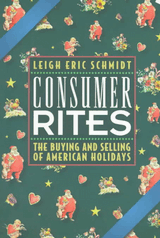
This story from NPR talks about the 19th-century American roots of large Hanukkah celebrations, featuring the religious studies scholar Diane Ashton, and connects the rise of the holiday to the development of elaborate home-based holiday celebrations in Victorian America. It's the time of the year when it's good to pull down Leigh Schmidt's Consumer Rites: The Buying and Selling of American Holidays (Princeton U. Press, 1997 paperback), which shows how "commercial appropriations" of the holidays, especially Christmas, were tied into religion, becoming times of "devout consumption."

So
uth of Cincy, Jewish southerners have developed their own traditions around Hanukkah and food, discussed further by Marci Cohen Ferris in her fun book Matzoh Ball Gumbo: Culinary Tales of the Jewish South. Read/hear more about it here, and also more here. A brief taste:

Oh, sure, this is a great holiday for Jewish Southerners because it celebrates oil, perfect, 'cause we use a lot of it. You know, there's a strong tradition of frying here. And anything with a cast iron pan you got to love, if you're a Southerner. But I'll tell you what we have, and this is actually a traditional menu that my mother always made. Very traditional to have brisket for Hanukah. It's a winter meal. And not everybody barbecued their brisket and served it in kind of that style, but that's how we made ours
.

Noah's Ark, the Theme Park: Tomorrow Never Knows


Paul Harvey

Only the sly wit of Randall or the acerbity of Matt Sutton could do justice to this story: Noah's Ark, the Theme Park.

Kentucky, it appears, has "promised generious tax incentives to a group of entrepreneurs who plan to construct a full-size replica of Noah's ark, load it with animals and actors, and make it the centerpiece of a Bible-based tourist attraction called Ark Encounter." Like I said, Randall will have to write another chapter of his new book The Annointed: America's Evangelical Experts, which already features one chapter on the creationist museum just 45 miles away from the proposed Ark theme park in Kentucky, to explain this new story to us.

The developers of Ark Encounter, who have incorporated as a profit-making company, say they expect to spend $150 million, employ 900 people and attract 1.6 million visitors from around the world in the first year. With the Creation Museum only 45 miles away, they envision a Christian tourism corridor that would draw busloads from churches and Christian schools for two- and three-day visits.

The bulk of the story focuses on the relationship of the theme park to a series of tax incentives given to its part-owner, Answers in Genesis. Tea-Partiers: where are you now? Here is your Exhibit A of government subsidies run amok. Evidently, though, they are too busy bitching about an 11-second video of a cross with some ants crawling on it, intended to depict the sufferings of AIDS victims, that was part of a larger installation up at the National Portrait Gallery -- I say "was" because it's been taken down. Check your empathy at the door. Oh, never mind, don't even go through the door, since the firestorm of criticism about the exhibition came from those who had not seen it (those who had seen it registered virtually no complaints). Thanks, Speaker Boehner, for focusing on the big issues of the day. Read/hear more about this story, including a slide show of some of the pieces in this installation, here.

But back to the Ark Park. One thing about the park will be cool: it will explain how Noah dealt with issues of "waste management" on the boat. When I was a kid, I spent a lot of time wondering about that very issue.

The park is facing some "rough waters" around issues of separation of church and state, as reported here. The secular/scientific libertarians are all over the story here. Most amusingly of all, though, the Los Angeles Times story, intending to hyperlink its reference to the group Answers in Genesis, instead provides a link to Genesis, the Phil Collins musical group. Come to think of it, Genesis actually did a pretty credible version of the Beatles' song "Tomorrow Never Knows." Like the Beatles sang, "it is believing. It is believing." Of course, they also sang "I am the walrus, coo-coo-coo-choo." Were walruses on the ark?

Kamis, 25 November 2010

American as Pumpkin Pie

Paul Harvey

A big shout out to all of you who stop by here, lurk, send me emails, comment (snarkily or otherwise), introduce yourself at conferences to talk about the blog, and send me your suggested topics and contributions. Thanks, one and all.

And while we're on Thanksgiving, here is Heather Cox Richardson's brief exploration of the origins of the holiday during the Civil War; and the American Historical Association blog provides a plethora of fun links about the history of the holiday to follow and read/listen to. One of the links there takes you to American as Pumpkin Pie: A History of Thanksgiving, from the radio program Backstory; one of the interviewees there, Anne Blue Wills of Davidson College, talks about material from her article "Pilgrims and Progress: How Magazines Made Thanksgiving," which discusses the origins of the national holiday before the Civil War in Sarah Hale's efforts through the pages of Godey's Lady's Book and Magazine.

Minggu, 21 November 2010

We're No. 1! Colorado Springs Leads in Religion (or Not) and in Defunding NPR Nazis

Paul Harvey

Men's Health magazine, noted for its scholarship in American religious studies, recently rated the top 100 "holiest cities in America." Result: Colorado Springs rated first on the list. I'm very glad to be first in something. Here's a brief excerpt:

While it's true that Colorado, at 5,980 feet above sea level, is closer to heaven than even the Mile High City, we used a different set of numbers to divine our findings. We scoured the U.S. Census and the yellow pages (Yellow.com) for places of worship per capita. Then we tallied up religious organizations (U.S. Census) and the number of volunteers who support these groups . . . Finally, we considered the amount of money donated to religious organizations . . . and spent on religious books.

Most religious

1. Colorado Springs, CO
2. Greensboro, NC
3. Oklahoma City, OK4. Wichita, KS
5. Indianapolis, IN
6. Jacksonville, FL7. Portland, OR
8. Birmingham, AL9. Charlotte, NC
10. Little Rock, AR

The fact that Portland appeared at #7, even though Oregon consistently appears down towards the bottom of most professional surveys conducted by ARIS and others, immediately made me question the methodology here. And in doing so, here's a counter-survey that I found, from our own local paper (based on figures from 2000, admittedly, but still):

A quick run through the data seems to contradict the idea that El Paso County is a highly religious place. The 2000 survey found El Paso County was home to 222,490 people who claim an affiliation with some religion. That was 43 percent of the population. The rate in Denver, meanwhile, is 64 percent.

So, either we're No. 1, or we don't even hold a candle to Denver. Take your pick.

One area where we indisputably lead the nation is in the great national jihad to defund the "Nazis" at National Public Radio ("Nazis" being the term Roger Ailes of Fox News, evidencing its usual fair and balanced presentation, used to refer to NPR; Ailes is President of Fox News).
Leading the great national jihad is our local representative Douglas Lamborn, previously unknown to the public at large but known locally for protecting every piece of military spending pork, no matter how many Defense Secretaries insist that they be cut, and vowing to protect Medicare against the encroaching monstrosity of "socialized medicine" and "Obamacare" -- and etc. You get the idea.
Here's a hilarious cartoon about Lamborn's jihad, from Denver's Westword.

For years Lamborn has sponsored bill to defund completely National Public Radio; the combination of the Juan Williams incident and the recent elections have given this bill a very good chance of approval next year. Our local paper the Colorado Springs Independent covers the story here.

How ironic I should come upon this story, or combination of stories, after listening to a really thoughtful and intelligent program on my local public radio station KRCC this morning featuring a panel discussion from various locals (the religion reporter at the Colorado Springs Gazette, a college chaplain, and some others) on the influence of evangelicalism in Colorado Springs. Besides the panel discussion, the program also features a reporter visiting a local mosque here in the Springs, and another report from the tough lives experienced by those who feel called to the little town of Crestone, Colorado, in an area which houses a striking diversity of religious communities from a Carmelite Monastery to various Zen Buddhist groups. Ethereal spirituality, as the piece makes clear, is a challenge when you're trying to make it through the bitter winters and swarms of spring mosquitoes in that remote corner of SW Colorado.

I was thinking about the particular recent attacks on NPR further tonight in relationship to this commentary by Guy Raz at the end of today's All Things Considered -- a short, arrestingly beautiful piece that showed NPR at its best. Here's hoping the piece goes viral.

Raz was reflecting on Roger Ailes, the Fox News executive who recently said the following:

"They are, of course, Nazis," Ailes said of NPR. "They have a kind of Nazi attitude. They are the left wing of Nazism. These guys don't want any other point of view."

[Yes, Ailes since issued the ritual obligatory apology. So what; it's obvious he meant what he said in the first place].

Let's leave aside the complete historical malapropism of the idiocracy here ("left wing of Nazism," etc.). What moved me was Raz's short oral essay "inspired" (or whatever the term should be) by Ailes's grotesque comments. Raz began by reflecting on his great-grandfather Abraham Reiss, who didn't make it out of Europe before the real Nazis got to him, and then further on what it meant for him to hear "Nazi" used in reference to his network.

That word, Nazi, means something. We are all free to use it as we please. It's our right, of course. But when its use is stripped of any of its real meaning, I just ask you to remember the story of Abraham Reiss.

Colorado Springs -- whether we're first or not in religious adherence,you can thank us for taking the lead in the great national jihad to defund the left-wing Nazis at NPR.


P.S.: While you're at it, check out the piece right before Raz's essay, which is about the growing number and influence of Israeli jazz musicians in New York. I heard one of them, the fantastic bassist Omer Avital, about 10 years ago, and still smile when I think of him ferociously attacking his instrument all night at Small's, with the Jason Lindner band. One of the most astonishing nights of music I've heard in my life; and, for me, a spiritual experience. So here's to you, Omer. My local public radio station, the great and wonderful KRCC, plays your music on occasion, and I heard a tune of yours one time, quite unexpectedly, on the tiny station KZRA in Alamosa, Colorado, one of many rural public stations which have taken root thanks to indispensable public subsidies to bring one-of-a-kind programming to the hinterlands of places such as SW Colorado and NW New Mexico. Congressman Lamborn, check it out sometime, you might like it.