A few days ago, I posted a set of reflections on Jason Bivins, Religion of Fear: The Politics of Horror in Conservative Evangelicalism. Jason left some comments on that post and has consented to have them reprinted here as a guest post. Jason is presently working on a book about jazz and religion, and promises a post on that subject here at the blog sometime later this summer. The tentative title: Spirits Rejoice! Jazz and American Religion. As a onetime devotee of the Church of John Coltrane, I await that work eagerly. REad more about that and Jason's other thoughts on Religion of Fear and other subjects in his interview here.
---------------------------------------------------------------------------------
Writing Religion of Fear
by Jason Bivins
It was a strange journey to conceive and then labor over this book during the madhouse years. And as I write in the conclusion, my sense of this political religion’s power (and of its unsavory implications) was equaled only by my frustration over the relatively apolitical character of American religious studies. Or at least over its blandly political character: strolls down tired old paths in new shoes, or chewing the cud at a safe (but always “inoffensive”) remove (maybe Delillo would call this Bovine Studies, Paul!).
But what really drove me was not just my desire to offer a fresh approach to studies of religious conservatism, to chronicle a different kind of doom (the secular version perhaps, where conspiracy, apathy, solipsism, and intolerance spawn a virally circulating cultural resignation), or to document some important subcultural strains of American evangelicalism. What really drove me was the hope that everything I write about in the book would disappear. Not religion or conservatism (anyone who takes that from the book, well, I worry about their reading skills), but unreason, stentorian shrillness, and splenetic visions of holy gore. This isn’t to say that I expected my book would facilitate this fading (though I confess that I nurtured dreams of “crossover” sales), for that would be too much to hope for. Nor is it to say that I bought too heavily into campaign year ebullience. I simply hoped.
Of course I knew that ROF wasn’t going anywhere. It never has. It only adapts and mutates. The sense that hostile others are responsible for our ills is too potent, too fluid an explanation, and too efficient a means for evading the ambiguous responsibilities of democratic citizenship. Just consider Glenn Beck's recent "appropriation" of Thomas Paine. There is, of course, more than this going on in my story and in others like it. But the very tensional relationships, the flourishing agon, the open-endedness of deliberation on which democracies rest, these are the stakes with this incarnation of the religion of fear (which, in light of Todd’s comparative questions, might mark a difference from other instances).
Alas, we are still mired in this stuff. But at the end of the day, I have enough faith in the field, in its possibilities, in its gifts, to think the project was worth seeing through. And, despite sometimes seemingly overwhelming evidence to the contrary, I have confidence in my fellow citizens. That might sound bizarre, and I don’t mean to suggest that what’s wrong is simply the disproportionate influence of a warped few; rather, like all of us, I know that the arts of conversation and respect can be realized far more easily than we might think. To pin our hopes on governmental or administrative change is too much and too remote. But as political theorists like Romand Coles write so cogently, it’s possible to think and perceive and practice differently on a much smaller scale, to sustain those values we think are worth sustaining, and to seek out ways of realizing them with other humans.
So despite my pessimism (you should have seen the first version of the ending!), and despite the enduring power of these frights, perhaps it’s possible simply to turn away from the ROF and start cultivating (or reviving) other sensibilities. I look forward to those moments when the field stops wringing its hands at the sidelines quite so much.
Minggu, 05 Juli 2009

Sabtu, 04 Juli 2009
Virginia Statute for Religious Freedom
FOR JULY FOURTH
THE TEXT OF THE VIRGINIA STATUTE FOR RELIGIOUS FREEDOM (1786)

THE TEXT OF THE VIRGINIA STATUTE FOR RELIGIOUS FREEDOM (1786)

An Act for establishing religious Freedom.
Whereas, Almighty God hath created the mind free; that all attempts to influence it by temporal punishments or burthens, or by civil incapacitations tend only to beget habits of hypocrisy and meanness, and are a departure from the plan of the holy author of our religion, who being Lord, both of body and mind yet chose not to propagate it by coercions on either, as was in his Almighty power to do, that the impious presumption of legislators and rulers, civil as well as ecclesiastical, who, being themselves but fallible and uninspired men have assumed dominion over the faith of others, setting up their own opinions and modes of thinking as the only true and infallible, and as such endeavouring to impose them on others, hath established and maintained false religions over the greatest part of the world and through all time; that to compel a man to furnish contributions of money for the propagation of opinions which he disbelieves is sinful and tyrannical; that even the forcing him to support this or that teacher of his own religious persuasion is depriving him of the comfortable liberty of giving his contributions to the particular pastor, whose morals he would make his pattern, and whose powers he feels most persuasive to righteousness, and is withdrawing from the Ministry those temporary rewards, which, proceeding from an approbation of their personal conduct are an additional incitement to earnest and unremitting labours for the instruction of mankind; that our civil rights have no dependence on our religious opinions any more than our opinions in physics or geometry, that therefore the proscribing any citizen as unworthy the public confidence, by laying upon him an incapacity of being called to offices of trust and emolument, unless he profess or renounce this or that religious opinion, is depriving him injuriously of those privileges and advantages, to which, in common with his fellow citizens, he has a natural right, that it tends only to corrupt the principles of that very Religion it is meant to encourage, by bribing with a monopoly of worldly honours and emoluments those who will externally profess and conform to it; that though indeed, these are criminal who do not withstand such temptation, yet neither are those innocent who lay the bait in their way; that to suffer the civil magistrate to intrude his powers into the field of opinion and to restrain the profession or propagation of principles on supposition of their ill tendency is a dangerous fallacy which at once destroys all religious liberty because he being of course judge of that tendency will make his opinions the rule of judgment and approve or condemn the sentiments of others only as they shall square with or differ from his own; that it is time enough for the rightful purposes of civil government, for its officers to interfere when principles break out into overt acts against peace and good order; and finally, that Truth is great, and will prevail if left to herself, that she is the proper and sufficient antagonist to error, and has nothing to fear from the conflict, unless by human interposition disarmed of her natural weapons free argument and debate, errors ceasing to be dangerous when it is permitted freely to contradict them: Be it enacted by General Assembly that no man shall be compelled to frequent or support any religious worship, place, or ministry whatsoever, nor shall be enforced, restrained, molested, or burthened in his body or goods, nor shall otherwise suffer on account of his religious opinions or belief, but that all men shall be free to profess, and by argument to maintain, their opinions in matters of Religion, and that the same shall in no wise diminish, enlarge or affect their civil capacities. And though we well know that this Assembly elected by the people for the ordinary purposes of Legislation only, have no power to restrain the acts of succeeding Assemblies constituted with powers equal to our own, and that therefore to declare this act irrevocable would be of no effect in law; yet we are free to declare, and do declare that the rights hereby asserted, are of the natural rights of mankind, and that if any act shall be hereafter passed to repeal the present or to narrow its operation, such act will be an infringement of natural right.
Jumat, 03 Juli 2009
Teaching American Religious Pluralism
On Teaching American Religious Pluralism to Foreigners
by Kevin M. Schultz, University of Illinois, Chicago
I just had the joy of teaching about America's religious pluralism to 30 high school teachers from around the world.
My school, the University of Illinois at Chicago, participates in a State Department exchange that brings to Chicago 30 American history teachers from around the world. They're here for six weeks, including two weeks of travel time, to learn about all-things-American. There were two teachers from Japan, two from Norway, and two from Scotland. Other than that, there was one representative from places all over the world--Belgium, South Africa, Nairobi, Turkmenistan, the Czech Republic, Italy, Columbia, the Philippines, Israel, and much more. I got to lecture on American religion and religious pluralism. We read about the culture wars and Bellah's "Civil Religion in America." I lectured on American religious history from the Puritans to today. A full three hours, to say the least.
The first thing I learned was how unique our system of religious freedom is.
The separation of church and state, with the state still being relatively friendly to religion, is one-of-a-kind. And, besides a few of the Muslims in the crowd, most of the others envied our system, although they remained baffled by how we Americans could be such a nation of believers but never have to learn about religion or religions in public schools. They had me there--parents do carry this burden, or pass it on to the institution of their choice--but that was the deal we've brokered here in the United States. The Palestinian guy wasn't buying it, saying in his nation-less land, the schools taught the "two religions around them, Islam and Christianity." He didn't flinch when I asked if they taught Judaism too. Of course they didn't.
The second thing I did was hypothesize that our history of recognizing religious pluralism has four stages, each resembling the swing of a pendulum: (1) the Puritan "city on the hill" which declined as soon as it was established into the Founders notion of religious freedom as enshrined in the Constitution (no religious tests) and the First Amendment; then (2) a swing back toward creating a culturally unified Protestant nation beginning with the Second Great Awakening and carrying on until the first decades of the 20th century (see Ed Blum's Reforging the White Republic); then (3) the decline of this Protestant hegemony (and another swing of the pendulum) from, say, the 1920s to the 1970s, with the 1962 and 1963 Supreme Court cases bringing the point of pluralism home (with Catholics and Jews in the vanguard); and (4) pluralism challenged, with the rise of the Religious Right and the Moral Majority trying to push the pendulum back.
I'm not sure how far the pendulum will swing back this time around, but I do think it's interesting, and vitally important, that each time the pendulum swung to the "honoring pluralism" side, a batch of laws were passed or upheld, first in the form of the Constitution and the First Amendment, and second in the Supreme Court cases of the early 1960s that declared that "favoritism cannot be tolerated."
Perhaps the enshrinement of these ideas allowed the pendulum to go back again toward Protestant Christianity, with Americans secure in the knowledge that the religious freedom that Americans are unique in possessing will remain intact. After all, even in phase four, the Moral Majority includes among its ranks conservative Jews and conservative Catholics. Pluralism wins?
Just a thought. Or just another over-simplification.
by Kevin M. Schultz, University of Illinois, Chicago
I just had the joy of teaching about America's religious pluralism to 30 high school teachers from around the world.
My school, the University of Illinois at Chicago, participates in a State Department exchange that brings to Chicago 30 American history teachers from around the world. They're here for six weeks, including two weeks of travel time, to learn about all-things-American. There were two teachers from Japan, two from Norway, and two from Scotland. Other than that, there was one representative from places all over the world--Belgium, South Africa, Nairobi, Turkmenistan, the Czech Republic, Italy, Columbia, the Philippines, Israel, and much more. I got to lecture on American religion and religious pluralism. We read about the culture wars and Bellah's "Civil Religion in America." I lectured on American religious history from the Puritans to today. A full three hours, to say the least.
The first thing I learned was how unique our system of religious freedom is.
The separation of church and state, with the state still being relatively friendly to religion, is one-of-a-kind. And, besides a few of the Muslims in the crowd, most of the others envied our system, although they remained baffled by how we Americans could be such a nation of believers but never have to learn about religion or religions in public schools. They had me there--parents do carry this burden, or pass it on to the institution of their choice--but that was the deal we've brokered here in the United States. The Palestinian guy wasn't buying it, saying in his nation-less land, the schools taught the "two religions around them, Islam and Christianity." He didn't flinch when I asked if they taught Judaism too. Of course they didn't.
The second thing I did was hypothesize that our history of recognizing religious pluralism has four stages, each resembling the swing of a pendulum: (1) the Puritan "city on the hill" which declined as soon as it was established into the Founders notion of religious freedom as enshrined in the Constitution (no religious tests) and the First Amendment; then (2) a swing back toward creating a culturally unified Protestant nation beginning with the Second Great Awakening and carrying on until the first decades of the 20th century (see Ed Blum's Reforging the White Republic); then (3) the decline of this Protestant hegemony (and another swing of the pendulum) from, say, the 1920s to the 1970s, with the 1962 and 1963 Supreme Court cases bringing the point of pluralism home (with Catholics and Jews in the vanguard); and (4) pluralism challenged, with the rise of the Religious Right and the Moral Majority trying to push the pendulum back.
I'm not sure how far the pendulum will swing back this time around, but I do think it's interesting, and vitally important, that each time the pendulum swung to the "honoring pluralism" side, a batch of laws were passed or upheld, first in the form of the Constitution and the First Amendment, and second in the Supreme Court cases of the early 1960s that declared that "favoritism cannot be tolerated."
Perhaps the enshrinement of these ideas allowed the pendulum to go back again toward Protestant Christianity, with Americans secure in the knowledge that the religious freedom that Americans are unique in possessing will remain intact. After all, even in phase four, the Moral Majority includes among its ranks conservative Jews and conservative Catholics. Pluralism wins?
Just a thought. Or just another over-simplification.
Kamis, 02 Juli 2009
New Look!
Paul Harvey
No, this isn't a post about Eisenhower's foreign policy, but about our stylistic changes here at RIAH! Randall Stephens, who has now officially been promoted to full BlogMeister status, has put together a new template for us, the partial results of which you see here. We're still working on it, and those of you who are using INternet Explorer as your web browser [hint -- use Firefox or Google Chrome, your life will improve immediately] may not see the blogroll and such in the right-hand column. For some mysterious reason, IE will not show that, and we're trying to fix that. The blog image at top should be changing each time you log in, as soon as we can get the Java script thingie to accomplish that.
Anyway, thanks to Randall and congratulations on his promotion to BlogMeister. Onward, Billy Pilgrim.
Spirit the Seventh Fire
FOR IMMEDIATE RELEASE CONTACT:
Amy Long
Two Sheps That Pass…
646.613.1101
amy@twoshepsthatpass.com
PETER BUFFETT RELEASES EXCLUSIVE SINGLES AND INTERACTS WITH FANS VIA NING COMMUNITY
NEW YORK, July 2, 2009 – Emmy-award winning composer, musician, songwriter, producer and philanthropist, Peter Buffett, has decided to revert back to the days of releasing singles using his exclusive Ning community as a launch pad. With the record business changing rapidly, Buffett believes that an album might cease to exist in the near future, therefore he has decided to put out one single per month, first solely to his Ning community, and then release it to the world one month after its exclusive debut.
The first in the series of exclusive singles “The Cut,” is already available in the community for streaming and on July 7th, fans will be able to purchase the song digitally. This is to coincide with the release of his next exclusive single on the community site July 6th.
Buffett’s Ning social network community provides a platform where members can receive exclusive material including videos, music and more. Similar to Facebook or MySpace, the Ning community allows members to interact with each other and add elements to their profiles, while receiving special content and alerts straight from Buffett. Unlike Facebook or MySpace, members have the chance to interact directly with Buffett via a monthly live chat, “Talk Back Tuesdays” on the first Tuesday of each month.
The first “Talk Back Tuesday” will be Tuesday, July 7th at 8pm EST. Peter will be online to discuss his new music, the upcoming book release, receive feedback on “The Cut” and more. Fans can log onto www.peterbuffett.com/ning to request an invitation to join the community in order to participate in the event.
ABOUT PETER BUFFETT
Peter Buffett is an Emmy Award-winning musician, songwriter, producer, composer, and philanthropist. He is also co-creator, along with Grammy-nominated, international recording artist Akon, of IsThereSomethingICanDo.com-- a social-networking website designed to promote social action. This spring, the pair released a new collaboration, "Blood Into Gold," which debuted at a special concert at the UN General Assembly for the International Day of Remembrance of the Victims of Slavery and the Transatlantic Slave Trade. He is the creative mind behind many of the original MTV bumpers of the ‘80s, and the climactic crescendos in the memorable “Fire Dance” scene in 1990’s Oscar winning film Dances with Wolves. While Peter has remained behind the scenes as a composer of jingles, movie soundtracks and atmospheric sound collections for the grand majority of his career, he began experimenting with vocals and a more eclectic pop/rock sound in recent years. His latest album is entitled Imaginary Kingdom, and was released on his own imprint, BeSide Records. Buffett first book, Life Is What You Make It, is scheduled for release in 2010 through Harmony (Crown). For more information, visit www.peterbuffett.com.
Amy Long
Two Sheps That Pass…
646.613.1101
amy@twoshepsthatpass.com
PETER BUFFETT RELEASES EXCLUSIVE SINGLES AND INTERACTS WITH FANS VIA NING COMMUNITY
NEW YORK, July 2, 2009 – Emmy-award winning composer, musician, songwriter, producer and philanthropist, Peter Buffett, has decided to revert back to the days of releasing singles using his exclusive Ning community as a launch pad. With the record business changing rapidly, Buffett believes that an album might cease to exist in the near future, therefore he has decided to put out one single per month, first solely to his Ning community, and then release it to the world one month after its exclusive debut.
The first in the series of exclusive singles “The Cut,” is already available in the community for streaming and on July 7th, fans will be able to purchase the song digitally. This is to coincide with the release of his next exclusive single on the community site July 6th.
Buffett’s Ning social network community provides a platform where members can receive exclusive material including videos, music and more. Similar to Facebook or MySpace, the Ning community allows members to interact with each other and add elements to their profiles, while receiving special content and alerts straight from Buffett. Unlike Facebook or MySpace, members have the chance to interact directly with Buffett via a monthly live chat, “Talk Back Tuesdays” on the first Tuesday of each month.
The first “Talk Back Tuesday” will be Tuesday, July 7th at 8pm EST. Peter will be online to discuss his new music, the upcoming book release, receive feedback on “The Cut” and more. Fans can log onto www.peterbuffett.com/ning to request an invitation to join the community in order to participate in the event.
ABOUT PETER BUFFETT
Peter Buffett is an Emmy Award-winning musician, songwriter, producer, composer, and philanthropist. He is also co-creator, along with Grammy-nominated, international recording artist Akon, of IsThereSomethingICanDo.com-- a social-networking website designed to promote social action. This spring, the pair released a new collaboration, "Blood Into Gold," which debuted at a special concert at the UN General Assembly for the International Day of Remembrance of the Victims of Slavery and the Transatlantic Slave Trade. He is the creative mind behind many of the original MTV bumpers of the ‘80s, and the climactic crescendos in the memorable “Fire Dance” scene in 1990’s Oscar winning film Dances with Wolves. While Peter has remained behind the scenes as a composer of jingles, movie soundtracks and atmospheric sound collections for the grand majority of his career, he began experimenting with vocals and a more eclectic pop/rock sound in recent years. His latest album is entitled Imaginary Kingdom, and was released on his own imprint, BeSide Records. Buffett first book, Life Is What You Make It, is scheduled for release in 2010 through Harmony (Crown). For more information, visit www.peterbuffett.com.
The Religiosity of Domestic Terror

Kelly Baker
In an op-ed piece from the New York Times in mid-June, Paul Krugman commented on the spate of domestic terror: the murder of George Tiller, a doctor who performed abortions, and the the murder of a security guard at the National Holocaust Museum. Krugman noted that the Department of Homeland Security issued a warning about the dramatic increase of ring-wing extremism, which the upsurge of these movements in the 1990s, the era of the Oklahoma City bombing. Krugman continues that there is an important difference between the 1990s and today, the role of the media in disseminating hate. Krugman writes:
Now, for the most part, the likes of Fox News and the R.N.C. haven’t directly incited violence, despite Bill O’Reilly’s declarations that “some” called Dr. Tiller “Tiller the Baby Killer,” that he had “blood on his hands,” and that he was a “guy operating a death mill.” But they have gone out of their way to provide a platform for conspiracy theories and apocalyptic rhetoric, just as they did the last time a Democrat held the White House.
Whether the media is to blame or not, there is something about the outright intolerance of this rhetoric that needs to be examined. What I am more interested in is the lack of commentary on religion in these movements. Yes, the shooter at the Holocaust Museum was a white supremacist, but he was also involved in highly conspiratorial and religious worldview. And some have even compared his actions to that of a suicide bomber. Tiller was murdered while serving as church usher, but his murder was justified as a murder of a murderer, a just killing to save the lives of innocents, by radical anti-abortion activists. Religion lurks in this realm of domestic terror, but observers are often hesitant to note the place of particular forms of Christianity in motivating gruesome actions. In his article, "Onward Christian Terrorists," Mark Juergensmeyer notes that these two events represent the upswing in Christian terrorism that mimics the hotbed of such thinking and doing in the 1990s. He writes:
If, as it seems, Scott Roeder was indeed the culprit behind the ghastly killing of Dr. George Tiller last week in a Wichita church, the attack raises the possibility of the beginning of a new wave of Christian terrorism in the Obama era. Ruby Ridge and other incidents in the 1990s culminated with the Oklahoma City Federal Building bombing, an event so horrendous that it seems to have sobered the radicalism of many Christian militia members. Then came the eight-year reign of President George W. Bush who voiced his support for anti-abortion activists and gave the impression that they had a friend in the White House. The violence abated.
All this may now be changing. A new president is vilified in the right-wing press not only as pro-abortion but as a demonic figure. The image is one of desperation: that the moral authority of the country has been taken captive by an evil enemy. This has the effect of giving moral license to an image of cosmic war, goading the violent urges of some of the most extreme of the Christian activists, whose world view is a melange of millenarianism and anti-abortion adventurism.
This sort of violence might become more commonplace with the current political regime change. For these extreme religious activists, the moral order is decaying, which requires action to right the world again. For someone like me who analyzes the worlds of white supremacists, these events are neither shocking nor surprising. The violent rhetoric of these groups can easily lead to equally violent actions.
What is surprising to me is how shocked the general public can be that these groups have religious, especially Christian, foundations. In the spring term, my presentation of white supremacy and Christianity to my Religious Intolerance class was met with confusion and occasional disdain. Movements like Christian Identity and the Army of God unnerved them. Christianity, for many of them, was a movement of social justice, love or familiarity. Other religious movements might produce terrorists but not the religion of their families, homes and communities. Moreover, domestic terror seemed too far-gone and forgotten. Few remembered the tragedy of Ruby Ridge or the Oklahoma City bombing. When they did remember, these events became one time events created by deranged, unaffiliated people. The ties to Christian patriot movements or larger extreme Christian worldviews were forgotten or never known in the first place. Some could not fathom the relationships to Christianity. And in all honesty, this is one of the few lectures where my guilt lingers. My students, by large, did not realize that these groups existed in our proverbial backyards. A few students left my lecture with fear about what these groups might do and what our government was doing to track homegrown, white
 terrorists. Then, the death of Tiller and the shooting at the Holocaust Museum affirmed their fears and my own.
Hopefully, my students have more nuanced views of concepts like religion, terror and intolerance, and they can realize that just because a religion is familiar doesn’t mean that it can’t also be strange from time to time. Overall, I hope more scholars take up the banner of Michael Barkun, whose excellent work on Christian Identity and conspiracy and religion has directed us to the importance of conspiratorial religious worldviews. His insistence that no matter how strange or fantastic that these worldviews still need study is increasingly important with these groups on the rise. Religion is a part of white supremacy and domestic terror; perhaps, we just have to be more willing to look for it.
Rabu, 01 Juli 2009
Religious History, New Wave
Randall Stephens
Religious history wins! Hat tip to Don Yerxa for pointing me to an AHA study on the field of history. At the AHA blog Robert Townsend reports that "AHA Membership Grows Modestly, as History of Religion Surpasses Culture."
Religion takes the lead, barely. And, of course, there are all sorts of ways data like this can be parsed. Still interesting. According to Townsend:
Sorry if I've harped on this on this blog before, but... I wonder if this shift in emphasis is really reflected in articles and books published, panels at conferences, and the like. (Shoot me if you heard me mention this before on the THS blog.)
I conducted a little informal, crude, utterly unscientific study of my own a couple years back. I went through journals like American Quarterly and the Journal of American History for the years 1997-2007. These rarely include religious history topics. (The American Historical Review was a little better.) Only 5% of the articles in the American Quarterly, the premier publication for American studies, covered religion. Only 4.3% of the essays in the Journal of American History dealt with religion over the same period. (See John Butler's now-classic 2004 essay in the JAH: "Jack-in-the-Box Faith: The Religion Problem in Modern American History.")
Others might quibble with me here about the number of articles, books, etc published on American religious history topics. But, take a look at recent OAH programs for more confirmation. Or, thumb through most professional history conference programs and find much the same. When I was at the OAH in 2008 I remember being surprised by how few panels dealt with religion.
Is it true that American religious history has less visibility than other cultural history topics? If so, why? Is the uptick in the number of American religious historians a generational phenomenon, as James O'Toole suggested some time ago in Historically Speaking. Is it predominantly a "young" field? Have young'ins not had as great an impact yet? Or, are there other reasons why religious history is not as visible as cultural history in general?
Remember what John T. McGreevy and George Marsden had to say about this? In 1996 McGreevy argued that because historians’ long studied the post-Civil War era through the lenses politics (the triumph of a liberal, activist government) and organizational developments (the bureaucratization of American life), religion remained epiphenomenal. Marsden sees something similar at play. The story of American religion has run counter to the inevitable secularization scholars long predicted, says Marsden. In his view, though, “Exclusivists forms of Christianity and other faiths seem to become more popular as the nation modernizes.” The rapid growth of free churches, mega-churches, and pentecostalism--and, I would add, the mere existence of a scripture-based superhero, BIBLEMAN, played by Willie Aames--does not square with a master narrative of diversity, tolerance, and/or an ironic sensibility.
(Shameless plug: I say a little more about some of these developments, minus BIBLEMAN, in a volume I've edited for the University of South Carolina Press's Historicans in Conversation Series. The book is titled: Recent Themes in American Religious History, and is collection short essays that appeared in Historically Speaking by Marsden, McGreevy, O'Toole, Robert Orsi, Jane Shaw, Kathleen Garces-Foley, Thomas Kidd, Stephen Stein, Leo Ribuffo, John Turner, Jonathan Sarna, and others.)
Religious history wins! Hat tip to Don Yerxa for pointing me to an AHA study on the field of history. At the AHA blog
 Robert Townsend reports that "AHA Membership Grows Modestly, as History of Religion Surpasses Culture."
Religion takes the lead, barely. And, of course, there are all sorts of ways data like this can be parsed. Still interesting. According to Townsend:
The most notable change in the profile of our membership is the continuing rise of specialists in religious history. More members selected the history of religion as field of specialization (7.7 percent in all) than any other thematic category. Religion surpassed cultural history (selected by 7.5 percent of the membership), which has been the most popular subject category among members for more than 15 years. (Cultural history eclipsed social history as the field of choice in the mid-1990s.)
Members specializing in the history of religion were working in most of the geographic categories, but the highest proportions seemed to be studying early European or recent U.S. history.
Members specializing in the history of religion were working in most of the geographic categories, but the highest proportions seemed to be studying early European or recent U.S. history.
Sorry if I've harped on this on this blog before, but... I wonder if this shift in emphasis is really reflected in articles and books published, panels at conferences, and the like. (Shoot me if you heard me mention this before on the THS blog.)
I conducted a little informal, crude, utterly unscientific study of my own a couple years back. I went through journals like American Quarterly and the Journal of American History for the years 1997-2007. These rarely include religious history topics. (The American Historical Review was a little better.) Only 5% of the articles in the American Quarterly, the premier publication for American studies, covered religion. Only 4.3% of the essays in the Journal of American History dealt with religion over the same period. (See John Butler's now-classic 2004 essay in the JAH: "Jack-in-the-Box Faith: The Religion Problem in Modern American History.")
Others might quibble with me here about the number of articles, books, etc published on American religious history topics. But, take a look at recent OAH programs for more confirmation. Or, thumb through most professional history conference programs and find much the same. When I was at the OAH in 2008 I remember being surprised by how few panels dealt with religion.
Is it true that American religious history has less visibility than other cultural history topics? If so, why? Is the uptick in the number of American religious historians a generational phenomenon, as James O'Toole suggested some time ago in Historically Speaking. Is it predominantly a "young" field? Have young'ins not had as great an impact yet? Or, are there other reasons why religious history is not as visible as cultural history in general?
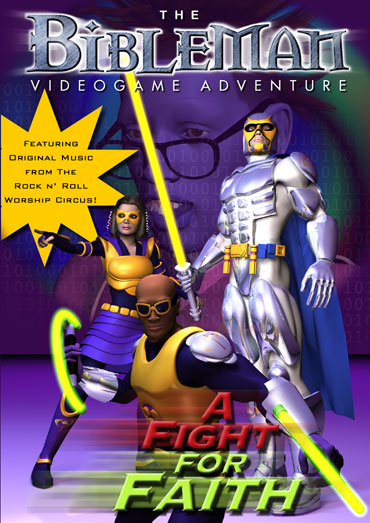
Remember what John T. McGreevy and George Marsden had to say about this? In 1996 McGreevy argued that because historians’ long studied the post-Civil War era through the lenses politics (the triumph of a liberal, activist government) and organizational developments (the bureaucratization of American life), religion remained epiphenomenal. Marsden sees something similar at play. The story of American religion has run counter to the inevitable secularization scholars long predicted, says Marsden. In his view, though, “Exclusivists forms of Christianity and other faiths seem to become more popular as the nation modernizes.” The rapid growth of free churches, mega-churches, and pentecostalism--and, I would add, the mere existence of a scripture-based superhero, BIBLEMAN, played by Willie Aames--does not square with a master narrative of diversity, tolerance, and/or an ironic sensibility.
(Shameless plug: I say a little more about some of these developments, minus BIBLEMAN, in a volume I've edited for the University of South Carolina Press's Historicans in Conversation Series. The book is titled: Recent Themes in American Religious History, and is collection short essays that appeared in Historically Speaking by Marsden, McGreevy, O'Toole, Robert Orsi, Jane Shaw, Kathleen Garces-Foley, Thomas Kidd, Stephen Stein, Leo Ribuffo, John Turner, Jonathan Sarna, and others.)
Langganan:
Postingan (Atom)