Tampilkan postingan dengan label asian american religion. Tampilkan semua postingan

Senin, 27 Desember 2010

Citizens of a Christian Nation, Redux

Paul Harvey

Several months ago Ed Blum posted his thoughts on Derek Chang's Citizens of a Christian Nation: Evangelical Missions and the Problem of Race in the Nineteenth Century (and some other books dealing with religion and war) here. My review of Chang's fine book has just come out in the Journal of American History, and I'm posting it in below.
________________________________________

White northern Baptists in post-Civil War America perceived themselves as “emissaries of the Christian nation.” They carried the gospel of Christ and of American civilization to the freedpeople of the South and to Chinese immigrants in the West. They sought to create a “conduit for the inclusion of alien populations into the brotherhood of Christianity and the nation.” For them, this was part of the new birth of freedom. In doing so, however, they also produced “discourse of difference that made that inclusion yet more difficult.” In seeking to “uplift” African Americans and Chinese, they perpetuated “racial difference through culture and religion” (68-69). The heathen black and the heathen Chinese could be transformed, but they also had to be transformed. In return, the African American and Chinese immigrant subjects turned the language and institutions of uplift and nationalism to their own benefit. Especially by working to establish independent institutions and find leadership roles within them, “their example undermined a significant part of the ideological foundation on which white evangelical uplift was based” (125).

So Derek Chang argues in this engaging study of the work of the American Baptist Home Mission Society in North Carolina (mostly in Raleigh, focused on the building of what became Shaw University) and in Portland among the Chinese community there. Chang gives the evangelicals their due. In the face of Klan violence in the South and anti-Chinese hooliganism in the Northwest, American Baptists worked to develop institutions that would incorporate the freedpeople and the Chinese into a Christian brotherhood.

Ultimately, neither the well-intentioned evangelicals nor their freedom-seeking African American and Chinese subjects fulfilled their dreams and goals as they wished, for “acts of racial terror limited the radical hopes of the home mission project and frustrated the attempts of evangelicals, blacks, and Chinese to fashion an inclusive nation through such interracial enterprises” (157). In the end, while the white Baptists took refuge in a “strain of evangelical nationalism that emphasized orderly hierarchy and stability over redemptive quality and democracy,” African Americans and Chinese “continued to fight for the transformation they desired, using mission resources to “position themselves in the larger battle over their place in the civic order” (158).

Focusing on freedpeople in and around Raleigh, North Carolina and Chinese immigrants in Portland Oregon, Chang’s comparative research and theoretical reflections shed fresh light on the subject of post-war religious reconstruction. Specialists will enjoy the endnotes, where Chang dialogues at length with fellow scholars. More general readers likely will be surprised by the efforts of white elites in Portland to restrain anti-Chinese violence. Despite being “permanent aliens,” for a time the Chinese in the Northwest enjoyed a degree of social inclusion never experienced by African Americans, who theoretically were included in the nation through the postwar constitutional amendments. In the end, both groups suffered at the hands of the virulent racial terrorism of the last two decades of the nineteenth century. Their American century would have to wait.

Senin, 20 Desember 2010

American Buddhism as a Way of Life


Paul Harvey

A couple of new books of note, with short reviews from Choice:

1) American Buddhism as a Way of Life


I'll put the Choice reviews up as separate posts. First, for American Buddhism:

American Buddhism as a way of life, ed. by Gary Storhoff and John Whalen-Bridge. SUNY Press, 2010. 217p index afp; ISBN 9781438430935, $75.00; ISBN 9781438430942 pbk, $24.95. Reviewed in 2011jan CHOICE.
This useful series of essays focuses on ways Buddhism has been transmitted to the US in the late 20th and early 21st centuries. Beginning with an analysis of the influence of pivotal Buddhist teachers Alan Watts and D. T. Suzuki, this book proceeds to evaluate some basic elements of the fusion of the many forms of Buddhism into American culture, along with the pivotal tensions created by that fusion. One of the most valuable features of these discussions is the selection of such a wide range of examples illustrating a central point: that in spite of the apparent conflict in basic categories (e.g., Buddhism's emphasis on no self, impermanence, and interdependence versus the American culture of individualism, self-reliance, privacy, and self-promotion), large numbers of Americans, though not formally "Buddhists," have been profoundly influenced by Buddhism, while Buddhism has in turn demonstrated that it can adjust to American culture. The result is an original, representative, and thoroughly informative look at "American Buddhism" introducing itself into and becoming an accepted part of American life. Summing Up: Recommended. Lower-level undergraduates through faculty/researchers; general readers. -- J. M. Boyle, formerly, Dowling College

Minggu, 25 Juli 2010

The Soul Destroying Poison of the East; or, Why I'll Assume the Savasana Posture while Watching Mad Men

Paul Harvey

I’ve been meaning to get back to doing some yoga, something I did in years past, as a supplement to my normal exercise diet of web-surfing, Netflix-watching, fantasy-football-playing, and martini-glass-lifting. Every time I think of doing so, however, the same chilling thought comes to mind: what will Matt Sutton say? All the trash talk sure to come my way via my gmail from said Sutton should I announce my resumption of yoga as my spiritual discipline and complaining about how I can’t even hold the “Warrior Pose” for more than five seconds, pins me to my chair.

Or maybe it’s just that I’m lazy and would rather just stick to my normal exercise diet, as described above. I report, you decide.

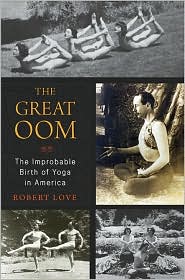
Yoga, and the nexus of yoga with religion, physical fitness, commerce, and sex in America has received much attention lately, probably due to the appearance of a number of recent books detailing the history of the yoga

phenomenon. In this week’s New York Times Book Review (which, startlingly, actually had a number of well-written and engaging reviews which dealt at length and seriously with the subject matter at hand by people who knew something about the subject beforehand -- if only this would be more the norm), Pankaj Mishra reviews Stefanie Syman’s The Subtle Body: The Story of Yoga in America, and Robert Love’s The Great Oom: The Improbable Birth of Yoga in America. Barbara Spindel also has a nice review of both works together here. Love focuses more on Pierre Bernard, described by Mishra as “one of the first of many indefatigable charlatans who popularized yoga.” Read the reviews for more fascinating detail on yoga’s Elmer Gantry.

Syman’s work follows a broader track, beginning with the influence of Indian philosophy on the Transcendentalists:

Both Emerson and Thoreau admired the “Bhagavad-Gita”; Emerson’s Oversoul resembles the Brahman, the all-inclusive, all-pervading Self of the Upanishads. However, neither Emerson nor Thoreau knew much about the physical-fitness side of yoga. The earliest Indian vendors of spirituality, like Swami Vivekananda, who lectured on Hinduism at the World Parliament of Religions in Chicago in 1893, looked down on the asanas, or poses, of hatha yoga as a defective path to yoga’s goal: the union of the individual self with the divine Self.


Syman then follows the appearance of Indian religious figures at the World Parliament of Religions in 1893, the struggles of yoga teachers and practitioners through the era of immigration restriction, and finally to the post-1945 recovery of yoga in America and its explosion with the counterculture and intense commercialization afterwards.

The story may appear to be a familiar one: the marketing of yet another religious tradition, and its watering down into a convenient calorie-burner for people on the go. Or at least for people who can tune out and turn off long enough to do so.

That’s certainly part of it, but Mishra points out that religious traditions, no matter how ancient, are always more mixed up than this, and that contemporary Americans were hardly the first to bring together religion, exercise, commerce, and sex:

The image of incorrigibly individualist and materialist Americans rummaging through ancient cultures in search of eternal youth, beauty and self-gratification has long provoked scorn. “Yoga in Mayfair or Fifth Avenue,” Carl Jung sternly declared, “is a spiritual fake.” But such a fetish of the “authentic” assumes that people in the country of yoga’s origin have upheld a timeless and unchanging yoga rather than practicing what Wendy Doniger, the distinguished historian of Hinduism, calls the world’s greatest “have your rice cake and eat it” religion.

It was in India that the tradition of Tantrism first exalted the human body as the source of this-worldly liberation. The generation of semi-Westernized Indians who brought about the renaissance of yoga in the early 20th century were themselves syncretists, combining ideas from both East and West. Even the physical aspects that dominate yoga today are partly reimports from the West. T. Krishnamacharya (the South Indian teacher of Indra Devi), B. K. S. Iyengar and K. Pattabhi Jois borrowed from gymnastic postures introduced to India by British colonialists.

Reading all this may be just enough to get me back into the bikram studio just down the street (everyone, promise not to tell Sutton). For now, it’s time to assume the savasana (corpse) posture on my lounger, take the first previous sip of an appropriately dry martini, and fire up some Mad Men. Now that’s what I’m talking about.

Senin, 12 Juli 2010

Nikki Haley and the Construction of South Asian Identity

We welcome the following guest post from Samira Mehta, a graduate student in American Religious Cultures at Emory University who is writing a dissertation on Christian/Jewish interfaith families in the U.S. from 1965 to the present.

The media has been abuzz with Nikki Haley--the winner of South Carolina’s Republican gubernatorial primary, focusing on her promise as a rising star of the Republican party, on allegations of adultery, and, most significantly, on her ethnic and religious identities. If Haley wins the seat, she will become the second Indian-American and the first descendant of Sikh immigrants in United States history to become a governor.

The image she cultivates, however, is unlikely to strike the average viewer as South Asian. The combination of her nickname, Nikki, and her married name, Haley, does not suggest an ethnicity outside of the mainstream. Additionally, as her campaign has become more successful, Haley’s Christianity and relationship with Christ have become more prominent on her website.

Critics from divergent groups have questioned Haley’s construction of her identity, the authenticity of her conversion to Christianity, and her motives in “whitening” her name. Some Indian-Americans accuse Haley of minimizing her heritage simply to succeed in Republican politics. Some conservative Christians, an important part of the GOP base (and therefore of Haley’s constituency), question the authenticity of her conversion. I won’t dwell here on these charges, but rather I’ll explore the cultural background that informs how we, in the United States, think about questions of assimilation, multiculturalism, religion, and ethnicity.

There are, broadly speaking, two models for immigrants who want to become part of American civic life: passive and active pluralism. Passive pluralism has existed since the beginnings of a “public Protestantism” into which those who were nonwhite and/or not Protestant could assimilate. For the 19th and much of the 20th centuries, Catholics and Jews who wanted to be part of mainstream society could do so by living Protestant lives—adopting Protestant names, marrying Protestants, and raising their children in Protestant culture. Sometimes, they discarded the religions in which they were raised and sometimes they consigned them to their private lives, in order to live secular, apparently mainstream public lives. Sometimes they did so with the tacit or explicit support of their natal religious and ethnic traditions, and at other times individuals broke with their traditions in order to become American. Similarly, religious and/or ethnic communities would often, consciously or unconsciously, move in directions that helped them assimilate into American culture.

According to religious studies scholar Richard Hecht, active pluralism came about as a result of the massive Asian immigration to the US after 1965, the very wave of immigration that included Nikki Haley’s parents, and from the social activism of the late 1960s and the 1970s. Active pluralism requires that minority groups make their religious needs and heritages a part of the public landscape—in other words, rather than adapting to an American Protestantism, people bring their identities into the public sphere. Then, those identities are incorporated, with all of the complicated compromises that implies, into the surrounding culture.

Haley functions more in the passive than in the active pluralism model, and many read that as a political choice. They have a point: Nimrata Randhawa Haley would be a bit long for a yard sign, but it is also more clearly ethnic than Nikki Haley. As the last presidential campaign demonstrated, many conservatives, particularly those of the tea party persuasion, do not like ethnic names. But before concluding that Haley constructed her identity for purely political reasons, it is worth considering the kinds of identities available to a child growing up in South Carolina in the 70s and 80s. Many children of immigrants born in that first decade of Asian immigration were the only South Asian students in their classrooms, and the lack of cheap phone calls, extensive cable channels, and the internet limited contact with India. Additionally, Haley comes from a Sikh family, a minority group even in India with a recent history that further complicates the relationship between Sikh Americans and India. Haley grew up in an environment in which the South Asian identity available to her was that of the “model minority,” an identity that is based, in part, on not making waves. When people comment on her “slight Southern accent” as evidence of contrived assimilation, it begs the question, What other kind of accent would one expect from a woman born in small-town South Carolina?

Turning to the question of Haley’s religious background and her conversion, much discussion has hinged on the religious choices she and her husband have made for their family: does the family attend events at both the UMC Church and the gurdwara, are the children are being raised Methodist or in both religions, and is her own conversion genuine or a matter of expediency? Perhaps it was genuine. Perhaps it was a matter of political convenience. Perhaps it was something more complicated. Khyati Joshi, a scholar who studies the intersections of race, religion, and ethnicity in the South Asian American experience, points out that for Indian-America children growing up in the United States in the 70s and 80s, Christianity set the tone for what religion was—many of them retained their childhood religions, but many ended up more comfortable in mainstream American culture and adopted values that were at least somewhat tied to Christianity. Joshi’s research suggests that Haley’s choices, especially when seen in concert with her marriage and the dominance of Christianity in South Carolina may exist on a continuum of second-generation South Asian responses to life. I am speculating here, but it does serve as a reminder that even the most genuine of conversions occurs within a social context. In Haley’s case, that context includes having grown up in a predominantly Christian society and having decided to marry a Christian man.

Any candidate who came to Christianity as an adult and courts the conservative Christian base would probably invite concerns about the validity of their conversion, but Haley’s racial identity as a South Asian brings that choice under much deeper scrutiny. After all, despite inconsistencies in George W. Bush’s conversion narrative, very few people have questioned the authenticity of his conversion. Joshi argues that having “skin the color of mocha” is considered to be immediately indicative of a non-Christian religious identity, often Hindu or, more challenging, Muslim. Specifically, she argues that because “America’s attention is repeatedly focused on [Muslim, Middle Eastern and South Asian] rivals, brown-skinned non-Christian Americans become more (or less) than just an ‘other’ within society; they become an other that is associated in the American mind with a foreign enemy.” The steps, in other words, from brown to Hindu or Muslim to terrorist are fairly short in the American mind, and, as many Sikhs learned immediately post-9/11, could consistently misidentify them as Islamist terrorists. Those of us who were paying attention to the most recent presidential campaign (that is to say, the entire country) know this. We all watched as members of the Republican Party implied, or stood by as others declared, that Barak Hussein Obama was Muslim and not American because of his name. And while I do not mean to downplay the significance of race in the election, I would argue that the Muslim claim, not his race, undermined then-Senator Obama’s Americanness. The very foreignness of his name implied, despite his years of church attendance, that he was Muslim and un-American, just as her brownness causes some to question Ms. Haley’s conversion and not that of George W. Bush.

When people get nervous about Haley for her seeming disavowal of her South Asianness, they are missing the mark. The most legitimate concern is not that Haley, though the child of immigrants, Americanized her name or became a Christian. Certainly, those choices have political implications, and all indications suggest she is too savvy to have missed them. Nevertheless, she is enacting one of the few scripted identities possible for the children of the first wave of South Asian immigrants—and it is a script that favors assimilation. Rather, the concern about Haley should be that she has chosen to make her political bed with figures like Sarah Palin, one of the instigators of the challenges to Obama’s Americanness, and that she courts as her base the very people who support movements like the “birthers.” All of the accusations made against Obama could be made against Haley, but it’s unlikely they will be, because her political conservatism allies her with the very group most likely to be her accusers, people whose track record with non-white, non-Christian immigrants and their children is frightening at best.

Jumat, 09 Juli 2010

Remember, LeBron, You Got to Go Through Hell Before You Get to Heaven

Paul Harvey

Mike Altman and others here frequently have called for expanding the boundaries of the sacred for analysis, and since various contributors here have posted on everything from Disney Religion to Green Day's American Idiot to early modern tattoos, I should think this would be a receptive venue for an expansive view of religious ritual.

All the same, there's plenty of room here for traditional theological analysis. I"m going to guest post something soon from Jeremy Bangs, about the theological/social worldview of the Pilgrims, which he believes challenges much existing scholarship in the area.

But before we get there, a priceless document for theological analysis has just come to our attention: Dan Gilbert, majority owner of the Cleveland Cavaliers, in an open letter addressed to "All of Northeast Ohio and Cleveland Cavaliers Fans Wherever You May Be Tonight." (He should have just plagiarized from Conan O'Brien's letter to his fans, which was addressed to "People of the Earth").

In case you've been living in a cave this week, let me bring you up to speed: LeBron James has decided to sign with the Miami Heat, joining new teammates Dwayne Wade and Chris Bosh. Said act was announced in an hour-long show of pretty boring absurdist theater (actually 2 hours, after the post-show coverage) last night on ESPN. Since NPR and the New York Times, Wall Street Journal, et al covered the story as well, I assume that those of you who could give a rat's behind about all this nonetheless could not escape the news story no matter how much you wanted to.

Of more interest to me is owner Gilbert's response (hilariously posted in Comic sans font, as blog reader Matt Bowman pointed out to me), full of sound and (impotent) fury. The letter might as well have been labeled: "LeBron Shouldn't Tap."

Theologically speaking, many important lines of American religious thought crash together (Nascar style) here. Let me count the ways, or at least a few of them:

1) a critique of a culture of narcissism, with a jab at the "narcissistic, self-promotional build-up" to the televised special. Here, of course, we are into Christopher Lasch land, and I'll just point you to this series of posts by our contributor John Fea for more there. Coming from an NBA owner, naturally this is pot calling kettle black stuff, but I'm less interested here in the evident hypocrisy than in the adoption of a pluralistic world of theological motifs.

2) "The self-declared former 'King' will be taking the 'curse' with him down south. And until he does 'right' by Cleveland, James . . . will unfortunately own this dreaded spell and bad karma."

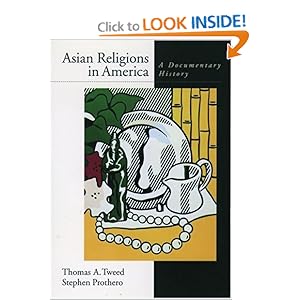
Where to begin?? We have Ham's curse together with allusions to some sort of witchery (presumably Pat Riley is the Wizard). We have a common sense view of fairness and justice, and a defensiveness about Cleveland reminiscent of the biblical verse about what good could ever come out of Nazareth. The end reference to karma is likely just cultural cliche, almost completely shorn now of its religious referent (similar to how the term "redemption" is commonly used -- "wow, he really redeemed himself with that putt on the 18th") -- but more charitably, I will assume owner Gilbert has read Stephen Prothero and Thomas Tweed's extensive primary source volume Asian Religions in America, and thus speaks from a profound knowledge of the extensive influence from the nineteenth century forward of Asian religious concepts on the American psyche.

3) Weirdly juxtaposed alongside the abundant Arminian references to assured salvation and the bitterly expressed communal utopianism (guaranteeing that long-suffering Cleveland fans will enjoy the championship hardware before the false prophet LeBron ever does) is a profound aphorism of Hardshell Baptist theology:

"Some people think they should go to heaven but not have to DIE to get there."

I can hear the Appalachian preacher's end-of-line punctuation point -- "ha" -- at the end there, and the capitalization and thus verbal emphasis on DIE comes straight from many a camp meeting sermon a la Kentucky ca. 1805. But more likely, owner Gilbert got this theology via the way everyone else got it in the 1970s, from the Steve Miller Band's "Big Old Jet Airliner," with the line about having to go through hell before you get to heaven. Dante would have been singing along.

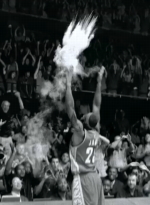
Finally, there is the emphasis from Romans 13, about all things working together for good. As Gilbert explains, "This heartless and callous action can only serve as the antidote to the so-called 'curse' on Cleveland, Ohio." Here, the false prophet has been exposed and driven out of town, and the alleged salvation that the prophet would bring can now be seen as just another sacrifice for Baal. The prophet was a conjuror, casting a spell and bringing the curse with the fetish bag of chalk powder (or whatever that white stuff was) thrown up before every game. Those fans who burned the jerseys understood that purification is the communal expiation to rid the last vestiges of the evil and witchery of the false prophet/conjuror. As the slaves sang, "Old Satan is a liar and a conjurer too, If you don't mind, he'll conjure you."

(Needless to say, the burning also calls to mind some of the most disturbing images of American history; for a much more serious analysis of that issue and the whole aspect of the hyperbolic anger directed at a routine business decision, see Tenured Radical's post "A Meditation on the American Way of Rage").

There's much, much more here, theologically speaking, and I invite comments to add to the mix. Until then, goodbye to the people I trusted. LeBron will get rich(er), for sure, but in the meantime he'll get busted.

Sabtu, 22 Mei 2010

It's In the Blood: Religion in Reconstruction and WW I

by Ed Blum

I live exactly 0.92 miles from the beach. I know this is the precise distance because my dumb running watch always tells me how far I’ve gone and how slow I am (how can I be at 10 minutes already?!?). Recently, as I labor up and down the boardwalk of Pacific Beach, I’ve been listening to the sly lyrics and driving rhythms of AFI, an alternative band that was the hit of 2006. My favorite is “Love Like Winter.” It pulsates through my eardrums as I bop along the beachfront. It’s a fun song, and I won’t even try to explain the lyrics (“For of sugar and ice I am made, I am made” … perhaps the narrator is suggesting that he is a snow cone). It’s the repetition of one line that grabs me: “It’s in the blood, it’s in the blood, … She wanted love, I taste blood.”

For some reason, these lines have led me over and over to reflect upon two new books in American religious history: Derek Chang’s Citizens of a Christian Nation: Evangelical Missions and the Problem of Race in the Nineteenth Century and Jonathan H. Ebel’s Faith in the Fight: Religion and the American Soldier in the Great War. Both books deal with blood – but in very different ways. Chang examines missions among African Americans and Chinese Americans in the years after the Civil War and finds that religion had much to say about notions of what’s “in the blood.” Ebel joins American soldiers on the battlefields of the Great War and looks at how they religiously responded to the blood soaked worlds around them. Both books continue to demonstrate how religious history is leading the way in revisions of American history writ large.

Chang’s work takes us into the world of Baptist home missions on the East and West coasts of the late nineteenth century. He details the efforts and ideologies of the American Baptist Home Mission Society (ABHMS) as they reached out to newly freed African Americans in North Carolina and Chinese Americans in Oregon. Chang suggests that white missionaries and supporters of missions linked faith and citizenship in a concept of “evangelical nationalism” where an American identity was built upon Protestant (or perhaps Christian) faith. Underneath this seemingly-open nationalism, however, were assumptions about “evangelical” and “American” that were rooted in race and class. If African Americans or Chinese Americans were to become members of the nation, then they must conform to certain white demands. They must express adoration for white guidance, embrace the norms of middle-class domesticity, and accept some form of second-class citizenship because of their alleged racial differences and inferiorities to whites.

Chang also narrates a counter story, where African Americans and Chinese Americans recast and re-envision their place in the nation. African Americans pushed for their own models of leadership and for control over their institutions. Chinese Americans, and particularly several Chinese Christian missionaries, expressed confidence and authority. As communities, African American and Chinese American Christians enacted their place in the nation by occupying space and performed their spirituality through community songs and events. Perhaps heavy in ideas and light in evidence, Chang’s Citizens of a Christian Nation is a critically important book in American religious history and Reconstruction studies. First, he follows the lead of Daniel Stowell (to whom all scholars of religion and Reconstruction are indebted) in drawing more attention to the important place of faith, churches, and spirituality in the dilemmas and difficulties of Reconstruction. Second, Chang connects East to West via the ABHMS and points American historians to the importance of remembering the West (as Heather Cox Richardson has done in West from Appomattox for Reconstruction and as Tisa Wenger has done in We Have a Religion for religion; click the link for our interview with Wenger about her book).

Ebel brings us into the twentieth century and onto the bloody battlefields of WWI. He examines religion in WWI from the perspective of the soldiers and those who supported them. Ebel wants to understand (and to help us understand) how soldiers understand war. He finds that while American combat troops and war workers differed slightly in their approaches to the war, most found “redemption” in it. He brilliantly points out that “redemption” could have many different meanings. We know this is the case from Reconstruction – where redemption meant to southern white Democrats the return of their political and social rule; for African Americans, which John Giggie has detailed majestically in his pathbreaking After Redemption, “redemption” meant something very different in the late nineteenth century). For some in WWI, the war would mean worldwide redemption as God’s forces of good would defeat the demonic Kaiser and Crown prince. Or the war could bring national redemption. It could alleviate the conflict caused by massive immigration, for instance. Or for others, the war would redeem middle class and upper class men from the debilitating effects of overcivilization. Redemption could also function at the individual level, leading men to find “Truth” amid the war.

With a dizzying array of interesting points, Ebel provides a list of new avenues of study. In one chapter, he focuses upon the religious responses to the war by African American soldiers. In another, Ebel looks at the ways women understood the war spiritually. I thought the most interesting discussion in Faith in the Fight was the debate at the time over whether combat soldiers earned salvation merely by dying in battle. A “doctrine of immediate salvation for the fallen” emerged in the war, one that clearly revised evangelical approaches to salvation where faith in Christ was somehow necessary. Those interested in theology will find plenty of bloody meat here. Ebel efforts to determine the ways soldiers made theological sense of war, how they connected to liberal and fundamentalist theological trends, and how race and gender influenced religious worldviews. Faith in the Fight is an impressive book that all scholars of twentieth-century American religious history should read and that should be incorporated in all subsequent studies of WWI. (I’ve already used material from it for a few paragraphs in my current projects!)

The wheels of the American religious history bus keep rolling. Whether in Reconstruction or in WWI, Chang and Ebel show that religion can open our eyes to what’s “in the blood.”

Rabu, 21 April 2010

The Thoreau Diaries

by Michael Altman

John Summers has a review of the new edition of Henry David Thoreau's The Journal 1837-1861 edited by Damion Searls over at the New Republic. Usually, I'm interested in Thoreau because of his thoughts on the Bhagavad Gita or The Laws of Menu but Summers makes an interesting point contrasting Thoreau with his Puritan forefathers:
Thoreau’s “inner voice” did not sound anything like John Winthrop, Cotton Mather, or Samuel Sewell. “It is a certain faeryland where we live,” he recorded along a walk one June afternoon. “I wonder that I ever get five miles on my way, the walk is so crowded with events and phenomena.” Like the Puritans, Thoreau envisioned New England as an enchanted world; but unlike their journals and diaries, he did not suggest an unconscious conversing intimately with God, and he broke decisively from their Augustinian style of self-accusation.
In Walden, Thoreau sits at the side of the pond and reads his Gita. He delights in the thought that the water at Walden and the water flowing from the Himalayas are one and the same and that he and the brahman share a drink together:

I lay down the book and go to my well for water, and lo! there I meet the servant of the Bramin, priest of Brahma and Vishnu and Indra, who still sits in his temple on the Ganges reading the Vedas, or dwells at the root of a tree with his crust and water jug.I meet his servant come to draw water for his master, and our buckets as it were grate together in the same well. The pure Walden water is mingled with the sacred water of the Ganges. With favoring winds it is wafted past the site of the fabulous islands of Atlantis and the Hesperides, makes the periplus of Hanno, and, floating by Ternate and Tidore and the mouth of the Persian Gulf, melts in the tropic gales of the Indian seas, and is landed in ports of which Alexander only heard the names.
On one level, it would tempting to read Thoreau's vision of unity between Walden and the Ganges and he and the brahman through the lens of the Gita and an adoption of Indian mysticism--after all, Thoreau claimed to be an American yogi. But Summers' small point illumines that more is going on here. Thoreau is part of a larger American Protestant tradition that sees the world through eyes of enchantment. While the Puritans may have seen evil in the wilderness and Thoreau found enlightenment in the woods, both intimately connected the natural and supernatural worlds. What draws Thoreau to the Gita is not only its philosophical difference from American Christianity but also its similarities to his New England ancestry. Thoreau's reading of the Gita emphasizes its commonalities with Puritan thought. In this early period of encounter between America and other religious cultures it is too easy to focus on the ways Thoreau or Ralph Waldo Emerson adopted and adapted Asian religious cultures without considering how they made sense of these new cultures as Americans (and a special kind of Protestant Christian American at that.) We have to really think through the American in American yogi.

Selasa, 13 April 2010

The New American Ganges: Hinduism and Health in American Religious History

Today's post comes from our newest contributor to the blog, Michael J. Altman! Michael is a Ph.D. student in American Religious Culture at Emory University, where he researches the American encounter with Hinduism, and more broadly constructions of the category of the sacred in American religious history. Michael's first post, below, concerns the connections made in the 19th century between Asian religions and the spread of disease, versus more contemporary conceptions of the connections of Asian religions and health. Welcome to Michael! You can also follow Michael on Twitter: @MichaelJAltman.

Cholera, India, and Religious Epidemiology in America

Michael J. Altman

Today is the end of the Kumbh Mela—a Hindu festival held every three years—which means millions of Hindus are bathing in the Ganges river at the City of Haridwar to cleanse themselves of their wrong doing in order to achieve moksha (liberation from the cycle of rebirth). What does this have to do with religion in America? Or American history, even?

Glad you asked.

I recently came across a handful of articles in the Chicago Medical Examiner, and a few other medical journals from the late nineteenth century which argued that this same ritual bathing at Haridwar would lead to a cholera outbreak in the United States.

As one 1868 article from John C. Peters, M.D. of New York puts it:

“There is a great nursery of cholera in the northern part of Hindostan, at the foot of the Himalaya Mountains, viz., at HURDWAR, where the thrice sacred Ganges emerges from the mountains…The largest of all the Hindoo festivals and fairs is held at Hurdwar every year…but every twelfth year, which is particularly holy, as man as 1,500,000 to 3,000,000 of devotees and traders are often crowded together…As a matter of course, cholera is often brought to Hurdwar; often originates there; and is frequently carried away from it.”

The article then goes on to explore how various 19th century epidemics of cholera began at Haridwar and then spread to Europe. While many of the explanations focus on trade routes, a lot of them also focus on religious practices as the spreading disease. Hindu pilgrims spread the disease throughout the subcontinent and then Muslim pilgrims spread it across Russia and the Near East. As the story goes, it then spreads to southern Europe, then to Western Europe and then possibly to the United States.

The relationship between Hinduism, Islam, and southern (Catholic) Europe to the spread of cholera brings three points to mind regarding American religious history.

First, the connection between “superstitious” or “heathen” religious practice and disease highlights the relationship on the other hand between Christianity and rational Western medicine. All of the writers in these journals doctors and Protestants and the two are intimately connected.

Second, the spread of disease tracks along a religious/cultural/ethnic hierarchy from the lowest, “heathen India,” through the Muslim Middle East and Catholic Italy to Christian Europe to the highest, democratic and Protestant America, that reflects the ethnological theory of the period. At this point in American history, non-Christian religions were not only encountered through a missionary lens but also through this pseudo-scientific, ethnic, and racial lens as well. Furthermore, this religiously flavored epidemiology is another way of thinking through the connection Thomas Nast makes in his cartoon “The New American Ganges” between Catholic ritual and Indian religion.

,

Finally, these articles provide the background against which later nineteenth century encounters with Asian religions in America would occur. Vivekananda and members of the Brahmo Samaj could have moderate success at the World’s Parliament of Religions because their Hinduism looked nothing like this ritualized, disease spreading, “superstition.”

A century later, Asian religions would provide resources for new forms of spiritual and religious healing. That move from disease to health reveals a lot about the success of the turn of the twentieth century Indian gurus like Vivekananda and his 1960s progeny. Now, ideas about health and Hinduism in America tend more toward ideas about Transcendental Meditation than communicable diseases like cholera.

Minggu, 28 Maret 2010

Immigration and Religion in America

Paul Harvey

Surveying the books reviewed in the new Journal of American History gives a quick overview of the variety and vitality of American religious history. From the eighteenth-century Moravians, to Catholic feminism, to W. E. B. DuBois, to Holiness/Pentecostalism, to the memory of the Salem witch trials, to religion in the life of George Washington, and much else instead, even a quick scan and assessment of these newer titles suggests continued strength in the field.

Here's a title I was completely unaware of, and haven't seen yet, but looks promising:

Immigration and Religion in America: Comparative and Historical Perspectives. Ed. by Richard Alba, Albert J. Raboteau, and Josh DeWind. (New York: New York University Press, 2009. vi, 407 pp. Cloth, $78.00, ISBN 978-0-8147-0504-9. Paper, $26.00, ISBN 978-0-8147-0505-6.)

Immigration and Religion in America: Comparative and Historical Perspectives

The book pairs comparisons of earlier and more-studied immigrant groups (Italians, Japanese, Jews, and northward-migrating African Americans) with newer immigrant communities (Mexicans, Koreans, Arab Muslims, and Haitians). Each pairing comes with an introduction focusing on the religious history of the groups. Here's a bit more, from the review (access required for History Cooperative):

Several essays stand out. The sociologist David Lopez's "Whither the Flock? The Catholic Church and the Success of Mexicans in America" argues that, unlike the Italian case, "it is difficult to point to any important ways in which the church has facilitated their climb up the ladder of success" for Latino Catholics (p. 71). In "The Shaping of Arab and Muslim Identity in the United States," however, Yvonne Yazbeck Haddad shows evidence of Islam facilitating the acculturation of Muslim Arabs—much as Judaism did for Jews—by providing women the opportunity to participate in public life. Elizabeth McAlister and Karen Richman's "Catholic, Vodou, and Protestant: Being Haitians, Becoming American—Religious Pluralism, Immigrant Incorporation, and Transnationalism" illustrates the complicated ways that varied religious traditions and history provide meaning for Haitians in a new land.

Two essays challenge the notion that declining participation in religious rituals means that immigrant religious roots are less important to later generations. Despite the decline of traditional Buddhism among the Japanese, Jane Naomi Iwamura's "Critical Faith: Japanese Americans and the Birth of a New Civil Religion" argues that "what has emerged from the collective experience of war and internment is a faith that is tied to no particular religious tradition but that takes racial-ethnic identity as its starting points" (p. 137). Calvin Goldscheider's "Immigration and the Transformation of American Jews: Assimilation, Distinctiveness, and Community" suggests that for Jews the issue is not how much they have assimilated but "what factors sustain ethnic and religious community" (p. 198). He argues that the economic stratification of education and occupation, built on the demography of the first generation, allows this immigrant group to challenge the assumption that Jews (as a group) have become secularized in America.