Tampilkan postingan dengan label women's history. Tampilkan semua postingan

Sabtu, 26 Maret 2011

Gender and American Religious Historian, Part III

By Kelly Baker

And the beat goes on (and on and on). As I continue to put together the list of my favorite scholarship/scholars on gender, women's history, and masculinity for NWHM, I find that hesitate more and more about my choices, their inclusivity/exclusivity, and what they say about me as a scholar: What have I read? What do I need to read? What do I leave out? Why do I like Protestants so much? (That one has an easy answer). What is my lingering fascination with American Catholics? How might I find the good gender scholarship beyond my own research interests?

As commentators have noted, my list is primarily filled with scholarship about white Protestants and Catholics, which is certainly true. I write primarily about white Protestant men and women, so my list does skew that way. This does not give me a free pass, but our readers should know that the list is my favorite hits in gendering American religious history, and thus, it is not a universal, or even close to canonical, list nor should it be viewed as such. These are works that I have deeply respect, admire and even love. They urge me to be a better gender historian. Their questions become my lingering questions. As I write about masculinity and femininity, I reflect on these as lessons on how to do gender analysis, as models for emulation, and as nourishment and encouragement in my own attempts to make gender a primary category of analysis within my religious studies training. Overall, the series functions for me to highlight what I consider to be good work on gender and religion (often Christianity) and encourage you to enjoy the scholarship I list.

What this means is that I hope our readers will continue to list their choices in the comments section. Several folks have already contributed via comments and email, so THANK YOU! I will post your suggestions as an addendum to the Gender and the American religious historian series (available here and here). Please continue to list your favorites or email me your picks.

11. Tracy Fessenden is one of my favorite American religious historians, hands down. Her Culture and Redemption was an inspiring work that challenged the secularization thesis by showcasing how secular can functions as “stealth” Protestantism. She is also the co-editor of the The Puritan Origins of American Sex. In my classes, I assign her “The Convent, the Brothel, and the Protestant Woman’s Sphere,” from Signs, in she argues that anti-Catholicism functioned as tool to maintain the Protestant domestic sphere, so enforcing boundaries on nuns and prostitutes became a way to preserve pure, white womanhood.

12. Marie Pagliarini’s “The Pure American Woman and the Wicked Catholic Priest: An Analysis of Anti-Catholic Literature in Antebellum America,” from Religion and American Culture documents how analyzing gender helps us understand historical practices of intolerance. Moreover, religious intolerance works best when historical actors seek to protect innocent womanhood from some dangerous, religious threat. I cannot wait to read her article entitled, 'And the Word was Made Flesh': Divining the Female Body in Nineteenth-Century American and Catholic Culture" in the same journal.

13. Julie Byrne’s O God of Players is a cultural history of Catholic women’s basketball, which emphasizes the physicality and joy of play for these Catholic girls. The Immaculate Mighty Macs negotiated their identities as young Catholic women in the physicality of the sport but also understood the game as a Catholic enterprise. Byrne’s work showcases the fluidity of religious identity as well as the ways in which basketball problematized as well as reinforced notion of Catholic womanhood. I’ve blogged about the book previously here.

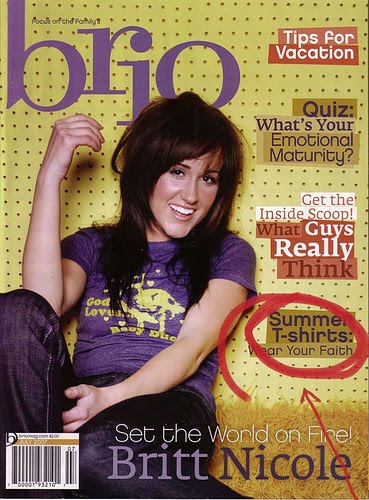
14. Heather Hendershot’s Shaking the World for Jesus is not only a good primer for those of you interested in evangelical use of media, but also contains one of the best interrogations of evangelical chastity programs for teens. Using Focus on the Family’s teen magazines for boys and girls, Hendershot shows the dangers of “eruptive” male bodies and “contained” female bodies, and importantly, documents how teens negotiate chastity in their own lives. Chastity events prove to be some of the only co-ed excursions, but the emphasis on purity for teenage women is a larger burden to bear than their male counterparts.

15. Kristy Nabhan-Warren’s The Virgin of El Barrio appears often of my Religions in the U.S. syllabus. It is an ethnography of Estela Ruiz, her vision of the Virgin Mary, and her activism and missionizing. Nabhan-Warren documents Ruiz to showcase not only her life and her visions, but also the blending of Catholicism and evangelicalism in Ruiz’s ministry. Moreover, Nabhan-Warren doesn’t shy away from gender dynamics of the ministry, and she illuminates the complicated relationship between Ruiz, the Virgin Mary, and her family.

16. Margaret Bendroth’s Fundamentalism and Gender was one of my earliest endeavors into understanding the relationship between Christian women and fundamentalism. Her work traces the idea of female subordination in fundamentalist practice, and she demonstrates how the idea of subordination, which seems so necessary to fundamentalism, oscillates between a mandate placed upon all women to loosely enforced dictate, especially when women are needed to fulfill quasi-leadership roles. Moreover, she stresses the fundamentalist attachment to masculinity as necessary to the Christian doctrine as well as the masculine nature of recruiting. This book was one of the first to make me realize how gender is a necessary category of analysis in religious studies. In addition to this work, she is also the co-editor of Women in Twentieth Century Protestantism and the author “Why Women Loved Billy Sunday: Urban Revivalism and Popular Entertainment in Early Twentieth Century America” in Religion in American Culture.

17. Janet Moore Lindman’s Acting the Manly Christian: White Evangelical Masculinity in Revolutionary Virginia” in William and Mary Quarterly is an excellent discussion of how white evangelical men in the South redefined masculinity in Christian terms. Southern manhood did not necessarily fit with the evangelical norms of piety, and thus, these evangelical men redefined themselves as suffering saints rather than gambling toughs. Evangelical manhood was defined in negative terms, in the ability to abstain rather than give in to worldly pleasures. Moreover, Lindman documents how evangelicalism, however, embraced the hegemonic power of white manhood despite the emphasis on suffering and Christian soldiers.

Also, on another NWHM note, go check Historiann's review of Telling Histories: Black Women Historians in the Ivory Tower. Here's an excerpt:

White and her contributors explain the many struggles that black women faced as they began to enter the profession in the 1960s and 1970s–the obligation placed on many to serve their communities rather than their intellectual ambitions; the scoffing and disbelief they faced in white and black male mentors who were mostly hostile to their interest in women’s history; the stresses of entering work environments in which the other people who look like them are all secretaries or janitorial staff; the racism and sexism of students who walk out of their classes and refuse to recognize their intellectual and professional authority; the cluelessness or plain old racism of overwhelmingly white feminist scholarly communities; and the never-ending suspicion of other historians that black women’s history can never be “objective” if it’s written by black women.


Kamis, 24 Maret 2011

Remembering the Triangle Fire


By Heath Carter

Tomorrow marks the 100th anniversary of NYC's Triangle Shirtwaist Fire, a sweatshop blaze that consumed the lives of nearly 150 women in what still stands as one of the nation's worst industrial disasters. Interest in this solemn occasion has only been intensified by the current controversies involving unionization and collective bargaining, which have been discussed at some length on this blog and around the web.

Many of the women who died were Jewish, and New York's Jewish community has taken a leading role in the public remembering. This Sunday, for example, several groups are sponsoring a procession in which 146 persons, one for each of the victims, will march from the site of the fire to the Eldridge Street Synagogue. For more on that event, you can peruse The Triangle Walk's blog.

If you are interested in reading a brief history of the fire, as well as finding out about some of the other commemorative events happening around the nation this weekend, you might check out WNYC's site as well as the Labor and Working-Class History Association's (you have to scroll down a little ways on the latter).

Senin, 21 Maret 2011

David Sehat on National Women's History Month

by Kelly Baker

The Oxford University Press blog has a two-part interview with David Sehat, author of The Myth of Religious Freedom (which we have blogged about here, here, and here), entitled, "Is God woman's greatest nemesis?" Michelle Rafferty poses the question, and Sehat discusses his chapter on religion and the women's right movement as well as Sarah Palin.

Here's a snippet:

Me: So while reading your chapter on the beginnings of the women’s rights movement, I was surprised to learn that there was actually a split in ideology when it came to religion…

Sehat: Exactly. The women’s movement was not monolithic. Henry Ward Beecher, who was the most famous preacher in the last half of the nineteenth century, was in the branch that thought that God had created women to be more inherently moral. So women needed the vote and greater participation in public life in order to increase the moral tone of public life. Beecher thought that women were crucial to upholding communal moral standards.

Elizabeth Cady Stanton, on the other hand, believed that the notion of women’s inherent moral superiority was a ruse to keep them isolated and in the home. She thought it excused a lot of philandering on the part of men (because their moral deviance didn’t matter as much as women’s). She concluded that women needed first to be seen as individuals, rather than matrons or mothers or ciphers of morality to society at large, in order to reform society in a just way.

Me: Which is why she also took on marriage?

Sehat: Right. She thought marriage law was the linchpin that held together Christian patriarchy. When a woman married, she lost control of nearly everything when women surrendered her legal identity and then couldn’t get out of the marriage because it would upset society’s morals.

Rabu, 16 Maret 2011

Gender and American Religious Historian, Part I

By Kelly Baker

As mentioned in my post recently, I want to highlight the scholars who take gender and women seriously in American Religious History for National Women's History Month. Below, I have provided my first four scholars, and these are the folks that I find most pivotal when I think about the power of gender history to inform and change American religious history. As one might tell, I have favorite pieces of scholarship from each, and each has a large body of scholarship to draw from. The ones I highlight are the ones that influence me most deeply as a scholar.

Here are they are:
1. Ann Braude, of course, is at the top of my list. Her works include Radical Spirits: Spiritualism and Women's Rights in Nineteenth-century America (2001), Sisters and Saints: Women and Religion in America and several edited collections, notably Transforming the Faiths of Our Fathers: The Women Who Changed American Religion. Her essay, "Women's History is American Religious History"(1997) is required reading. In this piece, she argues that women's history is central to the narratives of American religions, and that common descriptors like secularization refer to men's roles and decreasing presence in churches rather than abandonment wholesale of Christianity. For Braude, religious history looks different from the perspective of women, and this needs to be accounted for in our tellings and retellings of American religious history. Again, I wonder how many have taken seriously her call of the gendered nature of our categories of American religious historiography.

2. Pamela Klassen's work on religion and maternity is one of my currently most assigned pieces in my gender classes. While I don't assign the whole of Blessed Events: Religion and Home Birth in America (2001), I do assign her “Sacred Maternities and Post-Biomedical Bodies” from Signs. Klassen's analysis of home birth tackles one of the most problematic areas for feminist theory, pregnancy. Her article presents the ways in which home birthing women describe their bodies and what is "natural" as well as what is supernatural about birth. Her explorations of what is at stake in the natural clearly shows how pregnancy is socially constructed and biological. Just because we assume biology doesn't mean it is. Klassen deftly showcases how the biological becomes paramount in the case of pregnancy, but home birthing women graft social and religious meaning on their bodies as well. They might be "postbiomedical bodies" but they are social bodies as well.

3. Marie Griffith's work on Women's Aglow also appears quite frequently in my classes in American religious history and gender. Much like with Klassen, I don't assign the whole of God's Daughters:Evangelical Women and the Power of Submission (1997).Instead, my students read "Submissive Wives, Wounded Daughters, and Female Soldiers…” from David Hall's edited collection, Lived Religion in America. This haunting piece on the power of submission to God in the lives of women often troubles my students. That discomfort allows for good analysis and equally compelling discussion. I am also deeply in love with Born Again Bodies (2004), which emphasizes the importance/significance of bodies and food in American religious history. Griffith's assertion of the danger of slimness in religious circles to emphasize certain white, female bodies and the corruptedness of differing bodies stayed with me long after I finished this work. The centrality of bodies to theology also made me rethink my own approach to white, male bodies in my own work. (Griffith has just been named the director of the John C. Danforth Center on Religion & Politics at Washington University in St. Louis.)

4. Robert Orsi's “ ‘He Keeps Me Going’: Women’s Devotion to Saint Jude Thaddeus…” in Religion in American History: A Reader is another constant in my classes. This article is a portion of Thank You, St. Jude: Women's Devotion to the Patron Saint of Hopeless Causes (1999), which is my favorite book, hands down, by Orsi. Every time I read this article, I find some new layer of complexity from the lovely interweaving of immigrant history, the Catholic Church's position on women in newsletters, and the material relationships of the women to St. Jude. He writes, "Women...created and imagined themselves, manipulating and altering the available grammar of gender" (349). Moreover, Orsi poignantly notes, "Women believed that they became agents in a new way with Jude's help" (349). Women believed in agency, but Orsi seems less convinced. This line proved particularly fruitful to my students this semester as they struggled with the question of agency and the desire to see agency even if there is none. Belief in agency startled them and me, and we wondered how St. Jude operates. We pondered what does the attachment to the patron saint of lost causes really mean for women, for Catholicism, and for our class.

Also, stay tuned for additional posts on the same topic here.

[Cross-posted at kellyjbaker.com]