Tampilkan postingan dengan label gender and religion. Tampilkan semua postingan

Minggu, 17 Juli 2011

What do the Pope, Obama, and Johnny Rotten Have in Common?: Observations on Gender and the Antichrist

by Charity Carney

Thanks to Kelly Baker for suggesting a series on masculinity and religion during Paul's hiatus. Here's the first of my installment.

Americans’ fascination with the Antichrist has only grown over the past decade with an increasing number of pop culture references and politicized rhetoric surrounding the evil symbol of a coming Armageddon. Obama was/is accused by some as being the Antichrist—Obama beginning as relatively unknown politician who rose to power swiftly and won the hearts of many Americans with a message of hope. He made promises that were too good to be true, many said, and some accused him of acting like a messiah to lure unsuspecting Americans into his trap. (Google “Obama and Antichrist” if you haven’t before. It’s amazing what people can do with Photoshop.) The racialized overtones of this depiction of the president cannot be overlooked. Many Americans were terrified of Obama’s candidacy and election because he was an “other” in their worldview and so their fear blossomed into anger and denouncements of the “Yes We Can” Man as evil. Racist motivations aside, Antichrist accusations and personas have power (to scare, to motivate, and to actually empower) and much of that power resides in the masculine meme of the position.

White Women, Rape and the Power of Race in Virginia, 1900-1960 as well as cultural works on more recent America like Michelle Alexander’s thought-provoking new book, The New Jim Crow). But beyond the masculine world of racialized sexuality and crime there are other gendered factors that contribute to the current Antichrist discourse.

An alternative view of the Antichrist is that promoted by the Wisconsin Evangelical Lutheran Synod (WELS). Current Republican presidential candidate contender Michelle Bachman once belonged to this group but recently demanded a written statement from the synod about a year ago asserting that she was no longer affiliated with them or their anti-Catholic beliefs. The WELS doctrine regarding the Antichrist states:

“Since Scripture teaches that the Antichrist would be revealed and gives the marks by which the Antichrist is to be recognized, and since this prophecy has been clearly fulfilled in the history and development of the Roman Papacy, it is Scripture which reveals that the Papacy is the Antichrist.”

The Pope is perhaps the most powerful religious figurehead alive in the Western world and by imbuing him with the religious authority of the Antichrist, the WELS has given him even more influence, although that is obviously not their intention (see http://www.theatlantic.com/ for the full story). The Pope and Catholics and many other Christians (including Lutherans) certainly do not view the Papal position as connected to the Antichrist, but the debate alone grants the Papacy more power because it is simply being debated. The Pope and the Catholic leadership, too, have a preponderance of masculine authority despite their sworn celibacy. The Church has maintained its commitment to male authority since its founding and continues to rely on an all-male cast of Pope, Cardinals, and priests, etc., giving nuns duties that reflect a more maternal role (teaching and nursing, for instance). The Pope, I contend, would not be accused of being the Antichrist if it was not necessarily a male occupation and if the Catholic Church did not imbue it with masculine power.

And it is here where I will play “devil’s advocate” (pun, sadly enough, intended): Antichrist imagery can also be used as a hyper-masculine badge of honor. Take, for example, the role that Antichrist played in the punk music scene of the 1970s. The Sex Pistols’ lead singer, Johnny Rotten, even went so far as to declare himself an antichrist in “Anarchy in the UK”:

I am an anti-christ

I am an anarchist

Don't know what I want but

I know how to get it

I wanna destroy the passerby caus’ I

I wanna BE anarchy!”

The Sex Pistols might have been Nietzsche’s favorite band. In The Antichrist, the nihilist wrote: “What is good?—Whatever augments the feeling of power, the will to power, power itself, in man.” Ultimately, the concept of an Antichrist is a positive one to Nietzsche because it empowers man to challenge a blundering God whom impedes science and knowledge. Although Nietzsche is not speaking directly of the biblical Antichrist, he is pressing the notion that anti-Christian, anti-God, anti-religious views are what give men control and intellect. The Antichrist may be the supremely masculine symbol—with power and virility and ferocity representing his most cited characteristics.

The dangers of this discourse, however, are immense. As seen with Obama, declaring a public personality to be the Antichrist only engages widespread animosity and fear, which, when combined, can lead to vehement and violent reactions. So maybe the WELS should reconsider its charged doctrine concerning the Pope as well as those who have labeled the president as the Antichrist.

Minggu, 10 Juli 2011

Motherhood, Morality, and, Ultimately, Madness: My Thoughts on the Casey Anthony Case

by Charity Carney

Will it never end?! Not the Casey Anthony media craze. There’s no hope there. But the complete lack of awareness on the part of the American public of their obsession with motherhood, proper familial relations, and these moral boundaries that so many claim exist but cannot agree on what they are and what they mean. I have to admit, I’ve been watching my fair share of Nancy Grace's commentary lately—the subtle movements in Anthony’s face, the ridiculous analysis of her hairdo (to ponytail or not to ponytail?)—and I keep watching because I have become entranced with the concepts of proper American motherhood AND fatherhood situated so squarely in our television sets. What this case has elicited is more than talk of mob rule and justice for a murdered child. It has revealed how the American mainstream views modern motherhood and family life and how their commitment to those ideals often trumps the mandates of the justice system and Constitution.

Casey Anthony is pretty. She is young. She is white. And all of these are reasons that she has captured the country’s attention for so long. But alongside these factors runs a strain of judgment based on maternal standards that have made themselves extremely clear over the past few months. Dubbed “Tot Mom” by Nancy Grace, Anthony has been criticized for not “acting” like a mother should (a penalty that many have said warrants death in and of itself), for being a liar (the temptress that she is, fooling policemen and her parents alike), and for even living with her parents after the birth of her child (unsure of who the father was and unable to take care of her daughter herself as a 22-year-old single mother). Despite the gruesome facts surrounding the court case, there is something to be learned about American morality when it comes to gendered subjects: even within a “modern” society where many women defy maternal stereotypes, the court of public opinion still retains a very conservative understanding of what moral parents do.

Pitted against Casey Anthony’s “immoral” behavior are the accusations against and defenses of her father, George Anthony, of child abuse and molestation. When Casey’s defense attorney’s brought this accusation to light and used it as a central part of the explanation of “Tot Mom”’s (ugh, it hurts to write it) actions, the media had a field day. The majority of newscasters, analysts, lawyers, and interviewed citizens rejected the idea that any father could do that to his daughter or cover up the death of his granddaughter. Not casting personal blame on any person, I simply observe that our patriarchal system is still firmly in place, you’ll be happy to know. In case anyone was worried, it’s doing just fine. The stark contrast of the moral questions cast upon Casey Anthony’s motherhood and George Anthony’s fatherhood is an indicator of the gendered status of ethical parenting.

Not that we did not realize this already, but I have not seen in recent times a more clear example of gendered judgment of moral/immoral behavior. I do think that the fact that the O.J. Simpson verdict has been held up as a comparison to the Anthony case only encourages this idea but the difference is that the Simpson trial was held up as a race-based incident and the Anthony trial is stuck in American psyches when it comes to any kind of higher gender analysis.

Rabu, 04 Mei 2011

The Religious and Fraternal Underpinnings of Sci-Fi Fandom

By John Crow

The semester is over at Florida State and next week begins the summer semester. I have already begun my summer reading which continues my interest in fraternalism, religion, gender, and the body. In that vein I have begun with Mark Carnes’ Secret Ritual and Manhood in Victorian America (Yale UP 1989). In the beginning of the volume, he notes the significant changes that occurred to fraternalism after the antimasonic movement of the 1830s. Between the 1840s and 1860s, there was a move to upgrade fraternalism, to make it more palatable for the middle-classes, and to re-center the fraternal orders on ritual performance. While social interaction remained important, to some degree, it was the performance and belonging that mattered. Thus antebellum orders such as Freemasonry and the Odd Fellows swelled to significant numbers with the Odd Fellows having over 800,000 members in 1896 and the Freemasons not far behind with 750,000. For many of them, it was the performance in the rituals that cemented their involvement. They were able to reconnect with an imagined past and so-called ancient wisdom that was universally available.

Not surprisingly, these fraternal orders took the place of organized religion and church for many men. The rituals offered a universal morality couched in allegory that they performed. Members assumed costumes, imaginatively entering Solomon’s Temple in the Royal Arch Degree, discovering the lost word and Ark of the Covenant, or sitting around faux camp fires, connecting to an imagined primitive American past in the Order of the Red Men. In the Knight of Pythias, degrees were placed in Ancient Greece and the Medieval Europe. In many cases the degrees where anachronistic, combining historical figures and time periods in ways that were impossible. In response to non-historical claims, noted Masonic scholar, Albert Mackey, stated that the setting may be “true or false,” but the “lesson is still there, and the symbolism teaches it exclusive of the history.” All these movement promised connections to a world separate from the one the men knew, although it was imbued with symbols and allegories that pointed to a familiar Protestant morality. During these rituals, wearing masks and costumes, these men took on new identities imbued with deep and mystical meaning, though never straying too far from standard social conventions. As I read these lines, I wondered if today’s sci-fi fandom operates in a similar way for many in our modern culture.

Being from Atlanta, I thought of the largest fandom convention that takes place every Labor Day, DragonCon, and its cadre of costume wearing participants, reenacting sci-fi scenes from comic books, movies and television shows. These sci-fi conventions, or “cons” as they are called, occur somewhere in America every weekend. During these cons, fans step into their imaginative worlds similar to the masons and Odd Fellows. Instead of playing Hiram Abif, one may play to role of Obi-Wan Kenobi, similarly struck down by the forces of evil, only to be resurrected, not by the lost word, but by a universal “force,” which stresses a morality similar to that professed by masons. In fact, for many Jediism takes the place of more established religion. Some Jedi practitioners claim ancient pedigrees, not unlike many fraternal orders. Of course I could have picked Star Trek, with its secular humanism based Prime Directive, or some other vampire or anime series. In all these cases, the fans step into another world, assuming new identities. Carnes suggests that these new identities assist the performers in addressing anxieties. They certainly allow the creation of worlds that the members regulate and control. Ritual is a big part of that, as is social control. Just as masons can “black ball” and prohibit the membership of others, fandom groups police their boundaries in a variety of ways. Whether one must know the lines of a movie, the histories or genealogies of characters, or the proper conduct for the mythos or game, the boundaries can be stark and the participants unforgiving of violators.

Looking specifically at gender and the body, these imaginative worlds allow participants to explore and recast their bodies and gender in a variety of ways. While Victorian fraternal orders may have allowed men to adapt and re-inscribe gender roles in society, responding to the much discussed feminization of Victorian America, sci-fi fandom allows modern participants the ability to explore issues of gender and the body in complex ways. Cross dressing is common, as is the assumption of costumes that obscure gender altogether. Participants can have wings, become cyborgs, add additional limbs, or don non-gendered, non-human costumes, or even non-biological roles such as those of robots. Similarly, bodily extensions and modifications are common. In the opposite direction, participants may take on exaggerated gender features such is common in Japanese anime costume play, or “cosplay” as it is called. Another vibrant scene is the anachronistic steampunk movement, which attempts to fuse modern or futuristic technology with eighteenth century aesthetics.

The reasons men participate in fraternal orders now, as well as in the past, are complex and changing. Yet I think they give us some clues into modern worlds like sci-fi fandom, worlds in which religion and fraternalism manifest in very predictable ways. Capturing the religiosity of these participants can be difficult. They often fall into the ambiguous spiritual-but-no-religious segment of American society. Yet if we look for older models, such as Victorian fraternalism, we may be able to glean certain similarities which open possibilities for study. Though, on the surface, a mason dressed as Moses, participating in an initiation seems completely unrelated to a woman dressed as a Sith lord, wielding a light-saber, the underlying motivations may not be that different. Fraternal orders during the Victorian era addressed anxieties while simultaneously stressed conventional morality and middle-class virtues. While the sci-fi fandom world may seem completely unrelated, it too may be performing the same functions.

Rabu, 13 April 2011

Nancy Hardesty (1941-2011) and Biblical Feminism


Paul Harvey

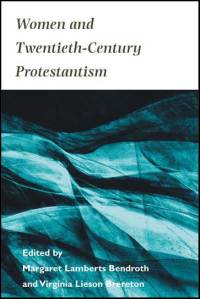
Julie Ingersoll has posted a very warm tribute to Nancy Hardesty (1941-2011), Founding Mother of Biblical Feminist Movement, at Religion Dispatches. Thank you, Julie; and thank you, Nancy, for a life of scholarship and activism. I did not know Nancy personally except for a few brief exchanges, but I'll always remember Nancy's wry look during an encounter I had at a conference years ago with Dorothy Patterson, the famously flamboyant Southern Baptist conservative and author of the statement about family roles and gracious submission in the Baptist Faith and Message Statement, who spent a few minutes at the Women and Twentieth-Century Protestantism conference in Chicago in 199? (can't remember the year now) berating my scholarly research and credentials to write about Southern Baptists (some of you regular blog readers were there, not to name any names Judith). Nancy got to spend a lot of time being berated by biblical anti-feminists, and she countered them both with her scholarship and with her everyday work. You may find a bibliography of her work here.

Sabtu, 26 Maret 2011

Gender and American Religious Historian, Part III

By Kelly Baker

And the beat goes on (and on and on). As I continue to put together the list of my favorite scholarship/scholars on gender, women's history, and masculinity for NWHM, I find that hesitate more and more about my choices, their inclusivity/exclusivity, and what they say about me as a scholar: What have I read? What do I need to read? What do I leave out? Why do I like Protestants so much? (That one has an easy answer). What is my lingering fascination with American Catholics? How might I find the good gender scholarship beyond my own research interests?

As commentators have noted, my list is primarily filled with scholarship about white Protestants and Catholics, which is certainly true. I write primarily about white Protestant men and women, so my list does skew that way. This does not give me a free pass, but our readers should know that the list is my favorite hits in gendering American religious history, and thus, it is not a universal, or even close to canonical, list nor should it be viewed as such. These are works that I have deeply respect, admire and even love. They urge me to be a better gender historian. Their questions become my lingering questions. As I write about masculinity and femininity, I reflect on these as lessons on how to do gender analysis, as models for emulation, and as nourishment and encouragement in my own attempts to make gender a primary category of analysis within my religious studies training. Overall, the series functions for me to highlight what I consider to be good work on gender and religion (often Christianity) and encourage you to enjoy the scholarship I list.

What this means is that I hope our readers will continue to list their choices in the comments section. Several folks have already contributed via comments and email, so THANK YOU! I will post your suggestions as an addendum to the Gender and the American religious historian series (available here and here). Please continue to list your favorites or email me your picks.

11. Tracy Fessenden is one of my favorite American religious historians, hands down. Her Culture and Redemption was an inspiring work that challenged the secularization thesis by showcasing how secular can functions as “stealth” Protestantism. She is also the co-editor of the The Puritan Origins of American Sex. In my classes, I assign her “The Convent, the Brothel, and the Protestant Woman’s Sphere,” from Signs, in she argues that anti-Catholicism functioned as tool to maintain the Protestant domestic sphere, so enforcing boundaries on nuns and prostitutes became a way to preserve pure, white womanhood.

12. Marie Pagliarini’s “The Pure American Woman and the Wicked Catholic Priest: An Analysis of Anti-Catholic Literature in Antebellum America,” from Religion and American Culture documents how analyzing gender helps us understand historical practices of intolerance. Moreover, religious intolerance works best when historical actors seek to protect innocent womanhood from some dangerous, religious threat. I cannot wait to read her article entitled, 'And the Word was Made Flesh': Divining the Female Body in Nineteenth-Century American and Catholic Culture" in the same journal.

13. Julie Byrne’s O God of Players is a cultural history of Catholic women’s basketball, which emphasizes the physicality and joy of play for these Catholic girls. The Immaculate Mighty Macs negotiated their identities as young Catholic women in the physicality of the sport but also understood the game as a Catholic enterprise. Byrne’s work showcases the fluidity of religious identity as well as the ways in which basketball problematized as well as reinforced notion of Catholic womanhood. I’ve blogged about the book previously here.

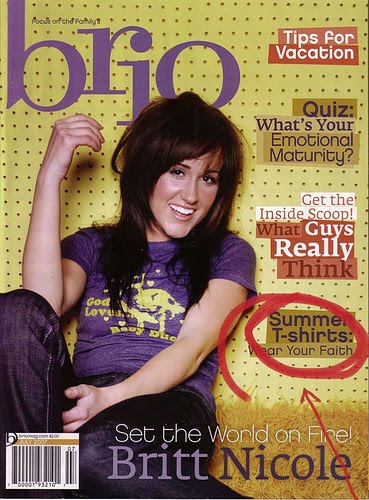
14. Heather Hendershot’s Shaking the World for Jesus is not only a good primer for those of you interested in evangelical use of media, but also contains one of the best interrogations of evangelical chastity programs for teens. Using Focus on the Family’s teen magazines for boys and girls, Hendershot shows the dangers of “eruptive” male bodies and “contained” female bodies, and importantly, documents how teens negotiate chastity in their own lives. Chastity events prove to be some of the only co-ed excursions, but the emphasis on purity for teenage women is a larger burden to bear than their male counterparts.

15. Kristy Nabhan-Warren’s The Virgin of El Barrio appears often of my Religions in the U.S. syllabus. It is an ethnography of Estela Ruiz, her vision of the Virgin Mary, and her activism and missionizing. Nabhan-Warren documents Ruiz to showcase not only her life and her visions, but also the blending of Catholicism and evangelicalism in Ruiz’s ministry. Moreover, Nabhan-Warren doesn’t shy away from gender dynamics of the ministry, and she illuminates the complicated relationship between Ruiz, the Virgin Mary, and her family.

16. Margaret Bendroth’s Fundamentalism and Gender was one of my earliest endeavors into understanding the relationship between Christian women and fundamentalism. Her work traces the idea of female subordination in fundamentalist practice, and she demonstrates how the idea of subordination, which seems so necessary to fundamentalism, oscillates between a mandate placed upon all women to loosely enforced dictate, especially when women are needed to fulfill quasi-leadership roles. Moreover, she stresses the fundamentalist attachment to masculinity as necessary to the Christian doctrine as well as the masculine nature of recruiting. This book was one of the first to make me realize how gender is a necessary category of analysis in religious studies. In addition to this work, she is also the co-editor of Women in Twentieth Century Protestantism and the author “Why Women Loved Billy Sunday: Urban Revivalism and Popular Entertainment in Early Twentieth Century America” in Religion in American Culture.

17. Janet Moore Lindman’s Acting the Manly Christian: White Evangelical Masculinity in Revolutionary Virginia” in William and Mary Quarterly is an excellent discussion of how white evangelical men in the South redefined masculinity in Christian terms. Southern manhood did not necessarily fit with the evangelical norms of piety, and thus, these evangelical men redefined themselves as suffering saints rather than gambling toughs. Evangelical manhood was defined in negative terms, in the ability to abstain rather than give in to worldly pleasures. Moreover, Lindman documents how evangelicalism, however, embraced the hegemonic power of white manhood despite the emphasis on suffering and Christian soldiers.

Also, on another NWHM note, go check Historiann's review of Telling Histories: Black Women Historians in the Ivory Tower. Here's an excerpt:

White and her contributors explain the many struggles that black women faced as they began to enter the profession in the 1960s and 1970s–the obligation placed on many to serve their communities rather than their intellectual ambitions; the scoffing and disbelief they faced in white and black male mentors who were mostly hostile to their interest in women’s history; the stresses of entering work environments in which the other people who look like them are all secretaries or janitorial staff; the racism and sexism of students who walk out of their classes and refuse to recognize their intellectual and professional authority; the cluelessness or plain old racism of overwhelmingly white feminist scholarly communities; and the never-ending suspicion of other historians that black women’s history can never be “objective” if it’s written by black women.


Rabu, 23 Maret 2011

Guest Post: Single Pastors and Unpaid Helpmeets

Today's guest post comes Charity Carney, a religious historian at Stephen F. Austin State University. She received her doctorate from University of Alabama in 2009, and her book, Ministers and Masters: Methodism, Manhood, and Honor in the Old South (Louisiana State University Press), will arrive on book shelves in October. This book provides a much-needed look at the place of masculinity in Christianity, particularly among ministers. Her post today engages the "problem" of single pastors and the roles of minister's wives in the contemporary period. Please welcome, Charity!

Single Pastors and Unpaid Helpmeets: The Problem of Marriage and Evangelical Leadership

By Charity Carney

In yesterday’s NY Times article, “Unmarried Pastor, Seeking a Job, Sees Bias,” journalist Erik Eckholm examines the lives of single pastors (particularly those belonging to more conservative evangelical denominations) and the obstacles they face in finding employment. Most churches want to have “family men” (the subtext here is not gay and not interested in getting into the panties of the females in the flock). While the article is interesting, what it posits is not new. It mirrors a debate that has received little attention but has plagued evangelical religious figures since the Christmas Conference or Cane Ridge. Should pastors be single or married? Today, that question has some addendums: single or married? man or woman? straight or gay? But for conservative churches, the social narrative arc has remained surprisingly the same even as church policies have changed. First, a bit of the article [emphases added]:

Like all too many Americans, Mark Almlie was laid off in the spring of 2009 when his workplace downsized. He has been searching for an appropriate position ever since, replying to more than 500 job postings without success.

But Mr. Almlie, despite a sterling education and years of experience, has faced an obstacle that does not exist in most professions: He is a single pastor, in a field where those doing the hiring overwhelmingly prefer married people and, especially, married men with children.

Mr. Almlie, 37, has been shocked, he says, at what he calls unfair discrimination, based mainly on irrational fears: that a single pastor cannot counsel a mostly married flock, that he might sow turmoil by flirting with a church member, or that he might be gay. If the job search is hard for single men, it is doubly so for single women who train for the ministry, in part because many evangelical denominations explicitly require a man to lead the congregation.

Mr. Almlie, an ordained evangelical minister who lives in Petaluma, Calif., has also had to contend with the argument, which he disputes with scriptural citations of his own, that the Bible calls for married leaders. “Prejudice against single pastors abounds,” Mr. Almlie wrote in articles he posted on a popular Christian blog site in January and February, setting off a wide-ranging debate online on a topic that many said has been largely ignored.

Some evangelical churches, in particular, openly exclude single candidates; a recent posting for a pastor by a church on Long Island said it was seeking “a family man whose family will be involved in the ministry life of the church.” Other churches convey the message through code words, like “seeking a Biblical man” (translation: a husband and a provider).

“I’ll get an e-mail saying ‘wonderful résumé,’ ” Mr. Almlie said in an interview. “Once I say I’m single, never married, I never hear back.”

Mr. Steen later married and for family reasons moved to Long Island, ultimately leaving the ministry. He now markets accounting services to churches.

Some religion experts suggested a less charitable reason for the marriage requirement: the expectation that a pastor’s wife will provide unpaid labor, perhaps leading the choir or teaching Sunday school.

“Sometimes, parishioners have an unspoken preference for a happily married male with a wife who does not work outside the home,” Cynthia Woolever, research director at U.S. Congregations, wrote in a 2009 article. “She also volunteers at the church while raising ‘wholesome and polite children.’ ”

Mr. Almlie notes that during the first 1,500 years of Christianity, “singleness, not marriage, was lauded as next to godliness.” Martin Luther, in his break with Rome, preached against mandatory celibacy and got married himself.

As he searches for a job, Mr. Almlie is also looking for a life partner. He has tried Christian dating services and even eHarmony, but nothing has clicked. He says that he understands the desire to have a model family, but that he faces too many myths and fears.

“Ultimately, I do begrudge not being hired,” he said.

Noble of Almlie, but some early evangelical minister might have begrudged churches, just for very different reasons. In the early 19th c. bachelorhood was viewed as the norm for Baptist and Methodist preachers, even though communities worried that single ministers would engage in inappropriate relations with young or even married women. Their single status also led to an image of "effeminacy" (subtext here may not be gay, but definitely not "manly" enough). Despite these social concerns, church leaders impressed upon ministers (especially circuit riders) the need to be single and celibate because the work was hard, there was little pay on which to subsist, and a wife and child may distract them from God’s work. The Virginia Conference in 1809 was termed the "Old Bachelor Conference" because there were so few married men in it. The denominational narrative has obviously shifted, but the social fears of congregants (who largely determine the direction of churches nowadays) remain the same and evangelical churches have bowed to cultural prescriptions once again. [See Heyrman, Southern Cross, of course, regarding young ministers’ image in southern society especially]

I also take interest in the role of women in this story—not simply the female pastors who are fighting their way into ministerial positions but the wives of the men who seem to be having more luck getting those jobs. The role of “helpmeet” has held a precious place in evangelical culture and women have played an important role in evangelical religion in America [Ann Douglas, The Feminization of American Culture, still holds here]. In some of my own research, I have run across very early debates over the role of Methodist ministers’ wives (most of these sources are dated late-antebellum as more ministers married—including the infamous debates surrounding James O. Andrew’s marriage and the pursuant denominational break in 1844). One of my favorite examples is an account of a minister’s wife’s experience that appeared in 1859 in the Southern Methodist Itinerant. Several women in one church practically persecuted their pastor’s spouse for neglecting her duties, not attending all church meetings, and attending to things that did not contribute to her husband’s ministry. Some of the “leading ladies” in the community went to the woman and told her that she needed to either teach Sunday School or join the Missionary Society if she wanted her husband’s church to prosper. The wife’s response is classic: if the church would like to pay her, she would be happy to serve but since they hired her husband and not her, they had no special claims to her time and energy. She said: “That the minister’s wife is expected to keep her house and clothe her children upon the lowest range of income, that will not allow her competent help” is work enough without having to “spend half of her time in gossiping among the idle or well-to-do ladies of the congregation—take part in their sewing circles, and attend all their various meetings for good or doubtful purposes.” This response is certainly not typical, but it does demonstrate the pressures placed on minister’s helpmeets from very early on.

What may have contributed to the persistence of this gendered vision of the holy household is actually the very commercial imagery of husband and wife preaching teams that invade our televisions on networks like TBN and advertise on billboards alongside the smiling insurance agents. In my current town of Nacogdoches (East Texas), a Baptist church hired a young pastor and the billboard denotes his position as “Head Pastor” and his spouse as “Wife,” an official title for an official (and officially unpaid) church role. For nationally recognized couples like Joel and Victoria Osteen, Creflo and Taffi Dollar, the Hagee clan, Kenneth and Gloria Copeland, the patriarchal dynamic is retained even if the wife has a larger role in the ministry. Single women like Joyce Meyers and Paula White (the “messed up Mississippi girl”) who have carved out a space still speak in sexed terms about faith and living one’s religion. Thus the debate continues (married/single, man/woman, straight/well, straight) with mainline evangelicalism—a page taken out of the past and pasted in the Times.

Senin, 21 Maret 2011

David Sehat on National Women's History Month

by Kelly Baker

The Oxford University Press blog has a two-part interview with David Sehat, author of The Myth of Religious Freedom (which we have blogged about here, here, and here), entitled, "Is God woman's greatest nemesis?" Michelle Rafferty poses the question, and Sehat discusses his chapter on religion and the women's right movement as well as Sarah Palin.

Here's a snippet:

Me: So while reading your chapter on the beginnings of the women’s rights movement, I was surprised to learn that there was actually a split in ideology when it came to religion…

Sehat: Exactly. The women’s movement was not monolithic. Henry Ward Beecher, who was the most famous preacher in the last half of the nineteenth century, was in the branch that thought that God had created women to be more inherently moral. So women needed the vote and greater participation in public life in order to increase the moral tone of public life. Beecher thought that women were crucial to upholding communal moral standards.

Elizabeth Cady Stanton, on the other hand, believed that the notion of women’s inherent moral superiority was a ruse to keep them isolated and in the home. She thought it excused a lot of philandering on the part of men (because their moral deviance didn’t matter as much as women’s). She concluded that women needed first to be seen as individuals, rather than matrons or mothers or ciphers of morality to society at large, in order to reform society in a just way.

Me: Which is why she also took on marriage?

Sehat: Right. She thought marriage law was the linchpin that held together Christian patriarchy. When a woman married, she lost control of nearly everything when women surrendered her legal identity and then couldn’t get out of the marriage because it would upset society’s morals.

Jumat, 18 Maret 2011

Gender and American Religious Historian, Part II


By Kelly Baker

This is my humble attempt to document those scholars who use gender as a category of analysis in American religious history. The first four on my list were the scholars whose work has most deeply influenced my own. The rest of my list includes scholarship I love as well as scholarship that I need to know (and you do too!). My current goal is to list 31 scholars for the 31 days of NWHM. Let's see if I can do it!

So, the list continues on:

5. Catherine Brekus, the editor of The Religious History of American Women: Reimagining the Past and author of Strangers & Pilgrims: Female Preaching in America, 1740-1845, is one of the strongest voices about the inclusion of women in American religious history. Her introductory piece to The Religious History of American Women pulls no punches. She writes:

More than thirty years after the rise of women's history alongside the feminist movement, it is still difficult to 'find' women in many books and articles about American religious history...[M]any seem to assume that women's stories are peripheral to their research topics, whether Puritan theology or church and state. They do not seem hostile to women's history as much as they are dismissive of it, treating it as a separate topic that they can safely ignore. Since 'women's historians' are devoted to writing women's history, those who simply identify themselves as 'American religious historians' can focus on topics that seem more important to them (1).

Brekus makes it clear that American religious history needs to attend to gender and her contributors showcase how studying the lives of women change the tenor, strategies and narration of American religious history. I reread her introductory essay, whenever I need a kick in the pants to do good gender analysis as a method to improve my scholarship. Women's history is not just the purview of women's historians.

6. Evelyn Higginbotham is the author of Righteous Discontent:The Women's Movement in the Black Baptist Church: 1880-1920(1993). While I am not the most familiar with her work, I should be. Harvard University Press describes this ground-breaking and award-winning work:

In her account, we see how the efforts of women enabled the church to build schools, provide food and clothing to the poor, and offer a host of social welfare services. And we observe the challenges of black women to patriarchal theology. Class, race, and gender dynamics continually interact in Higginbotham’s nuanced history. She depicts the cooperation, tension, and negotiation that characterized the relationship between men and women church leaders as well as the interaction of southern black and northern white women’s groups.

Righteous Discontent finally assigns women their rightful place in the story of political and social activism in the black church. It is central to an understanding of African American social and cultural life and a critical chapter in the history of religion in America.

7. Amy Koehlinger, a contributor to The Religious History of American Women, the author of The New Nuns: Racial Justice and Religious Reform in the 1960s (2007), and one of my mentors, helped me wrestle with Judith Butler's Gender Trouble as well as informed my approach to 1920s Klan femininity and masculinity. Amy's work on Catholic nuns and their struggles in the Civil Rights movement analyzes race and gender in tandem and demonstrates how nuns negotiated their new roles during the advent of Vatican II. Her new project, titled Rosaries and Rope Burns, explores importance of boxing for Catholic men as well as examines how the sport influenced performances of masculinity. This isn't first time she's tackled masculinity. Her essay, "Let Us Live for Those Who Love Us': Faith, Family, and the Contours of Manhood among the Knights of Columbus in Late Nineteenth-Century Connecticut" in the Journal of Social History, takes to task Mark Carnes's work on fraternities in the Victorian era for focusing solely on Protestant men's attempts to move away from domesticity. The Knights of Columbus, on the other hand, imagined their fraternal work as an extension of their family life.

8. Lynn Neal is the author of Romancing God: Evangelical Women and Inspirational Fiction (2006) and a co-conspirator when it comes to all things religious intolerance. Romancing God explores the relationships of evangelical fiction to evangelical romance novels, and Lynn takes seriously the piety and devotional reading of these Christian women. Rather than disparage the romance novel, she explores the complicated relationships evangelical women have with the books that they read and how this genre influenced their practices of Christianity. (I've blogged about Lynn and Amy's work long ago.)

8. Kathleen Sprows Cummings is the associate director of the Cushwa Center for the Study of American Catholicism, author of New Women of the Old Faith: Gender and American Catholicism in the Progressive Era (2009), and contributor to The Religious History of American Women. Kathy also blogs at with outr much beloved crew at Religion in American History. Her work employs case studies of Catholic women to demonstrate how debates over Catholic identity during the Progressive era were also negotiations of gender roles. She has written deftly about the place of women religious in Catholic infrastructure.

9. Anthea Butler, who I follow at Religion Dispatches, is the author of Women in the Church of God in Christ: Making a Sanctified World (2007). Butler's work engaged me as soon as she cataloged the fashion of the women of COGIC and discussed the ways in which fashion cleared up the problem of sanctified women's bodies. Here's what I said about her book at the Journal of Southern Religion:

Moreover, fashionable dress might present a gender-confused body. For members, "the Spirit could not move into a body that was 'confused' about its gender identity," which meant that women policed the clothing of other women to guarantee one could become sanctified (79). Additionally, dress was the preferred method of controlling men's sexual behavior. By dressing modestly, COGIC women differentiated themselves from prostitutes and appeared "respectable" (80-81). For Butler, dress is also the signal for changes within the denomination. Restrictions of dress emphasized the importance of self-sanctification, and the embrace of more fashionable attire signaled the engagement of church mothers with the larger world. To become civically engaged, these women had to retire plain dress and be "a smartly dressed, well-coiffed and well versed church mother with a vocabulary steeped in scripture yet attuned to the social realities on earth, rather than heaven" (136). The evolution of the Women's Department from 1911 to the 1960s could be traced sartorially. Their dress signaled their spiritual concerns, and their clothing shifted from a material artifact representing inner purity to smart clothing that symbolized a concern with the larger world. For Butler, by the 1970s, clothing had been stripped of much of its religious meaning, and well-dressed women were no longer engaged, but submissive to the commands of male leadership.

Her careful attention to the sartorial and the complexity of gender performance for COGIC women makes this one of my beloved examples of Pamela Klassen's assertion that the history of religion is a history of clothing.

10. Bret Carroll's article on the mediumship of John Shoebridge Williams is one my favorite academic articles, which is not a title I pass around lightly. Carroll uses the diaries of Williams to show how the medium faced conflicting norms of masculinity in Spiritualism but also larger 19th century American culture. Williams had a peculiar dilemma, in that he believed he was growing breasts because his daughter, Eliza, possessed him. I recently taught this article in my gender seminar, and my students were a bit flabbergasted. Yet, the complexity of masculinity, femininity and the problem of androgyny appear in this well-written and humorous article about one male medium's struggle with his gender performance. Feel free to rush to JSTOR for your reading pleasure.

Note: The University of North Carolina press is not influencing my choices with any monetary gains. They just rock when it comes to gender scholarship in American religious history.

Rabu, 16 Maret 2011

Gender and American Religious Historian, Part I

By Kelly Baker

As mentioned in my post recently, I want to highlight the scholars who take gender and women seriously in American Religious History for National Women's History Month. Below, I have provided my first four scholars, and these are the folks that I find most pivotal when I think about the power of gender history to inform and change American religious history. As one might tell, I have favorite pieces of scholarship from each, and each has a large body of scholarship to draw from. The ones I highlight are the ones that influence me most deeply as a scholar.

Here are they are:
1. Ann Braude, of course, is at the top of my list. Her works include Radical Spirits: Spiritualism and Women's Rights in Nineteenth-century America (2001), Sisters and Saints: Women and Religion in America and several edited collections, notably Transforming the Faiths of Our Fathers: The Women Who Changed American Religion. Her essay, "Women's History is American Religious History"(1997) is required reading. In this piece, she argues that women's history is central to the narratives of American religions, and that common descriptors like secularization refer to men's roles and decreasing presence in churches rather than abandonment wholesale of Christianity. For Braude, religious history looks different from the perspective of women, and this needs to be accounted for in our tellings and retellings of American religious history. Again, I wonder how many have taken seriously her call of the gendered nature of our categories of American religious historiography.

2. Pamela Klassen's work on religion and maternity is one of my currently most assigned pieces in my gender classes. While I don't assign the whole of Blessed Events: Religion and Home Birth in America (2001), I do assign her “Sacred Maternities and Post-Biomedical Bodies” from Signs. Klassen's analysis of home birth tackles one of the most problematic areas for feminist theory, pregnancy. Her article presents the ways in which home birthing women describe their bodies and what is "natural" as well as what is supernatural about birth. Her explorations of what is at stake in the natural clearly shows how pregnancy is socially constructed and biological. Just because we assume biology doesn't mean it is. Klassen deftly showcases how the biological becomes paramount in the case of pregnancy, but home birthing women graft social and religious meaning on their bodies as well. They might be "postbiomedical bodies" but they are social bodies as well.

3. Marie Griffith's work on Women's Aglow also appears quite frequently in my classes in American religious history and gender. Much like with Klassen, I don't assign the whole of God's Daughters:Evangelical Women and the Power of Submission (1997).Instead, my students read "Submissive Wives, Wounded Daughters, and Female Soldiers…” from David Hall's edited collection, Lived Religion in America. This haunting piece on the power of submission to God in the lives of women often troubles my students. That discomfort allows for good analysis and equally compelling discussion. I am also deeply in love with Born Again Bodies (2004), which emphasizes the importance/significance of bodies and food in American religious history. Griffith's assertion of the danger of slimness in religious circles to emphasize certain white, female bodies and the corruptedness of differing bodies stayed with me long after I finished this work. The centrality of bodies to theology also made me rethink my own approach to white, male bodies in my own work. (Griffith has just been named the director of the John C. Danforth Center on Religion & Politics at Washington University in St. Louis.)

4. Robert Orsi's “ ‘He Keeps Me Going’: Women’s Devotion to Saint Jude Thaddeus…” in Religion in American History: A Reader is another constant in my classes. This article is a portion of Thank You, St. Jude: Women's Devotion to the Patron Saint of Hopeless Causes (1999), which is my favorite book, hands down, by Orsi. Every time I read this article, I find some new layer of complexity from the lovely interweaving of immigrant history, the Catholic Church's position on women in newsletters, and the material relationships of the women to St. Jude. He writes, "Women...created and imagined themselves, manipulating and altering the available grammar of gender" (349). Moreover, Orsi poignantly notes, "Women believed that they became agents in a new way with Jude's help" (349). Women believed in agency, but Orsi seems less convinced. This line proved particularly fruitful to my students this semester as they struggled with the question of agency and the desire to see agency even if there is none. Belief in agency startled them and me, and we wondered how St. Jude operates. We pondered what does the attachment to the patron saint of lost causes really mean for women, for Catholicism, and for our class.

Also, stay tuned for additional posts on the same topic here.

[Cross-posted at kellyjbaker.com]

Senin, 14 Maret 2011

Gender Matters: My Lesson for Women's History Month

By Kelly Baker

Okay, so I am a little late to the party. It is already March 14th, and I am just getting around to my own reflections on National Women's History Month (NWHM). I even missed International Women's Day, but I think President Obama had it covered. (Historiann, the better blogger, already commented on the sausage fest that is the National Endowment Humanities Medal winners.) Timely, I am not.

The theme for NWHM this year is "Our History is Our Strength." As a historian and as a woman (I wonder why I feel the need to say both?), this theme resonates. History, we know, functions as a legitimator to claims about men and women in our public culture as well as scholarly cultures See Bonnie Smith’s The Gender of History: Men, Women and Historical Practice (1998) for a rousing discussion of how history as praxis is gendered. Moreover, the reclamation of women in history, the analysis of the fluidity of gender in different historical spaces and places, and the ability to analyze how gender functions as code for power relations are all crucial to understanding not only the place of women in American culture but also the constructions of womanhood/manhood and the consequences of these constructions. History becomes a possible tool of empowerment and agency because of its weight, its veracity, and its power to present our pasts to us. Women’s history month as a concept bothers me, though. Much like the critiques of Black History Month as separate space/history, I fear the limiting scope of one month as women’s month. The tagline in my head proclaims, “Women’s History, just a month every year!” My criticism is not original or new, but the concept of one month as the stand-in for the whole of women’s history is problematic. And it encourages the popular belief about history as “his-story,” a tired joke that still matters. One month a year cannot possibly d0 justice to the lives of American women and women globally, but I will take one month if the other possibility is no inscription of women’s history on our calendar year. I want celebrations of women’s history as history, unavoidable and required, rather temporary, demarcated and different. Women’s history is American history, and it is clearly American religious history.

Recently, I find myself describing my work as not just American religious history but also gender history. The mantle of gender historian is not new for me, but there is a new stridency. Yet, I find myself reading recent historical works and asking, "Where's gender? Where are women in religious institutions, movements and practice? Why don’t we discuss masculinity more?" When I feel really sassy, I ponder, "How can one do work in the twenty-first century without at least gesturing to gender?" I am not asking for much, an awareness of the social constellation attached to sexed bodies would be a good start. Perhaps, a glance at Judith Butler's Gender Trouble or Bodies That Matter, an occasional use of Michel Foucault on power, or hell, a nice lengthy description of how men and women in a variety of religious movements practice, believe, embody or “live” religion in relation to their gender. Gesturing to gender is better than ignoring the centrality of social and religious value attached to sexed bodies. Religious folk are not just what they believe or do. They have bodies. Bodies matter. Sexed bodies matter.

My teaching has forced this issue, like so many others. There is new pressing urgency to the import, and likely centrality, of gender to religious studies. Since I am teaching a gender and religion course, I feel like my whole semester is a women's history celebration while simultaneously a desperate mission to emphasize the centrality of women's history and gender history to religious history. Much like Catherine Brekus in her introduction to The Religious History of American Women, I wonder why American religious history still seems impenetrable to women's history, gender theory, and my current pet peeve, discussions of masculinity and men constructed as men. Gender matters, but convincing one's peers can be a zero-sum game. (To see my take on the problem of women and leadership, click here.) Why, I wonder, is it possible to ignore Ann Braude's salient and punchy statement, "Women's history is American religious history"? She's right. Almost fifteen years after her essay appeared in Retelling U.S. Religious History (1997), what gives? Braude eloquently showcases the sheer presence of women in American religious spaces. Women were the “people in the pews” for the majority of American history. By dismantling the popular thesis of feminization, Braude showcases that women did not “feminize” churches because their presence was the constant, not the presence of men. Braude’s insight should be foundational to explorations of American religious life alongside critical theories of race, class, and market. Perhaps, my stridency rears its ugly head here or not. What I want, if I could convince the historiographies of American religious history to bend to my will, is honest engagement of the impact of gender on the religiosity of American men and women as well as increasing attention to fluidity of gender identity in the historical past and the contemporary period.

Moreover, I want to pass out Joan Scott's famous essay, "Gender: A Useful Category of Historical Analysis" (1986) to anyone who doesn't attempt to describe and analyze (or please theorize) gender. Scott's masterful article articulates how gender had evolved as an analytical tool from studies of women to an idea that the study of women was the study of men to how gender was viewed as a cultural construction. For Scott, descriptive analysis was not sufficient to affect historical paradigms. Descriptive analysis cannot cut it, so Scott critiqued previous models that centered on origins of patriarchy, which relied on physical differences between men and women and perpetuated essentialism, Marxian analyses, which explained gender as only the by-product of changing economic structures, and the prevalence of psychoanalysis, which was influenced by French post-structuralists and object relations theory. Scott called for a historicization and deconstruction of the binary opposition of gender rather than relying upon an assumption that exists. Scott proposed a new definition of gender, which was an element of social relationships based on perceived sex differences as well as a “primary” way of articulating power relationships. Thus, Scott threw down the gauntlet rather than assume gender in our analyses, we must question the opposition between male and female and to see what is at stake when gender is used to legitimate a position. What Scott is proposing is to see how gender is constructed and how it is deployed. She urges historians to examine what happens when someone invokes gendered language. What's at stake? What’s gained by invoking gender? The better question might be: What is at stake in avoidance?

Thus, to celebrate women’s history, I will be posting blurbs about my favorite women’s and gender historians in American religious history for the rest of March at my website. Please feel free to send your suggestions to me.

[Cross posted at kellyjbaker.com]