Tampilkan postingan dengan label John Crow's posts. Tampilkan semua postingan

Rabu, 04 Mei 2011

The Religious and Fraternal Underpinnings of Sci-Fi Fandom

By John Crow

The semester is over at Florida State and next week begins the summer semester. I have already begun my summer reading which continues my interest in fraternalism, religion, gender, and the body. In that vein I have begun with Mark Carnes’ Secret Ritual and Manhood in Victorian America (Yale UP 1989). In the beginning of the volume, he notes the significant changes that occurred to fraternalism after the antimasonic movement of the 1830s. Between the 1840s and 1860s, there was a move to upgrade fraternalism, to make it more palatable for the middle-classes, and to re-center the fraternal orders on ritual performance. While social interaction remained important, to some degree, it was the performance and belonging that mattered. Thus antebellum orders such as Freemasonry and the Odd Fellows swelled to significant numbers with the Odd Fellows having over 800,000 members in 1896 and the Freemasons not far behind with 750,000. For many of them, it was the performance in the rituals that cemented their involvement. They were able to reconnect with an imagined past and so-called ancient wisdom that was universally available.

Not surprisingly, these fraternal orders took the place of organized religion and church for many men. The rituals offered a universal morality couched in allegory that they performed. Members assumed costumes, imaginatively entering Solomon’s Temple in the Royal Arch Degree, discovering the lost word and Ark of the Covenant, or sitting around faux camp fires, connecting to an imagined primitive American past in the Order of the Red Men. In the Knight of Pythias, degrees were placed in Ancient Greece and the Medieval Europe. In many cases the degrees where anachronistic, combining historical figures and time periods in ways that were impossible. In response to non-historical claims, noted Masonic scholar, Albert Mackey, stated that the setting may be “true or false,” but the “lesson is still there, and the symbolism teaches it exclusive of the history.” All these movement promised connections to a world separate from the one the men knew, although it was imbued with symbols and allegories that pointed to a familiar Protestant morality. During these rituals, wearing masks and costumes, these men took on new identities imbued with deep and mystical meaning, though never straying too far from standard social conventions. As I read these lines, I wondered if today’s sci-fi fandom operates in a similar way for many in our modern culture.

Being from Atlanta, I thought of the largest fandom convention that takes place every Labor Day, DragonCon, and its cadre of costume wearing participants, reenacting sci-fi scenes from comic books, movies and television shows. These sci-fi conventions, or “cons” as they are called, occur somewhere in America every weekend. During these cons, fans step into their imaginative worlds similar to the masons and Odd Fellows. Instead of playing Hiram Abif, one may play to role of Obi-Wan Kenobi, similarly struck down by the forces of evil, only to be resurrected, not by the lost word, but by a universal “force,” which stresses a morality similar to that professed by masons. In fact, for many Jediism takes the place of more established religion. Some Jedi practitioners claim ancient pedigrees, not unlike many fraternal orders. Of course I could have picked Star Trek, with its secular humanism based Prime Directive, or some other vampire or anime series. In all these cases, the fans step into another world, assuming new identities. Carnes suggests that these new identities assist the performers in addressing anxieties. They certainly allow the creation of worlds that the members regulate and control. Ritual is a big part of that, as is social control. Just as masons can “black ball” and prohibit the membership of others, fandom groups police their boundaries in a variety of ways. Whether one must know the lines of a movie, the histories or genealogies of characters, or the proper conduct for the mythos or game, the boundaries can be stark and the participants unforgiving of violators.

Looking specifically at gender and the body, these imaginative worlds allow participants to explore and recast their bodies and gender in a variety of ways. While Victorian fraternal orders may have allowed men to adapt and re-inscribe gender roles in society, responding to the much discussed feminization of Victorian America, sci-fi fandom allows modern participants the ability to explore issues of gender and the body in complex ways. Cross dressing is common, as is the assumption of costumes that obscure gender altogether. Participants can have wings, become cyborgs, add additional limbs, or don non-gendered, non-human costumes, or even non-biological roles such as those of robots. Similarly, bodily extensions and modifications are common. In the opposite direction, participants may take on exaggerated gender features such is common in Japanese anime costume play, or “cosplay” as it is called. Another vibrant scene is the anachronistic steampunk movement, which attempts to fuse modern or futuristic technology with eighteenth century aesthetics.

The reasons men participate in fraternal orders now, as well as in the past, are complex and changing. Yet I think they give us some clues into modern worlds like sci-fi fandom, worlds in which religion and fraternalism manifest in very predictable ways. Capturing the religiosity of these participants can be difficult. They often fall into the ambiguous spiritual-but-no-religious segment of American society. Yet if we look for older models, such as Victorian fraternalism, we may be able to glean certain similarities which open possibilities for study. Though, on the surface, a mason dressed as Moses, participating in an initiation seems completely unrelated to a woman dressed as a Sith lord, wielding a light-saber, the underlying motivations may not be that different. Fraternal orders during the Victorian era addressed anxieties while simultaneously stressed conventional morality and middle-class virtues. While the sci-fi fandom world may seem completely unrelated, it too may be performing the same functions.

Jumat, 18 Maret 2011

Is it Religious Belief or Charlatanism?

by John L. Crow

Wednesday evening the ARH graduate students at FSU had its monthly colloquium and during the lively discussion, the issue of fraud and charlatanism came up. In particular, how do we address the beliefs and practices of the historical actors we study? What about claims of healing and medicinal products? When a religious leader sells a product, such as a patent medicine or an herbal remedy, which they claim cures diseases, do we assume they believe in the product, or can we question whether their beliefs are true, raising the possibility of fraud? What if they claim they can heal by the laying on of hands, or from afar? Should we mention this possibility of fraud when there is no direct evidence?

Yesterday afternoon, in a seminar discussing the Sehat and Sullivan volumes Emily Clark blogged about, we discussed the relationship between the courts, religious intolerance, term definition, and the precarious position courts are in when they have to make judgment calls regarding religious belief and practice. While having this discussion, the previous question about charlatanism came to mind and putting these two issues together, I remembered the 1944 Supreme Court case of United States v. Ballard. While this case was not mentioned in Sehat, it would have fit his narrative well, especially in the chapter where he discusses the Supreme Court’s “radical” shift in the 1940s when “the court entered an entirely different world…[b]y acting as a guarantor of rights” (226).

Guy and Edna Ballard, along with their son Donald, were the heads of the “I AM” movement founded in 1930. According to Guy Ballard, while he was hiking on Mt. Shasta in California, he encountered the ascendant master Saint Germain. With roots in Theosophy, Ballard claimed that Beloved Saint Germain, the current master overseeing the Earth, chose Ballard and his family to be the mouth piece for the “I AM” movement. Through the Ballards, the masters, including Jesus, dictated new teachings which would grant immortality to those who accepted the teachings. The masters also claimed their wisdom would save the United States from destruction. Most importantly, because of his special position as the spokesperson of the masters, Ballard had attained a supernatural state of immortality. This enabled him to heal disease and conquer death and old age. He claimed he could do these things for others both in person and from afar if the followers sent the Saint Germain Foundation love offerings via mail. Ballard made these claims in printed literature created by the Saint Germain Press, on radio shows, which had a broad audience, and through correspondence courses.

Ballard unexpectedly died in 1939 causing a crisis within the movement. His death obviously refuted his claims of immortality. A number of his former adherents and students used this opportunity to challenge the movement and complained to the federal government about Ballard’s statements. In 1941, the United States filed a lawsuit against Edna and Donald Ballard, claiming that they were guilty of mail fraud, accepting money for products and services which they knew were fraudulent. Eighteen counts were brought against the Ballards. These claims of the Ballards included:
  • That the Ballards had attained a supernatural state of self-immortality, which enabled them to be entirely free from ailments common to man and to conquer disease, death, old age, poverty and misery, and that they could and would transmit that supernatural state to others willing to pay therefor.
  • That the Ballards had, by reason of supernatural attainments, the power to heal persons of ailments, diseases and injuries and the power to cure persons of diseases normally classified as curable and of diseases normally classified as incurable, and had in fact cured hundreds of persons.
  • That the Ballards had a divine and supernatural ability to bring forth from a supernatural state money, riches and other things necessary to mankind and could transmit that ability to others willing to pay therefor.

At the end of the case, both Edna and Donald Ballard were found guilty of twelve counts of fraud. The significant thing about the case, though, is that the district court judge gave certain instructions to the jury to not consider the religious claims made by the Ballards. The language of the judge is so specific I quote the passage in full:
Now, gentlemen, here is the issue in this case: First, the defendants in this case made certain representations of belief in a divinity and in a supernatural power. Some of the teachings of the defendants, representations, might seem extremely improbable to a great many people. For instance, the appearance of Jesus to dictate some of the works that we have had introduced in evidence or shaking hands with Jesus. To some people that might seem highly improbable. I point that out as one of the many statements. Whether that is true or not is not the concern of this court and is not the concern of the jury. As far as this court sees the issue, it is immaterial what these defendants preached or wrote or taught in their classes. They [the jury] are not going to be permitted to speculate on the actuality of the happening of those incidents. The issue is: Did these defendants honestly and in good faith believe those things? If they did, they should be acquitted. If these defendants did not believe those things, [if] they did not believe that Jesus came down and dictated, or that Saint Germain came down and dictated, did not believe the things that they wrote, the things that they preached, but used the mail for the purpose of getting money, the jury should find them guilty.
When the case was appealed (Ballard et. al. v. United States, 138 F.2d 540, (C.A. 9 1943)), the United States Court of Appeals for the Ninth Circuit overturned the ruling, claiming that the judge should not have excluded the issue of religious belief. The majority wrote, regarding the claims of meeting the masters and the powers of healing, “Whether such representations were false or true was a question which should have been submitted to the jury.” The case was appealed to the Supreme Court which sided with the district court and overturned the Ninth Circuit Court of Appeals. The significant point is that this opinion established the precedent that the United States government is not in the business of deciding which religious claims were true and which were false. The Supreme Court’s majority opinion states:
The Fathers of the Constitution were not unaware of the varied and extreme views of religious sects, of the violence of disagreement among them, and of the lack of any one religious creed on which all men would agree. They fashioned a charter of government which envisaged the widest possible toleration of conflicting views. Man's relation to his God was made no concern of the state. He was granted the right to worship as he pleased and to answer to no man for the verity of his religious views. The religious views espoused by respondents might seem incredible, if not preposterous, to most people. But if those doctrines are subject to trial before a jury charged with finding their truth or falsity,then the same can be done with the religious beliefs of any sect. When the triers of fact undertake that task, they enter a forbidden domain. The First Amendment does not select any one group or any one type of religion for preferred treatment. It puts them all in that position.
With the Supreme Court’s decision, the Ballards were retried. This new case also went to the Supreme Court (Ballard v. United States, 329 U. S. 187 (1946)) and was vacated because in the second trial women were illegally excluded from the jury. The end result was that Edna and Donald Ballard were never convicted of fraud.


In looking at the case of the Ballards, one might wonder how nineteenth century religious figures such as Andrew Jackson Davis would fair. After Davis was visited by Swedenborg and Galen while in a mesmeric trance and given his staff of healing, he then claimed to be a trance medium and that he could heal people. Phineas Parkhurst Quimby and Mary Baker Eddy also made claims related to curing disease. Healing is a significant aspect of various Christian movements, including Pentecostalism and Primitive Baptistism, to name just a couple. As scholars of religion, how do we engage the issue of fraud? Is it fraud only when remuneration is involved? Or is it only a problem when the alleged cure fails to work? Many say that as historians of religion we should adopt the stance of the Supreme Court and assert we are not in the business adjudicating any religious claims regarding belief and practice.

The United States v. Ballard set a precedent that, as Winnifred Fallers Sullivan points out, is impossible for the United States courts to follow. In a detailed study of Warner v. Boca Raton (1999), Sullivan shows that the court is routinely placed in the position of deciding what is a religion and thus protected belief and practice under the establishment clause in the Constitution. She notes, “legal protection for ‘religion’ anywhere demands a definition of religion” (151). I think we, as scholars of religion, are more aware than most about the difficulty of defining religion, and all the implicit and explicit baggage that comes with definition. But this, then, brings me back to my first question, how do we address the beliefs and practices of the historical actors we study? Of course there is no one answer and scholars must decide based on the data and claims of the historical actors. But what these books and court cases demonstrate is that our discipline is not alone in the struggle to answer these questions.

Rabu, 09 Maret 2011

Adapting to the Changing Landscapes of American Metaphysical Religion

By way of introduction, John L. Crow is a graduate student in American religious history at Florida State University, and he is now an official contributor to our blog. His interests lie in New Thought, Theosophy, western esotericism, and Buddhism in the west, and of course, he attends the happening alma mater (the Florida State Seminoles) of the assistant editor and some of our contributors. Please welcome his thoughts on Theosophy and Courtney Bender's The New Metaphysicals!--Kelly


I was recently reading the newest edition of Quest, the journal of the Theosophical Society in America. In it, Robert Ellwood, muses about the future of the society in an essay entitled, “Theosophy after the Baby Boomers.” In the essay he notes that the membership of the society has decreased from a high of 8,520 in 1927 to the current 3,546. These few members struggle to maintain the financial weight of the society’s properties and infrastructure. Ellwood posits that at some point if the organization can no longer continue in its existing form it may shift to an educational foundation using diverse media to deliver its lessons. He also points to the way the internet will be central to this future.

While Ellwood is clearly excited about the possibilities, there are many scholars who are faced with the conundrum of how to study religion when its institutional forms are quickly diminishing as its seemingly non-institutional forms are on the rise. This and Ellwood’s essay made me think of Courtney Bender’s recent sociological study on metaphysical religion in Cambridge, Massachusetts, The New Metaphysicals (Chicago, 2010). Bender points out that those who claim to be “spiritual but not religious” are no less involved with various institutions, but instead create what she calls a “symbiotic and connected relationship” with various religious and non-religious organizations. Constructing alternative social and organizational structures, these Metaphysicals use cooperative institutions to further their practices and community building. One of the institutions in Cambridge that Bender cites is the Boston chapter of the Theosophical Society.

Yet, Bender’s study is limited to a very particular place. As one of my colleagues asked, “How do we apply Bender’s study outside the heritage of William James?” I have been thinking about this and a perfect site to attempt this application is just a twenty-minute commuter train ride outside of Boston, in Salem, Massachusetts. Most are aware of Salem’s long history, especially its infamous trials in the 1690s. Today, in connection with this witchcraft legacy, Salem is one of the largest sites of metaphysical religion. It might be called the Northeastern Mecca of Wicca and neopaganism. We can certainly build on Bender’s insights, applying them to Salem, but we would have to be attentive to significant differences. Still, in noting these differences, we open up an opportunity to use her ideas throughout America.

First, we must understand, like Bender, that “Metaphysicals” is a wide-encompassing label for people who challenge existing boundaries between secular and religious. This flexibility allows us to see how what would previously be seen as a secular institution or means of communication could be incorporated in a larger spiritual network. Next we have to be aware of the diversity of individuals in that network. Bender focused specifically on white middle-class Metaphysicals. In Salem we would see a different set of Metaphysicals. People involved with Wicca and neopaganism are often in the working classes or are in the lower strata of the middle class, and more diverse racially. Still there are traditionally religious organizations in these networks. So while there is no Swedenborgian Church, nor a Theosophical Society, to meet at in Salem, other organizations fill in the gaps, both national and local. One of the most important is the Unitarian Church. Bender does not address Unitarianism to a great extent. One might guess that this is because the Unitarian Universalist headquarters are on Beacon Hill, near Boston Common, not near Cambridge. However, all over the nation Unitarian Churches host chapters of the Covenant of Unitarian Universalist Pagans (CUUPS). We should include existing metaphysical institutions such as Unity Churches and other New Thought groups. In areas where the density of Metaphysicals interested in group formation is dense enough, they often form local institutions, renting commercial spaces or meeting in individual’s homes. Salem has numerous examples of these kinds of groups. Being aware of these kinds of institutions allow us to include the various and wide-ranging religious traditions that form the symbiotic relationships of which Bender speaks.

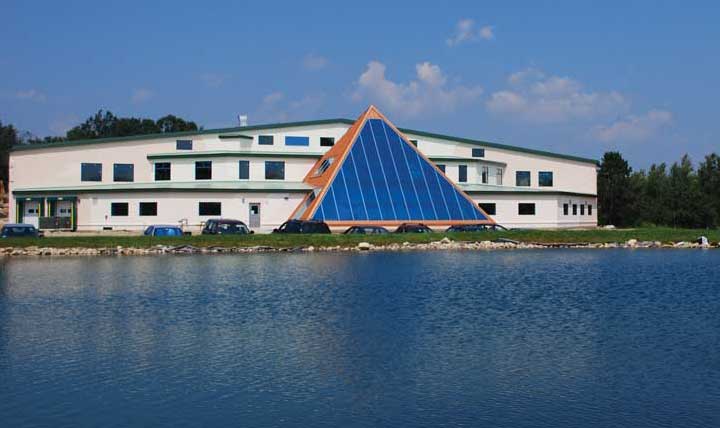
In addition to these religious institutions, there are commercial ones. This is where the boundaries really become porous. As mentioned above, Salem hosts numerous metaphysical bookstores. Bender mentions Seven Stars Bookshop in Cambridge and how it, along with other places like grocery stores, yoga studios, and health fairs, creates a network of commercial institutions that supply Metaphysicals with the goods and services they consume in the practice of their spirituality. In addition to these types of commercial enterprises, Salem offers us the opportunity to delve one level deeper to see the institutions that supply these independent companies. Salem is home to the national headquarters of Azure Green, one of the largest distributors of spiritual and occult products in the world. Housed in a building that includes a multi-story glass pyramid, Azure Green supplies the majority of the material sold by independent metaphysical bookshops. Combined with New Leaf Distributing, the nation’s largest metaphysical book and media distributor located just outside of Atlanta, these two companies homogenize the goods each store has to offer the metaphysical community. Thus, while the inside of the Bodhi Tree in Los Angeles may differ from Magus Books in Minneapolis, the majority of the books and goods sold in each are identical. Nevertheless, these stores also supply meeting spaces for discussion groups, tarot card readings, or ritual practice. Thus, while they are a commercial enterprise, they routinely house individual and group spiritual practices. Even non-metaphysical bookstores often house discussion groups for Metaphysicals. The now struggling Border’s Bookstores are host to a variety of Metaphysicals who use their stores and their coffee shops as meeting spaces.

A final example worth mentioning is the internet. While not of central focus to Bender’s study, the internet is probably the most important place that Metaphysicals use to build and coordinate their communities. Here certain websites become significant “institutions” for information exchange, community discussion, and meeting coordination. While some are organized by tradition, such as WitchVox, which allows pagans worldwide to meet and exchange messages and files, others are organized by geographic location, such as Meetup, which is used for people to create affinity groups and then meet in the non-virtual world. On this website one can find local yoga, astrology, or alternative health groups.

The differences between various metaphysical traditions are collapsing just as quickly as are the distinctions between religious and secular institutions that many religion scholars study. The boundaries between New Age practice, neopaganism, and yoga, for instance, are quite porous, as are the designations between what is and what is not religious. The “spiritual but not religious,” as Bender correctly notes, still depend on various institutions to maintain their practices and communities, but they do so in unusual ways. Ellwood is correct when he writes that people “active in religious or other larger meaning-giving organizations, are happier and healthier than solitaries or those who know only casual and informal relationships.” Yet how these solidarities manifest will continue to evolve and change in unexpected ways. As our field continues to grapple with these changes, it will be interesting to see how our methods attempt to capture these networks and communities. Ellwood ends his essay about the future of the Theosophical Society noting that it is “exciting to have the privilege of living in such times of change and challenge.” I think the same can be said for our field too!