Tampilkan postingan dengan label secularization. Tampilkan semua postingan

Senin, 31 Januari 2011

Michael Vick and the Politics of Prison Redemption

Paul Harvey

I always like it when someone comes up with a title guaranteed to drive a little blog traffic. The present title comes from Jennifer Graber, Professor of Religious Studies at Wooster College and author of the just-published The Furnace of Affliction: Prisons and Religion in Antebellum America. In her piece today for History News Network, she uses the Michael Vick saga, and the deep ambivalence about punishment and redemption, as a contemporary case study to investigate the roots of this ambivalence. A little excerpt here:

In round after round, the reformers claimed that a Christian nation necessarily supported criminal punishments designed first and foremost for reformation. Officials retorted that public safety demanded a realistic approach to corrections, one that used bodily punishments and shame to put unrepentant inmates in their proper place. This endless debate gave us the prisons we have today, institutions caught between simultaneous impulses to punish and redeem.

More on the book here, and below:

Focusing on the intersection of Christianity and politics in the American penitentiary system, Jennifer Graber explores evangelical Protestants' efforts to make religion central to emerging practices and philosophies of prison discipline from the 1790s through the 1850s.>Initially, state and prison officials welcomed Protestant reformers' and ministers' recommendations, particularly their ideas about inmate suffering and redemption. Over time, however, officials proved less receptive to the reformers' activities, and inmates also opposed them. Ensuing debates between reformers, officials, and inmates revealed deep disagreements over religion's place in prisons and in the wider public sphere as the separation of church and state took hold and the nation's religious environment became more diverse and competitive. Examining the innovative New York prison system, Graber shows how Protestant reformers failed to realize their dreams of large-scale inmate conversion or of prisons that reflected their values. To keep a foothold in prisons, reformers were forced to relinquish their Protestant terminology and practices and instead to adopt secular ideas about American morals, virtues, and citizenship. Graber argues that, by revising their original understanding of prisoner suffering and redemption, reformers learned to see inmates' afflictions not as a necessary prelude to a sinner's experience of grace but as the required punishment for breaking the new nation's laws.

Jumat, 30 Juli 2010

The Costs of Secularism

Janine Giordano Drake

To follow up on my story from a few weeks ago, the University of Illinois' Faculty Senate responded to the poor media attention and spontaneous protest among alumni and students about the firing of our adjunct professor, Kenneth Howell. They decided to re-hire him. The Faculty Senate resolved that it was the relationship with Newman that was the problem. Said Professor John Prussing of the faculty senate, "We thought the basic problem was a structural one, having nothing to do with Mr. Howell per se. When one has two employers, the missions of each may not always agree." Prussing went on to say the relationship was "pretty much an anachronism that goes back 40 years." Howell will be hired by the university as an adjunct in Catholic Studies, and paid $10,000 per semester to teach one course in Catholic Thought. The local newspaper article does not consider whether he will be issued any other courses, because Newman supported him to teach more than the one class. It doesn't sound to me like a professor with two PhDs, seminary training, and over two decades of teaching experience and publications would want to take an adjunct position with the option of teaching only one class. What I learn from this story is not how magnanimous the University turned out to be but how hard it must be to get work when you are a theologian interested in engaging with public school students about big ideas.

I am glad that not only our university community but people all over the country have been discussing this story as a philosophical question of secularism in higher education, and surely this firestorm was partially generated by our blog. Inside Higher Ed put together an excellent story about this which came out the same day as my piece in Religion Dispatches. My point a few weeks ago was that theology (even confessional theology) is an important, worthwhile area of study, but it is extremely expensive when not subsidized by either religious institutions or public schools. As I complete my dissertation at the boundaries of US political history, "lived religion," and the history of theology in the late nineteenth and early twentieth centuries, I find myself wishing every day that I had more access to theology courses taught by theologians. I study belief in the working class Religious Left of late nineteenth and early twentieth century--how, why, and to what extent, working class Catholic and Protestants changed the way they understood wealth accretion and the sin of materialism within the practice of Christianity. I do not believe that the history of theology has all the answers to my historical questions, but my project is deeply enriched by studies in theological history. This area of intellectual history, though made popular again by scholars like George Marsden and Mark Noll, is so rarely touched by public school historians. Many of us public school historians are probably like me--never trained in the subject because we attended militantly secular public schools all our lives. (My high school did not allow the mention of Christmas.)

And yet, this version of secularism that has prevented schools from providing courses in theology has been changing, even noticeably, over the course of my 27-year lifetime. Contrary to the sentiments of our Faculty senator, it is quite the opposite of "anachronistic" for public school funds to support religious institutions. It is true that this practice is old. According to Andrea Turpin, historian of secularism in higher education who commented on my Religion Dispatches article,

"The plan of inviting diverse theological institutions to offer classes on public university grounds dates back to Thomas Jefferson’s original design for the University of Virginia—a self-consciously secular institution. He believed this plan would maintain the neutrality of the state institution while providing the services desired by students. In my own research I have encountered the same plan pursued in the past to varying degrees at the University of Michigan, the University of Toronto, and the University of California, the latter of which touted its secularism very highly. Other examples may exist as well."

But on top of the fact this system has been around since the inception of American liberal arts education, recent constitutional debates over school vouchers affirm that religious institutions can be educators in a liberal democracy. As of 2002 in Zelman v. Simmons-Harris, the courts established that public funds could be invested in private, religious institutions as long as those institutions' aim was education and passed a particular set of guidelines. As Stanley Fish said in his op-ed, "Is Religion Special?" for the New York Times this past Monday, the establishment clause has been "pretty much rendered null" in areas of public education. Religion is now understood as one set of perspectives on the world--“just another discourse, no different from any other.” Fish challenges us to consider whether this is a fair category to place what is sometimes a totalizing belief system that affirms “a fidelity to an authority and to a set of imperatives that exceed, and sometimes clash with, what is required by the state.” His points here are excellent and the article could serve as a very useful launching pad for discussions about what religion is.

However, I would still argue that theological studies courses, even those taught by confessional theologians and sponsored by religious institutions, can do a lot of good in fostering a pluralistic model of cultural, philosophical and religious literacy. As the scholarship in US Religious History trends more toward "lived religion," those of us training at public schools stand to suffer an incalculable loss. This country is profoundly religious and Glenn Beck's popularity should remind us that there is a profound ignorance about what, exactly, religious people believe. The University of Illinois just invested $10,000 into one course called the Introduction to Catholic Thought. It's a shame we cannot do better than that.

Minggu, 11 Juli 2010

Everything is Bigger than Jesus in England

Randall Stephens

A review essay in the July 2 issue of the TLS is well worth the read (though it doesn't appear to be on-line). It gives some perspective on whatever counts as "secularization" in the United States. Theo Hobson discusses Cole Moreton's Is God Still an Englishman? How We Lost Our Faith (but Found New Soul); Peter Hitchens' The Rage Against God; Richard Harries' Faith in Politics: Rediscovering the Christian Roots of Our Political Values; and, weirdly, Brian McLaren's A New Kind of Christianity.

"The English inhabit the ruins of the greatest national religion of modern times," argues Hobson. "The nation's exceptionally close fusion of religion and politics has been crumbling for nearly two centuries, but refuses to collapse and die. It still gives good pomp; the anointed monarch retains a sacramental buzz. This ruin cannot be repaired or restored without two centuries of liberalism being reversed. But nor can it be simply condemned: the country's constitution rests on it, as does English identity."

May 2008 essay in the Sunday Times began with these lines: "Church attendance in Britain is declining so fast that the number of regular churchgoers will be fewer than those attending mosques within a generation, research published today suggests." Roughly 6% of the population attended church in 2006.

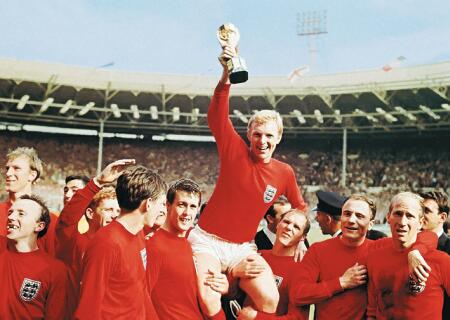
Theodicy anyone? How could a loving God allow England's team to go down in defeat year after year since 1966?

I like what William Butler Yeats had to say on compromise and hedging bets in the divine. "You know what the Englishman's idea of compromise is?" he wrote with a flourish of sarcasm. "He says, Some people say there is a God. Some people say there is no God. The truth probably lies somewhere between these two statements."

Rabu, 19 Mei 2010

Comparative Secularisms in a Global Age

Paul Harvey

Quite a number of excellent scholars, including my friends Tisa Wenger and Winni Sullivan, have essays in this very important new volume to call to your attention: Comparative Secularisms in a Global Age (Macmillan, 2010). Tisa's piece, which I was privileged to read in draft form, is entitled "God and the Constitution: Towards a History of American Secularisms"; in it she discusses a number of nineteenth-century groups who fought to establish "secularism" as a viable philosophy in a very evangelical United States -- including atheists as well as people who effectively could be described as "Protestant but still secularists." What becomes clear, at least from the portions of the book I looked at, is that defining "secularism" is about as tricky as defining "religion," and that, like juxtaposing slavery and freedom, the one cannot be defined without the other.

The book's description:

C
omparative Secularisms in a Global Age
explores the history and politics of secularism and the public role of religion in France, India, Turkey, and the United States. It interprets the varieties of secularism as a series of evolving and contested processes of defining and remaking religion, rather than a static solution to the challenges posed by religious and political difference. It features essays from leading scholars from across disciplines, secular and religious traditions, and regional expertise. The volume illustrates a new approach to the hotly contested relation between political authority and religious tradition.

Jumat, 30 April 2010

Charles Taylor's Secular Age and the American Zodiac


Paul Harvey

In "Higher Times in the Bible Belt," John Schmalzbauer considers why historians have not been discussing Charles Taylor's A Secular Age. Part of it has to do with the relative lack of social history in the work, of the kind that has most interested American religious historians of late. Of the work, Jon Butler has noted the lack of attention to the "experiences of ordinary people."

Butler draws on a deep knowledge of colonial American religion, noting that eighteenth-century observers found a combination of belief and unbelief. Together with recent scholarship on medieval and early modern Europe, such accounts challenge Taylor’s tendency to dichotomize the sacred and the secular.

Noting the interaction of the sacred and secular in the lives and practices of ordinary Americans, Schmalzbauer calls attention to one recent example, in Richard Callahan's Subject to Dust:

Focusing on twentieth-century Appalachia, historian Richard J. Callahan documents the persistence of such beliefs in Work and Faith in the Kentucky Coal Fields. Discussing the role of religion in everyday life, he describes how residents used the signs of the Zodiac to govern sowing and reaping, justifying such practices with appeals to both the Bible and the farmer’s almanac.

Some more potential material along the same lines: John Fea calls attention to the latest edition of Early American Studies, just as I had been using from that journal a very interesting piece, from a few years back, by Sarah Rivett: "Empirical Desire: Conversion, Ethnography, and the New Science of the Praying Indian" (Project Muse access required). Rivett has a fascinating passage about how English apostles of the 17th century sought to "hear" in Indian conversion voices the sound of authentic Christian primitivism; when they heard instead the same Puritan rhetoric that they had taught them, they heard it as false. There's much else of interest there, too.

The new edition of Early American Studies features a piece by T. J. Tomlin, "Astrology's from Heaven not from Hell: The Religious Significance of Early American Almanacs." Hope to get to that soon, or perhaps one of our readers can and give us a synopsis.

Kamis, 05 November 2009

God in the Secular City

Paul Harvey

Over at Immanent Frame, Nathan Schneider has a fascinating interview with the recently retired Harvey Cox, late of Harvard Divinity School. Recommended reading. Here's a little snippet, about his 1965 book The Secular City, whose title in many ways contradicts its contents. I had noted that a long time ago, but this interview partially explains that:

I was never part of the death of God movement. In fact, I tangled with those guys quite a bit. Bill Hamilton and Tom Altizer were friends of mine, but we clearly disagreed with each other. The original title of The Secular City, actually, was “God in the Secular City.” Nobody knows that because the publisher said to me, “No, let’s just call it ‘The Secular City,’” which is what we did. Some people have misread that. They look at the title and they think they know what the book is about. But I was arguing, from a biblical, theological perspective, that God is present in a range of institutions—in family, culture, and politics, as well as in nature—and not just in the religious sector. The relative decline of the institutional power of religion that we were seeing fifty years ago didn’t have to be a cause for panic, because God is present in the secular as well. That isn’t an idea that started with me. It is embedded in the Bible’s God of history, a God to be discerned and responded to in the world.

Selasa, 06 Oktober 2009

Spiritual Machines


Paul Harvey

Immanent Frame has just put up an excellent interview with John Modern, author of an article we've blogged about here briefly before, "Evangelical Secularism and the Measure of Leviathan,"Church History, December 2008, and also author of Haunted Modernity: The Metaphysics of Secularism, forthcoming from University of Chicago Press. The interview provides a quick user-friendly guide to some of his basic ideas and approaches. A brief excerpt:

JLM: I see the threatening nature of my work sometimes in my students. I’m sure many religious studies professors will say that. We are historicizing religion and that can pose a challenge to students about the newness or integrity of their own piety. But more often, I’m attempting to threaten existing scholarship in American religion about the ways we tell the grand narrative of the past two or three centuries. Evangelicalism, liberal Protestantism, Catholicism, and so forth, are often seen as threads of a larger picture, but threads that are nevertheless distinct. What I’m really interested in doing is asking whether they have more in common with one another than not.

Senin, 13 Juli 2009

Will the Union Rise Again?


Paul Harvey

Recently I was (at last) completing Kip Kosek's Acts of Conscience: Christian Nonviolence and Modern American Democracy (Columbia University Press) -- about which more soon. Today's post is not about his book, though, but more about a tale of two seminaries.

In tracing the history of Christian radical pacifism (particularly individuals associated with the
Fellowship of Reconciliation), the importance of Union Theological Seminary in New York comes up time and again. In the conclusion, Kosek notes that "the waning of liberal Protestantism in the second half of the twentieth century, coincident with the eclipse of political liberalism, is one of the great puzzles of modern American history, but whatever its complex causes, that trend damaged Christian non-violence severely." While FOR leaders were consistent critics of liberal Protestantism, they nevertheless depended on the liberal Protestant tradition for the "institutional network of churches, seminaries, student groups, journals, and other forums that
supported the Fellowship's activities and occasionally produced truly radical religionists."

By the late 1960s, "that network was fraying," and so was Union, a symbol of the "dimunution of liberal Protestantism's intellectual and institutional resources, at the same time that conservative evangelicals wre organizing for a political resurgence . . . " Kosek's conclusion thus joins, and adds to, scholarly analyses of a great transformation in the American political (and religious) fabric in the late 1960s and 1970s. The largely urban warriors of Kosek's text were replaced by the (largely) suburban warriors of the new age of conservatism.

As it happened, while reading over these passages I received in the mail the new history of Southern Baptist Theological Seminary (in Louisville) by the historian Gregory Wills: Southern Baptist Theological Seminary, 1859-2009 (Oxford, 2009). I read a proposal for this book several years ago, and since then have been looking forward to its publication.

Not just another commissioned institutional history, this is an outstanding work of scholarship by someone who knows the sources deeply and mines them extensively. Southern Seminary barely survived the Civil War and Reconstruction years, and again it struggled through the Depression and World War Two (just when Union was at its peak, with Reinhold Niebuhr leading the charge). By the late twentieth century, however, Southern had risen to become the largest Protestant theological institution in the United States. A painful struggle through the 1980s and 1990s resulted in a triumph for conservatives in the denomination, and for its current president R. Albert Mohler. The shifting of the American theological center of gravity from Niebuhr and his generation to Mohler and his marks the same kind of transformation (I think) that political historians such as Lisa McGirr, Donald Critchlow, and many others have tried to capture in their works.

A brief description from Oxford captures the main theme:

With 16.3 million members and 44,000 churches, the Southern Baptist Convention is the largest Baptist group in the world, and the largest Protestant denomination in the United States. Unlike the so-called mainstream Protestant denominations, Southern Baptists have remained stubbornly conservative, refusing to adapt their beliefs and practices to modernity's individualist and populist values. Instead, they have held fast to traditional orthodoxy in such fundamental areas as biblical inspiration, creation, conversion, and miracles. Gregory Wills argues that Southern Baptist Theological Seminary has played a fundamental role in the persistence of conservatism, not entirely intentionally. Tracing the history of the seminary from the beginning to the present, Wills shows how its foundational commitment to preserving orthodoxy was implanted in denominational memory in ways that strengthened the denomination's conservatism and limited the seminary's ability to stray from it. In a set of circumstances in which the seminary played a central part, Southern Baptists' populist values bolstered traditional orthodoxy rather than diminishing it. In the end, says Wills, their populism privileged orthodoxy over individualism. The story of Southern Seminary is fundamental to understanding Southern Baptist controversy and identity.

Southern Baptist polity gave populism power, and this populism frequently resulted in the expulsion of those who were thought to deviate from evangelical orthodoxy. In recent years, this led to an almost complete turnover of the seminary's faculty as the seminary's identity was brought in line with the orthodoxy of the "conservative resurgence" in the Southern Baptist Convention.

In an interview about his book,
Wills celebrates the struggle of orthodoxy against liberalism. He attributes the success of Southern to its periodic return to its roots, one that often involves some painful pruning but protects orthodoxy from decay. Southern Baptist expatriates and exiles from that period, obviously, view things differently, and the pain they experienced still can be felt (as in one personal reflection of a pre-1993 alumnus here). To his credit, Wills gives those voices full and fair coverage in his sections on what Southern Baptists used to refer to as "the controversy" (or did before "the controversy" was basically settled).

Because I admire Wills's scholarly research, but lament the outcomes that he celebrates, it makes me wonder what would be (or perhaps already is) the "institutional network" for our generation that would sustain the creative acts of conscience that Kosek traces in his book. The theologians and historians Gary Dorrien and Serene Jones, both of Union, as well as Cornel West reflect on that in this Bill Moyers interview. In particular, Dorrien has been instrumental in rescuing liberal theology from the caricatures to which it has been subjected. Perhaps the Union will rise again?

The pacifist radicals in Kosek's book were rather straight-laced, even conservative, in personal behavior, and their gender politics were pretty conventional. But they also certainly burst orthodoxies of both right and left, and ultimately served as a key transitional generation in bringing the "moral jujitsu" of active nonviolence resistance to the civil rights generation of the 1950s and 1960s. They weren't orthodox by anyone's standards. But really, what good is "orthodoxy," if it doesn't lead to justice?

Sabtu, 02 Mei 2009

Beyond Belief? Secularity and Scholarly Darlings

Paul Harvey

Nathan Schneider, "Beyond Belief: Research in Religion Goes After a New Target, The Secular," takes up a topic we've discussed here some before: the new scholarly research into secularity. We hit this topic before in covering Phil Zuckerman's new book Society Without God, and also in looking at the rise of the "nones" in surveys such as ARIS (that is, those answering "no religion" in surveys about personal religiosity). Recent commentors have noted that most of the growth of the nones took place from 1990 to 2001, and growth has leveled off since then, so the media hype about the recent study has been (surprise) as much hype as substance. Nonetheless, careful studies of un-belief are overdue and welcomed. Schneider surveys a variety of recent studies, the most interesting of which suggest how the boundary between being religious and irreligious is far more permeable than generally assumed:

Phil Zuckerman's study in Scandinavia, in fact, suggests that these distinctions aren't as clear as one might expect. His interviews show the extent to which, even in the absence of traditional supernatural beliefs, the subjects' religious heritage provides them with moral guideposts and cultural habits. Not believing in God doesn't stop most Danes and Swedes from considering themselves Christians.

Religions, we are beginning to learn, can be better understood by paying attention to what irreligion looks like. Probe irreligion, and you encounter not only new insights about how it works in people's lives, but also echoes of the very religions it defines itself against.

Before getting too comfortable with their apparent newfound status, however, the new secularists still have to contend with some fundamental realities, including the (still) remarkably high rates of religiosity in America. In short, other ways of looking at the evidence suggest that we're about as close to being "post-Christian" as we are to being "post-racial." Stephen Prothero addresses this in "Post-Christian: Not Even Close," where he suggests:

What the rise of the "nones" shows us is not how American Christianity is declining but how it is changing. The data tell us that Christians are increasingly likely to describe themselves as spiritual rather than religious, that they are increasingly wary of labels and institutions, and that they identify their faith less and less with "organized religion" and more and more with the personal power of Jesus himself.

What the data do not tell us is that the United States is becoming "post-Christian." If you meet a random American walking down the street, the odds are only one in 62 that he or she will self-identify as atheist or agnostic. . . . Meanwhile, Christianity remains, for good or for ill, a vital political force, not just on the right but also on the left, and the Christian Bible remains the scripture of American politics, invoked thousands of times a year on the floor of the U.S. Congress.

Over the past two decades, I have taught the "Christian America" debate to hundreds of students in my Religious Studies courses. When we finish our discussion, I call the question. My Christian students almost invariably describe the United States as a multicultural nation of religions, but my Jewish students tell me you have to be blind (or Christian) not to see that this is a Christian country. Here Christmas, not Passover, is a national holiday, and the only question about our presidents' religious affiliation seems to be from which Christian denomination they will come.

Prothero and others (including some posts here) have pointed out that the real news of the ARIS survey is the the shift of Catholicism from Northeast to Southwest, and the continuing decline of mainstream Protestantism and rise of evangelical faiths (born-agains now constituting 34% of Americans).

All of which makes me think of the protagonist in my favorite Elvis Costello song "Beyond Belief," from his Imperial Bedroom:

History repeats the old conceits
The glib replies, the same defeats
Keep your finger on important issues
With crocodile tears and a pocketful of tissues . . .

I've got a feeling
I'm going to get a lot of grief
Once this seemed so appealing,
Now I am beyond belief.

Selasa, 19 Februari 2008

$ecularism by the Numbers

BY RANDALL J. STEPHENS

Alan Wolfe's essay in the Atlantic Monthly, "The Coming Religious Peace" (March 2008), is a fascinating read. (See also, Jane Clayson's discussion with Wolfe on WBUR's On Point.) Amid the hubub about devotion and doubt, Wolfe uses a recent Pew survey to chart some trends in world religion. I had thought that the secularization thesis was dead, buried, and long decomposed by now, but the Pew survey and Wolfe's take on it shed new light on old questions.

Wolfe's remarks on the future of belief:

A lot rides on which of these predictions turn out to be true, and on how and where different religions bump up against one another. A common worry is that intense competition for souls could produce another era in which religious conflict leads to religious war—only this time with nuclear weapons. If we are really in for anything like the kind of zeal that accompanied earlier periods of religious expansion, we might as well say goodbye to the Enlightenment and its principles of tolerance.

The Pew chart that matches a "religiosity scale" and "per capita GDP," gives new meaning to the shop worn concept of "American exceptionalism."

Sure, Pentecostalism, Islam, and Mormonism are on the rise, but Wolfe cautions, don't count out the growing tide of secularism.

. . . the idea of inevitable secularization has fallen out of favor with many scholars and journalists. Still, its most basic tenet—that material progress will slowly erode religious fervor—appears unassailable. Last October, the Pew Global Attitudes Project plotted 44 countries according to per capita gross domestic product and intensity of religious belief, gauged by the responses to several questions about faith (a rendition of the Pew data appears on the opposite page). The pattern, as seen in the Pew study and a number of other sources, is hard to miss: when God and Mammon collide, Mammon usually wins.