Tampilkan postingan dengan label randall's posts. Tampilkan semua postingan

Kamis, 14 Juli 2011

It's mine! (America, that is)

Randall Stephens

The late D. James Kennedy hosted and broadcast his "Reclaim America for Christ" campaign. His efforts won the ire and disgust of commentators across the center and left of the political spectrum. "Reclaim" it from whom? Who would be excluded?

So it's not all that surprising that "Take Back America" crusades and "The Response," Rick Perry's August 6 rally in Houston, which Paul wrote a little about below. Here's the official line from the website for the gathering:

On August 6, the nation will come together at Reliant Stadium in Houston, Texas for a solemn gathering of prayer and fasting for our country.

We believe that America is in a state of crisis. Not just politically, financially or morally, but because we are a nation that has not honored God in our successes or humbly called on Him in our struggles.

According to the Bible, the answer to a nation in such crisis is to gather in humility and repentance and ask God to intervene. The Response will be a historic gathering of people from across the nation to pray and fast for America.

The first line of the last paragraph probably wouldn't set well with an Anabaptist, liberal Protestant, or just about anyone left of Mike Huckabee. But it does bring up an interesting matter about evangelicals' relationship with their country.

I'd like to see the Pew Forum on Religion and Public Life ask a broad sample of citizens some questions related to God-and-country matters. How about: Do you believe that America has a special relationship with God? Does the Constitution describe America as a Christian nation? Does God punish countries for national sins? Has America been chosen by God for a special purpose? (Maybe those are all too rhetorical!)

Kamis, 30 Juni 2011

Call for Proposals, SHA 2012, Mobile, AL

Randall Stephens

Just received some more directions from Marjorie Spruill and Don Doyle on the 2012 SHA conference. They encourage those of us on the program committee to "help create a rich and broad program for 2012 by soliciting exciting proposals particularly in your field." My field, being your field, dear reader, so let's get at it!

Here's the general note about the Mobile conference:

The Program Committee for 2012 invites proposals on all topics related to the history of the American South from its pre-colonial era to today. In addition, for the 2012 meeting in Mobile, it extends a special welcome to proposals relating to:

~ Mobile and the Gulf South

~ International, transnational, or comparative approaches

~ 2012 as an anniversary of major historical events, publications, etc.

Any religious history anniversaries of note? How about the activities of Gulf South missionaries in the Gilded Age and Progressive Era? Religious responses to natural disasters? Religion and labor radicalism? Big Oil and the churches? . . .

Rabu, 22 Juni 2011

Rock around the Pew

Randall Stephens

For those of you who work at the intersection of southern history, religion, and music, the H-Southern Music email list just might be for you. I recently posted a question to list members and got some great feedback.

I asked about the work I'm doing for a chapter/article on the interconnections of early rock music and revivalistic religion/hot protestantism/pentecostalism . . . etc. (I wrote a little about this in the last chapter of my book The Fire Spreads, but I'll be exploring this in much greater detail now.) I asked list members about sources--primary or secondary . . . interviews, archives, what have you--that they could suggest. Here are a few of the items that I have found useful mixed in with those that I only learned about through the suggestions of list members (in no particular order). Anything else to add?

Walt Trott and Bill Carlisle, Sister Sunshine: The Martha Carson Story (1st Books Library, 2000)

Macel Ely II, Ain't No Grave: The Life and Legacy of Brother Claude Ely (Dust to Digital, 2010)

Lynn Abbott, I've Got Two Wings (Casequarter, 2009)

Rodney Crowell, Chinaberry Sidewalks (Knopf 2011)

Russ Cheatam, Bad Boy of Gospel Music: The Calvin Newton Story (University Press of Mississippi 2003)

Joe Moscheo, The Gospel Side of Elvis (Center Street, 2007)

Vestal Goodman with Ken Abraham, Vestal!: "Lord, I Wouldn't Take Nothin' for My Journey Now" (WaterBrook Press, 1999)

Bob Terrell, The Life and Times of J.D. Sumner: The World's Lowest Bass Singer (Daywind, 2009)

David Stowe, No Sympathy for the Devil: Christian Pop Music and the Transformation of American Evangelicalism (UNC Press, 2011)

Gayle Wald, Shout, Sister, Shout!: The Untold Story of Rock-and-Roll Trailblazer Sister Rosetta Tharpe (Beacon, 2007)

Jamie Buckingham, O Happy Day: The Happy Goodman Story (Word Press, 1973)

Jerma Jackson, “Sister Rosetta Tharpe and the Evolution of Gospel Music,” Religion in the American South: Protestants and Others in History and Culture, eds. Beth Barton Schweiger and Donald G. Mathews (Chapel Hill: University of North Carolina Press, 2004)

Paul Oliver, Songsters and Saints: Vocal Traditions on Race Records (Cambridge: Cambridge University Press, 1984)

Stephen R. Tucker, “Pentecostalism and Popular Culture in the South: A Study of Four Musicians,” Journal of Popular Culture 16 (Winter 1982)

Jimmy Wayne Jones, Jr., “Modern American Pentecostalism: The Significance of Race, Class, and Culture in Charismatic Growth, 1900-2000” (Ph.D. diss., University of Arkansas, 2002)

Johnny Cash, Man in Black (Grand Rapids: Zondervan, 1975)

Tammy Wynette with Joan Dew, Stand by Your Man (New York: Simon and Schuster, 1979)

Charles Sawyer, The Arrival of B. B. King (Garden City, N.Y.: Doubleday and Company, Inc., 1980)

Myra Lewis with Murray Silver, Great Balls of Fire: The Uncensored Story of Jerry Lee Lewis (New York: William Murrow and Company, Inc., 1982)

Charles White, The Life and Times of Little Richard: The Quasar of Rock (New York: De Capo Press, 1994)

Vince Staten, The Real Elvis: Good Old Boy (Dayton, Oh.: Media Ventures, 1978)

Van K. Brock, “Assemblies of God: Elvis and Pentecostalism,” Bulletin of the Center for the Study of Southern Culture and Religion 3 (June 1979)

James R. Goff, Jr., Close Harmony: A History of Southern Gospel (Chapel Hill: University of North Carolina Press, 2002)

Peter Guralnick, Last Train to Memphis: The Rise of Elvis Presley (Boston: Little, Brown and Company, 1994)

Nick Tosches, Hellfire: The Jerry Lee Lewis Story (New York: Grove Press, 1998. I'm using this one for my fall 2011 course on the history of rock)

Ann Rowe Seaman, Swaggart: The Unauthorized Biography of an American Evangelist (New York: Continuum, 1999)

Jimmy Swaggart, To Cross a River (Plainfield, NJ: Logos International, 1977)

Senin, 06 Juni 2011

Foxed Paper and the Slight Smell of Mold: Reading, Browsing Actual Print Periodicals

Randall Stephens

Last week I visited the Midwestern Baptist Theological Seminary Library in Gladstone, Mo, just north of Kansas City. The staff was terrific and a bonus was an enormous collection of discarded books for sale--$1 or 50 cents/ea. I picked up Tim LaHaye's Battle for the Mind, and, oddly enough, a copy of Gordon Wood's Empire of Liberty.

Ideally, I hoped to browse through some denominational magazines and periodicals from the 1950s and 1960s for my next project on Christianity and rock/anti-rock. I was pleasantly surprised. The library had loads of Baptist and SBC serials dating back to the early years of the Cold War. Some of the titles I browsed through: Baptist Quarterly Review; Home Life; Baptist Training Union Magazine; The Student (A Baptist-style Jesus People-ish magazine, which Sam Hill actually wrote in). In addition to all that there were extensive runs of Christianity Today and Christian Century, along with quite a few other gems.

The Southern Baptist Periodical Index was a real help. But blast the indexers for not cataloging what I wish they had! (Page after page after page on "Missions.") I have seldom used the Index to Religious Periodical Literature (Chicago : American Theological Library Association.) But it's a tremendous resource for work on post-war American religion. And it gives a pretty good indication of the more popular magazines and journals that circulated at the time. See below the first page of the edition for 1971, listing a range of publications. (Click to enlarge.)


So, here are a few questions for all the RiAH research nerds and archive troglodytes out there: What do you suppose were the largest circulating and/or most influential denominational periodicals of the 1950s and 1960s? Which ones are the best for getting a sense of what men, women, and children in the pews were thinking? Why?

Sabtu, 07 Mei 2011

Not into History

Randall Stephens

We've been having a lively discussion on this blog, thanks to Paul's post, and there have been other discussion raging in the blogosphere about David Barton and the uses and abuses of history. The selective use of anecdotes, prooftexts, and the decontextualized way of doing history are closely connected. And, thanks to David Barton and his recent headline grabbing, we have a case in point.

Suppose an amateur Bible scholar said "I know everything there is to know about the Old Testament books of Genesis and I and II Chronicles." Then imagine you asked him/her about what he/she knew about Bronze and Iron Age religion and society, or the development of monotheism in the ancient Near East, or the Epic of Gilgamesh, or the original languages, or the extensive secondary literature written by thousands upon thousands of scholars who know way more about the subject. Then suppose he/she replies "no" on every count. Now, how is it again that this person really knows something important about Genesis and I and II Chronicles? This is a Theron Ware situation if there ever was one. Ignorance of context sometimes gives people remarkable confidence!

Barton does not recognized the idea that the past is like a foreign country. Instead Barton tends to flatten out time and space and make it almost seem as if the Founders are our contemporaries, motivated by the same concerns that motivate us now. Yet people in the past--whether we're talking about leaders of Bronze Age tribes or bewigged 18th century nabobs who tinkered on their mansions, read Montaigne in their spare time, or enjoyed arm-chair speculation about nature and providence--are not the same as us. This seems like a kindergarten point, but it's apparently lost on David Barton. (See his famous and repeated misuse of the word "seminary," in which he makes no effort to explain how that word meant something markedly different in the 18th century.)

At the Way of Improvement Leads Home John Fea makes an excellent, related point about context and Barton's ignoring an avalanche of inconvenient information:

I challenge you to go to Wallbuilders website and find much of anything about the fact that the many of the most important founding fathers rejected orthodox Christian doctrines such as the Trinity and the resurrection of Jesus. Good luck finding any sustained discussion about Thomas Jefferson and James Madison's successful attempt to separate church and state in colonial Virginia or the fact that their efforts were supported by evangelical Baptists with a theology similar to Barton's. These facts of history do not help Barton promote his ideological agenda, so why bother with them?

Right on.

Nearly any trained historian worth his or her salt who takes a close look at Barton and his hyper-politicized work will see glaring gaps in what he writes and talks about. He dresses his founders in 21st-century garb. He's not interested in knowing much about the history of colonial America or the US in the early republic. Why? Because he's using history to craft a very specific, anti-statist, Christian nationalist, evangelical-victimization argument in the present. (Remember the many unconfirmed quotations Barton used in the 1990s? He did so because, first and foremost, he was trying to make a political point.)

In history circles this is what we call "bad history."

Selasa, 26 April 2011

2012 Southern Historical Association Meeting

Randall Stephens

I'm serving on the program committee for the Southern Historical Association meeting, Mobile, Alabama, November 1-4, 2012. Paul tells me this will involve looking over an avalanche of proposals in a sealed bunker ten miles under the 2011 conference hotel. But he says it is fun, and I believe him. I'll do my utmost to get some good religion panels into the mix.

Here's the CFP:

SHA 2012, Mobile, Alabama:

The Program Committee invites proposals on all topics related to the history of the American South from its pre-colonial era to today. In addition, for the 2012 meeting in Mobile it extends a special welcome to proposals relating to:


* Mobile and the Gulf South
* International, transnational, or comparative approaches
* 2012 as an anniversary of major historical events, publications, etc.

The Program Committee accepts proposals for single papers but encourages session proposals that include two or three papers. Individuals interested in using the SHA website to organize a session with complementary papers may send an e-mail to Sheree Dendy with their name, e-mail address, and proposed paper topic. She will post this information on the SHA website, which others seeking compatible co-panelists may consult. Click here to view current postings of those seeking related proposals.

According to SHA policy, no one who appeared on the previous two programs, those at Charlotte and Baltimore, can be part of the program in Mobile.

Those submitting proposals should include suggestions of people who would be appropriate as commentators/chairs but not issue invitations. The Program Committee will select and invite a chair and usually two commentators. Note: this policy is new for the 2012 program.

No two people from the same institution can be on the same session.

See instructions for submitting proposals online, click here.

The deadline for proposals for the 2012 program is September 1, 2011.

Proposals in Latin American and Caribbean should be submitted to the section sub- committees. Click here.

2012 Program Committee Co-Chairs: Don Doyle and Marjorie Spruill University of South Carolina

Senin, 18 April 2011

Food and no Food

Randall Stephens

Eating . . . and not eating. Since the post from the other day was about religion and weight gain, here's another about relieving world hunger and fasting for a cause.

NPR ran an intriguing story the other day about Former Congressman and director of Alliance to End Hunger Tony Hall, who "has joined dozens of religious leaders and thousands of supporters to protest budget cuts that they say will unfairly affect the poor." It reminded me of George McGovern's talk I heard at the University of Florida nearly a decade ago. The lecture was sponsored by the History Department. McGovern pondered his religious upbringing, discussed what the US could do to alleviate hunger around the globe, and spoke briefly about how the 9/11 attacks were changing America and its relationships with other nations. (I'm also thinking of activist and ag specialist Glen Fell who spoke at ENC the other day on his work training subsistence farmers around the globe in an effort to reduce hunger.)

Back to the NPR piece:

Pam Fessler, "Ex-Congressman Fasts To Protest Budget Cuts," NPR, April 17, 2011

PAM FESSLER: Meet Tony Hall. A few weeks ago, the 69-year-old might have been called a little pudgy. Today, he hikes up his pants before he sits.

Mr. HALL: I am the executive director of the Alliance to End Hunger.

FESSLER: He's also a former Democratic congressman from Ohio who made headlines in the 1990s by going on a 22-day hunger strike. He was protesting what he saw as congress's failure to address the problems of the poor. And today?

Mr. HALL: Well, I'm in my 18th day of a hunger fast. I started off as a water-only fast and now I'm doing liquids. And really what we're trying to do is raise awareness.

FESSLER: So far, he's lost about 18 pounds. But Hall says it's not so bad, especially when thousands of people around the world die each day of malnutrition and millions of Americans worry about their next meal. He worries what will happen if lawmakers accept proposed cuts in food stamps and foreign aid.

Mr. HALL: They have a moral obligation when they look at this budget not only to cut the budget but to cut it in a righteous way. . . .

Sabtu, 16 April 2011

The Scandal of the Evangelical Behind

Randall Stephens

I've been having the students in my Religion and American Culture class summarize news stories related to the course. One brought in a feature on an interesting study--presented at the American Heart Associations Nutrition, Physical Activity and Metabolism/Cardiovascular Disease Epidemiology and Prevention 2011 Scientific Sessions in Atlanta. It reveals that young people who go to church regularly are more likely to tip the scales as adults than their non-religious counterparts.

Jeannine Stein of the Los Angeles Times reports:

An inactive lifestyle, watching TV and eating too many fatty foods are all to blame for many Americans being overweight and obese. We may have to add religion to that list. A study finds that young adults who regularly attend religious activities may be more prone to obesity by middle age than their nonreligious peers. . . . "It's possible that getting together once a week and associating good works and happiness with eating unhealthy foods could lead to the development of habits that are associated with greater body weight and obesity," said lead author Matthew Feinstein of Northwestern Medicine, in a news release. "We don't know why frequent religious participation is associated with development of obesity, but the upshot is these findings highlight a group that could benefit from targeted efforts at obesity prevention."

My one question . . . Why?

Rabu, 06 April 2011

Jonathan Walton Speaking at ENC

Randall Stephens

Jonathan Walton (Assistant Professor of African American Religions, Harvard Divinity School) will give a public lecture on "The Preachers' Blues: Reclaiming Authority on Wax," Wednesday, April 13, 4:00pm, Shrader Lecture Hall, Eastern Nazarene College, Quincy, MA.

Walton, a social ethicist and African American religious studies scholar, is the author of Watch This! The Ethics and Aesthetics of African American Religious Broadcasting (New York University Press, 2009) a groundbreaking study on religion, media, and theology. Cornel West (Princeton University) describes the book as "the best work we have on the complex dynamics of the Black megachurch phenomenon. Walton is a brilliant cultural critic and courageous prophetic voice!" James Cone (Union Theological Seminary) lauds Watch This! as "An important examination of the Black Electronic Church. Jonathan Walton brings new insights into the major TV evangelists in the African American community."

Professor Walton will speak at ENC on the history of the religious "race" record industry and the the cultural ethos and competing ethical values of black Christian communities during the 1920s and 1930s. Like all forms of mass culture, says Walton,

religious records served multiple purposes and were interpreted by listeners at varying registers. For many, religious recordings were spiritually edifying and liberating, just as they were wildly entertaining. Critics have show that these religious recordings contested the aesthetic values of the black middle class even as they reinforced bourgeois behavioral codes. By turning our attention to the shared interests of male preachers and the recording industry, I describe how sermons stressing personal piety and culturally familiar stereotypes shaped cultural debates concerning the style, content, and purpose of evangelical preaching in the 20th century.

Kamis, 31 Maret 2011

John Fea on the TV

Randall Stephens

RiAH friend and contributor John Fea was recently featured on C-Span's Book TV. Fea appears on a March 18 panel on The Founding Fathers and Religion. He speaks about his new book Was America Founded As a Christian Nation?: A Historical Introduction (Westminster John Knox, 2011). Check the video out here. (Sorry, can't embed it.) Here's the summary:

Authors talked about their books on the American Revolution and role played by religion in the founding of the United States. They also responded to questions from members of the audience. Tatiana van Riemsdijk moderated. The participating authors were: Barbara Clark Smith, author of The Freedoms We Lost: Consent and Resistance in Revolutionary America; John Fea, author of Was America Founded As a Christian Nation?; and John Ragosta, author of Wellspring of Liberty: How Virginia's Religious Dissenters Helped Win the American Revolution and Secured Religious Liberty. "Founding Fathers and Religion" was a panel at the Virginia Festival of the Book in Charlottesville, Virginia, held in the City Council Chambers on Friday, March 18, 2011.

Selasa, 22 Maret 2011

The "Newness" of the 1830s and 40s

Randall Stephens

Today we'll be discussing Paul E. Johnson and Sean Wilentz's The Kingdom of Matthias (Oxford University Press, 1994) in my Forging of an American Nation (1783-1865) class. As most readers of RiAH know, the authors tell the story of a strange religious group and its even stranger prophet, Matthias. The tale of Matthias's Kingdom--rife with "free-lovism," violence, and mystifying, anti-Finneyite beliefs--became front-page news in the 1830s. Early reports from those in my class who have already dug in are positive. One said it seemed a little like a 19th-century E True Hollywood Story.

I picked up a collection of essays, State of Mind: A Boston Reader (1948), at Commonwealth Books here in town last week. It includes wonderful material from the 17th to the mid 20th century. One selection--"The Newness" by Robert Carter, an essay that appears in the November 1889 issue of the Century Magazine--would be a good primary source item to read alongside The Kingdom of Matthias. Carter's sarcastic romp through the reform decades does not deal directly with the hirsute prophet Matthias, but an oddball cast of other wide-eyed dietary, dress, social, and anti-slavery reformers make an appearance in "The Newness." The essay can be read as a local color, skeptical, post-Civil War remembrance of the failures and naivete of reformism.

I include a few passages here:

By the "Newness" I mean a very singular intellectual and spiritual movement which broke out like an epidemic in New England some forty years ago, and ran its course for about ten years, when it subsided and disappeared almost as suddenly as it arose. I call it the
"Newness," because that was the most distinctive term applied to it, and the one by which it was most frequently designated by those engaged in it, though in fact it had no authentic or universally accepted appellation. By outsiders it was generally called Transcendentalism, and its disciples Transcendentalists, and to some extent and at certain periods those terms were used by the disciples themselves. . . .

I have noticed the influence which Unitarianism, Abolitionism, and the study of German literature had in producing the "Newness," and I have mentioned 1835 as about the date of its manifestation. The republication in this country of Carlyle's Sartor Resartus in 1836, and the appearance in the same year of Emerson's Nature, followed rapidly by his other works in the same vein, may be said to have brought the movement to a head, and it soon culminated in the issue of the magazine called "The Dial," in July, 1840, and, shortly after, in the establishment of the Community or Association of Brook Farm, near Boston. . . .

Brook Farm, however, was not the only community which was founded by the disciples of the " Newness." There was one established in 1843 on a farm called Fruitlands, in the town of Harvard, about forty miles from Boston. This was of a much more ultra and grotesque character than Brook Farm. Here were gathered the men and women who based their hopes of reforming the world, and of making all things new, on dress and on diet. They revived the Pythagorean, the Essenian, and the monkish notions of asceticism, with some variations and improvements peculiarly American. The head of the institution was Bronson Alcott, a very remarkable man, whose singularities of character, conduct, and opinion would alone afford sufficient topics fora long lecture. His friend Emerson defined him to be a philosopher devoted to the science of education, and declared that he had singular gifts for awakening contemplation and aspiration in simple and in cultivated persons. He was self educated, but had acquired a rare mastery of English in speech, though his force and subtlety of expression seemed to fail him when he wrote. His writings, though quaint and thoughtful, are clumsy compared with his conversation, which has been pronounced by the best judges to have been unrivaled in grace and clearness.

Mr. Alcott was one of the foremost leaders of the "Newness." He swung round the circle of schemes very rapidly, and after going through a great variety of phases he maintained, at the time of the foundation of Fruitlands, that the evils of life were not so much social
or political as personal, and that a personal reform only could eradicate them; that self-denial was the road to eternal life, and that property was an evil, and animal food of all kinds an abomination. No animal substance, neither flesh, fish, butter, cheese, eggs, nor milk, was allowed to be used at Fruitlands. They were all denounced as pollution, and as tending to corrupt the body and through that the soul. Tea and coffee, molasses and rice, were also proscribed,— the last two as foreign luxuries,— and only water was used as a beverage.

Mr. Alcott would not allow the land to be manured, which he regarded as a base and corrupting and unjust mode of forcing nature. He made also a distinction between vegetables which aspired or grew into the air, as wheat, apples, and other fruits, and the base products which grew downwards into the earth, such as potatoes, beets, radishes, and the like. These latter he would not allow to be used. The bread of the community he himself made of unbolted flour, and sought to render it palatable by forming the loaves into the shape of animals and other pleasant images. He was very strict, indeed rather despotic, in his rule of the community, and some of the members have told me that they were nearly starved to death there; nay, absolutely would have perished with hunger if they had not furtively gone among the surrounding farmers and begged for food. . . .

Brook Farm exploded in 1847 and Margaret Fuller went to Europe, I think it had very little distinctive existence in New England. The aspiring youth of New England seem now to be contented with making their way in the world very much as other people make it, without seeking for any fundamental change in the established order of society.

Rabu, 02 Maret 2011

Interview with Jennifer Graber

Randall Stephens

[I crosspost here a selection from a short interview with Jenn Graber. The full interview is at the HS blog.]

"Americans incarcerate," writes Jennifer Graber in her new engaging book The Furnace of Affliction: Prisons and Religion in Antebellum America (University of North Carolina Press, 2011). "Though the United States has less than 5 percent of the world's population," she writes, "it has almost a quarter of its prisoners." Such facts make the long history of American prisons and their maintenance all the more interesting. Graber, an assistant professor in the department of religious studies at the College of Wooster, analyzes the "intersection of Christianity and politics in the American penitentiary system."* Her interesting account also looks at the religious dimensions of discipline and the ideas that undergirded punishment from the 1790s to the 1950s.

Randall Stephens: You write that antebellum Americans disagreed on much when it came to prisons, but most “affirmed religion's central importance” to prisons and reform. How was criminal justice “religious” in this era?

Jennifer Graber: If you were concerned about criminal punishment in the early republic, there were lots of things to fight about. Once the states began to build prisons, the big debate was between a discipline out of Pennsylvania that featured total solitary confinement and one out of New York that combined labor in workshops during the day with solitary confinement at night. Partisans for these two systems called the other side un-American and un-Christian. Beyond the rival disciplines, people debated the best way to reform inmates. They argued about what was more important: a good Sunday School teacher in Sing Sing or clean water and decent food in Sing Sing? Without fail, everyone interested in the debate claimed that “religion”—and they used the word “religion” even though they meant variations of evangelical Protestantism—was central to inmate reformation and the overall health of American prisons as strong institutions. What they didn't realize is that their common evocation of “religion” masked significant differences. For instance, they all thought that prison chaplains were necessary, but disagreed—sometimes violently—over the role these ministers should play inside institutions. Or, they all assumed that God ordained the civil authorities to punish lawbreakers, but varied on the question of that punishment’s severity.

Stephens: What kinds of problems did evangelicals target in the prison system? What can we learn about them by the sort of reforms they pursued?

Graber: Their first target was colonial-era punishments, whether it was steep fines, corporal punishments such as whipping or branding, or the gallows. They joined a trans-Atlantic movement to reform punishment and were active in the construction and administration of the first prisons. Protestant evangelicals—and I include many Quakers in this group, which might ruffle some historians’ feathers—envisioned the prison as an ideal site for prompting criminals’ conversion and reformation.>>>

Selasa, 01 Maret 2011

Peter Gomes, Harvard Minister and Theologian, Dies at 68

Randall Stephens

This obituary for Peter Gomes appeared in the Boston Globe this morning. Gomes was a wonderful preacher and author. The sermons I heard him deliver at the Harvard Memorial Chapel were always as memorable as the were filled with meaning.

The Rev. Peter J. Gomes, who was known internationally as Harvard's pastor and was just as pleased to call himself a son of Plymouth, died Monday night at Massachusetts General Hospital. He had suffered a stroke in early December and his death was confirmed by a hospital spokeswoman.

He was 68 and had divided his time and identity between a 1799 house in his hometown and Sparks House, the 19th-century residence reserved for the leader of Memorial Church in Harvard Yard. . . .

Seamus Heaney, the Irish poet and Nobel Laureate, told The New Yorker that the Rev. Gomes's "style is full of cadence, roguery, and scampishness, which is redemptive. With Gomes there is always an element of masquerade as he tempts his audience into complicity."


The man who during four decades at Memorial Church would become known as the conscience and soul of Harvard, was the grandson of a Baptist preacher and was baptized a Catholic.
>>>

Senin, 21 Februari 2011

What Does This Map Tell Us?

Randall Stephens

The other day in my Religion and American Culture class we were covering mid-19th century America. I've found that asking questions about maps and looking at the demographics of the religious landscape can be a helpful in-class exercise. This map of Major Communal Experiments before 1860 comes from the old Mapcentral site, Bedford/St. Martin's. (Click to enlarge.)


(Students should not get the idea that every American sold his/her possessions, took up with the Shakers, and renounced sex. But still there certainly was quite a bit of communal/utopian action.) After we look at the above in class we ask: What accounts for the heavy presence in the North and the absence in the South? Why did utopian experiments thrive in this age? How did these influence society?

Some selected quotes might provide interesting context to the map and give the students something to ponder. (The two I cite here are not exactly representative, but could get the conversation rolling.) See, Ralph Waldo Emerson, who famously rhapsodized to his friend Thomas Carlyle in 1840:

We are all a little wild here with numberless projects of social reform. Not a reading man but has a draft of a new Community in his waistcoat pocket. I am gently mad myself, and am resolved to live cleanly. George Ripley is talking up a colony of agriculturists and scholars, with whom he threatens to take the field and the book.1 One man renounces the use of animal food; and another of coin; and another of domestic hired service; and another of the State; and on the whole we have a commendable share of reason and hope.

From the southern end, have a look at James Henley Thornwell, or George Fitzhugh, who wrote this in Cannibals All! or Slaves without Masters (1857):

Mormonism had its birth in Western New York, that land fertile of isms--where also arose Spiritual Rappings and Oneida Perfectionism--where Shakers, and Millenarians, and Millerites abound, and all heresies do most flourish . . . . Abolition swallows up little isms, and Socialism swallows up Abolition.

Bedford/St. Martin's Make History site provides some of the best map and visual resources for free.

Rabu, 16 Februari 2011

An Interview with Chris Beneke on The First Prejudice

Randall Stephens

About a week ago Paul blogged on Chris Beneke and Christopher S. Grenda's, The First Prejudice: Religious Tolerance and Intolerance in Early America (Univ. Pennsylvania Press, 2011). The edited volume, "presents a revealing portrait of the rhetoric, regulations, and customs that shaped the relationships between people of different faiths in seventeenth- and eighteenth-century America. It relates changes in law and language to the lived experience of religious conflict and religious cooperation, highlighting the crucial ways in which they molded U.S. culture and politics." I recently caught up with Chris by email and asked him some questions about the project and the work being down on tolerance/intolerance.

Randall Stephens: What is the unifying theme of The First Prejudice: Religious Tolerance and Intolerance in Early America?

Chris Beneke: Our title, The First Prejudice, plays on the popular understanding of religious liberty as the nation’s “First Freedom.” It also draws on the proposition that religion was initially the source of the deepest prejudice to afflict early Americans and the object of the first large-scale efforts to mitigate prejudice. We asked our contributors to be attentive to the distinguished and extensive historiography on church and state, but not beholden to it. The idea was to create a history of religious tolerance and intolerance that took into account a broader range of religious and cultural interaction than histories of religious liberty have traditionally done. For us, it presented an opportunity both to build a compelling new narrative of early American religious history-where religious differences are at center stage-and to develop a common set of reference points and questions that would frame more useful conversations about tolerance and intolerance in America.

Stephens: Why did religious tolerance develop in the West when and where it did?

Beneke: In a sense, it depends on what you mean by tolerance (I know it’s annoying when historians say that, but there, I’ve gone and done it). If you mean what Willem Frijhoff calls “everyday ecumenism,” or at least everyday cooperation and non-violence, then it’s very old indeed. Historians have been hard at work in the archives over the past two-plus decades, discovering that sort of tolerance in surprising places across medieval and early modern Europe. But as a commonly accepted ideal, as a stated commitment to some form of equality, and a legal practice that guaranteed a modicum of protection, tolerance is something that developed in the intellectual capitals of northern Europe during the late seventeenth and eighteenth centuries. And though I risk irritating my intrepid co-editor and some contributors by saying this, I think that it took hold in a much more fundamental and irrevocable way in the early national United States.

Stephens: When it comes to religious tolerance did the early United States differ all that much from Great Britain and western Europe?

Beneke: Here's the very short answer: official church establishments persisted across most of Europe into and beyond the twentieth century. In the United States, they did not. The U.S. may have maintained an unofficial Protestant establishment for many decades (via instruments such as the common law, public education, state religious tests.), but the fact that it was un-official and the fact that it was accompanied by substantive protections for free exercise, was critically important. For all the disingenuity involved, an un-official establishment was surely more hospitable toward religious minorities than almost any official establishment might have been. Maybe just as importantly, the commitment to disestablishment and religious liberty meant that the religiously intolerant had to explain themselves and find ways to wrap bigotry in the mantle of tolerance.

These factors have always kept American religious intolerance in check.

Stephens: How did particular religious groups or individuals "wrap bigotry in the mantle of tolerance"? Are you referring to anti-Catholic crusading in the mid-19th century?

Beneke: That’s a very good example. One common theme in American religious history is the excoriation and the marginalization of the allegedly intolerant, a point that John Corrigan and Lynn Neal have recently made well. Roman Catholicism is a prime example. Mormonism is another. More recently, it’s been Islam. Of course, as the controversies over burqas in France illustrate, we aren’t alone in this. In general, however, if you want to limit religious violence and religious discrimination, it’s better to have strong public norms in favor of tolerance, than not.

Stephens: It seems that the scholarly literature of tolerance/intolerance and the religious/irreligious roots of America's founding can't help but be tied to contemporary debates about church and state. Could you say something about the connection between the history being written on these subjects and the current debates about religion in American public life?

Beneke: I really hope that people who have a say in the decisions on these issues today-including judges and law clerks-will read The First Prejudice. But it would be a poorly prepared judge or law clerk that read only our book. As much as we sought to engage the literature on church-state relations, our conclusions were about seventeenth and eighteenth-century people who lived in a very different world.

Having said that, I think there are some scholars-notably Sarah Barringer Gordon and Tisa Wenger-whose recent books connecting religious studies and religious history to church-state issues resemble ours and do speak directly to larger questions about religion in modern public life. Steven K. Green and David Sehat have also expanded our appreciation for the subtle ways in which freedom can be limited, even under conditions of formal disestablishment. But our collective, comparative attention was focused on early modern Europe. It’s partly for this reason that The First Prejudice supplies a broader (if I were immodest, Randall, I would say “essential”) context for historians who are looking at the intentions of the founders and the political, cultural, and juridical legacies that developed thereafter. It’s just not possible to understand the reasoning behind the First Amendment, and similar provisions made in the states, without knowing a good deal about the contemporary meaning of religious liberty, the contours of religious interaction, the landscape of different faiths, and the social conditions that regulated relations between them. That’s what our contributors provided. Brilliantly.

Selasa, 01 Februari 2011

Questions for Research Projects

Randall Stephens

As the snow fell outside our classroom window today, the students in my Religion and American Culture class and I talked about research papers. A good paper can always use a good question. But what makes for a good question? Should the question be broad enough to lend itself to a sweeping assessment of a period? Or, should it be more narrow? What are the marks of a good question?

Hear are some of the questions we came up with as we brainstormed. (We're up to the early 19th century, which is reflected here):

What are the connections between religious belief and war in American history?

Why did utopian communities flourish as they did in the first half of the 19th century?

How did abolitionists and proslavery advocates use the Bible in the years leading up to the Civil War?

Was the women's rights movement a religious movement?

What were the political and social ramifications of the Second Great Awakening?

How has millennialism influenced American religious groups?

How have religion and politics been intertwined in American history? And how does the American context differ from the European context?

Are Americans more or less religious in 2011 as they were in 1961?

Jumat, 14 Januari 2011

New Books on Religion in Postwar America

Randall Stephens

A recent email from Darren Dochuk about work on postwar American religious history got me thinking about what has been rolling off the presses in recent years. Judging from this year's AHA program--which Michael Atlman reflects on below--there's much good work being done on 20th-century American religion. So, with little effort, and with the knowledge that there are too many good books out there, I paste here some recent-ish and forthcoming titles that deserve attention. (For what it's worth, I completely nerded out on the last day of the AHA book exhibit. I think I did permanent damage to what passes for muscles in my arms. So many books, so little time to read them!) Some of the books below range over a wider period of time, but cover the 20th century nonetheless. Quite a few of these have been covered in some fashion on this site. Please add more . . .

Fay Botham, Almighty God Created the Races: Christianity, Interracial Marriage, and American Law (UNC, 2009)

Peter Goodwin Heltzel, Jesus & Justice: Evangelicals, Race, and American Politics (Yale, 2009)

Gary R. Bunt, iMuslims: Rewiring the House of Islam (UNC, 2009)

Paul D. Numrich, The Faith Next Door: American Christians and Their New Religious Neighbors (Oxford, 2009)

Darren Dochuk, From Bible Belt to Sunbelt: Plain-Folk Religion, Grassroots Politics, and the Rise of Evangelical Conservatism (Norton, 2010)

Bryan N. Massingale, Racial Justice and the Catholic Church (Orbis, 2010).

Philip Goff, ed., The Blackwell Companion to Religion in America (Blackwell, 2010)

David S. Bovée, The Church and the Land: The National Catholic Rural Life Conference and American Society, 1923–2007 (Catholic University of America, 2010)

Charles W. Dunn, The Future of Religion in American Politics (Kentucky, 2009)

Randall Balmer, The Making of Evangelicalism: From Revivalism to Politics and Beyond (Baylor, 2010)

Kathryn Lofton, Oprah:The Gospel of an Icon (California, 2011)

Andrew Finstuen, Original Sin and Everyday Protestants: The Theology of Reinhold Niebuhr, Billy Graham, and Paul Tillich in an Age of Anxiety (UNC, 2009)

Mark Noll, God and Race in American Politics: A Short History (Princeton, 2008)

Timothy Stanley, Kennedy vs. Carter: The 1980 Battle For the Democratic Party’s Soul (Kansas, 2010)

David Edwin Harrell, Jr., Pat Robertson: A Life and Legacy (Eerdmans, 2010)

Gary S. Selby, Martin Luther King and the Rhetoric of Freedom: The Exodus Narrative in America's Struggle for Civil Rights (Baylor, 2008)

Daniel Williams, God's Own Party: The Making of the Christian Right (Oxford, 2010)

David P. Gushee, Jillian Hickman Zimmer, and J. Drew Zimmer, eds., Religious Faith, Torture, and Our National Soul (Mercer, 2010)

Monica Weis, The Environmental Vision of Thomas Merton (Kentucky, 2011)

Jason W. Stevens, God-Fearing and Free: A Spiritual History of America's Cold War (Harvard, 2010)

Steven P. Miller, Billy Graham and the Rise of the Republican South (UPenn, 2009)

David W. Stowe, No Sympathy for the Devil: Christian Pop Music and the Transformation of American Evangelicalism (UNC, 2011)

Alan Petigny, The Permissive Society: America, 1941–1965 (Cambridge, 2009)

Hugh McLeod, The Religious Crisis of the 1960s (Oxford, 2010)

Rabu, 05 Januari 2011

The Neuroscience of Religious Experience: An Interview with Patrick McNamara

Randall Stephens

In The Varieties of Religious Experience: A Study in Human Nature (1902) William James explored the physiological dimensions of religion. Why did nitrous oxide and ether "stimulate the mystical consciousness in an extraordinary degree"? (378) Why did epileptics have similar, euphoric religious experiences? What was the connection between the brain and the numinous?

In his typical around-the-barn style James observed:

The subliminal region, whatever else it may be, is at any rate a place now admitted by psychologists to exist for the accumulation of vestiges of sensible experience (whether inattentively or attentively registered), and for their elaboration according to ordinary psychological or logical laws into results that end by attaining such a "tension" that they may at times enter consciousness with something like a burst. It thus is "scientific" to interpret all otherwise unaccountable invasive alterations of consciousness as results of the tension of subliminal memories reaching the bursting-point. But candor obliges me to confess that there are occasional bursts into consciousness of results of which it is not easy to demonstrate any prolonged subconscious incubation. . . . The case of Mr. Bradley, that of M. Ratisbonne, possibly that of Colonel Gardiner, possibly that of Saint Paul, might not be so easily explained in this simple way. The result, then, would have to be ascribed either to a merely physiological nerve storm, a "discharging lesion" like that of epilepsy; or, in case
it were useful and rational, as in the two latter cases named, to some more mystical or theological hypothesis. I make this remark in order that the reader may realize that the subject is really complex.

Neuroscientists are now directly studying what James was groping at in the dark. One of those scientists is Patrick McNamara (Director of the Evolutionary Neurobehavior Laboratory in the Department of Neurology at the BU School of Medicine). He has worked on "developing an evolutionary approach to problems of brain and behavior and currently is studying the evolution of the frontal lobes, the evolution of the two mammalian sleep states (REM and NREM) and the evolution of religion in human cultures."

McNamara is also the author of The Neuroscience of Religious Experience (Cambridge University Press, 2009). "For billions of people the world over," he writes, "religious experiences and beliefs influence who they marry, how they rear their children, whom they spend time with, and how they comport themselves in dally life. It may well be that we
would not be as we find ourselves in the twenty-first century if our ancestors had not been intensely religious for most of the 'life' of our species." McNamara thinks its the perfect time to develop a "real science of religion," aided by breakthroughs in "anthropologic, cognitive, and neuroscientific studies
of the manifold features of religious experiences and in evolutionary approaches to religious experiences and behaviors" (ix)

I met up with McNamara at his office at Boston Medical Center about eight months ago. In the two-part interview embedded here I ask him about recent developments in neuroscience and pose questions about how the biological sciences can inform religious studies and, even, religious history.

I'm not sure how easy it will be to bridge the divide between the hard sciences and the humanities. (Charges of reductionism, functionalism, and the like will probably continue to be bandied about.) It reminds me of how C. P. Snow famously summed up the gap in his 1959 The Two Cultures: "Literary intellectuals at one pole--at the other scientists, and as the most representative, the physical scientists. Between the two a gulf of mutual incomprehension-sometimes (particularly among the young) hostility and dislike, but most of all lack of understanding. They have a curious distorted image of each other. Their attitudes are so different that, even on the level of emotion, they can't find much common ground."

That gap may still be wide. But I find the conversation going on among neuroscientists like McNamara and some religious studies scholars (not so much historians, I think) a fascinating one. Humanists should pay far more attention to what's going on over on the other side of the campus. And, vice versa.

Jumat, 31 Desember 2010

Review of From Bible Belt to Sunbelt

Randall Stephens

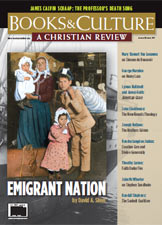
Books & Culture posts part of my review of Darren Dochuk's From Bible Belt to Sunbelt: Plain-Folk Religion, Grassroots Politics, and the Rise of Evangelical Conservatism. Subscribe to Books & Culture--read loads of great on-line material and receive the print version.

"The Sunbelt Coalition: Evangelicals and Politics in a New Light"

In 1968, Christian Life magazine featured a story on "The Reagans and Their Pastor." The Hollywood-star-turned-governor explained: "While prayer always has been a part of my life, I have spent more time in prayer these past months than in any previous period I can recall." He had much to pray about in that rocky election year. But when not praying, Reagan now and then slipped into jeremiad mode. Mild-mannered and affable in the eyes of many, Reagan raged at that "mess in Berkeley." The cold warrior morphed easily into the culture warrior. Civilization seemed to be collapsing. Juvenile delinquents and their liberal élite enablers wanted to wreck the Golden State. In response, Reagan promised constituents that he would stand firm against hedonism, crime, and all manner of sin. And though the situation was grave, he was not above cracking a well-timed joke. The typical campus radical or hairy young libertine, Reagan famously quipped, "dresses like Tarzan, has hair like Jane, and smells like Cheeta."

Southern California's conservative Christians, many who came out West from the southern plains, naturally took to the Gipper. He spoke their language. Darren Dochuk reflects on Reagan's popularity among those faithful in his wonderfully written and expertly researched From Bible Belt to Sunbelt: Plain-Folk Religion, Grassroots Politics, and the Rise of Evangelical Conservatism.

In the early 1970s, evangelicals halfheartedly supported Richard Nixon, who, along with being shifty, was once too cozy with silk-stocking Republicans like Nelson Rockefeller. Later in the decade, evangelicals from Atlanta to San Diego began to cast a suspicious eye on Jimmy Carter. In their view, the Baptist president from Plains, Georgia, was a liberal appeaser, soft on communism, and softer still on moral degeneracy (code for homosexuality, abortion, and feminism). Reagan, by contrast, would not vacillate on family values, thought supporters. Neither was he a seedy political chameleon. . . .

A sampling of other material in Books & Culture's Jan/Feb issue that might be of interest to readers of this blog:

Timothy Larsen
Faith Under Fire: Americans in World War I.

George Marsden
Invisible Faith: The Life and work of Henry Luce.

James L. Guth and Lyman A. Kellstedt
Why We Get Along: Religion and public life in the U.S.

John G. Stackhouse, Jr.
A Christ We Can Follow: The new kenotic theology

Robert Bruce Mullin
The First Great Schism: AD 400 to AD 600.

David A. Skeel
Emigrant Nation: Italy, giving and receiving.

Mary Stewart Van Leeuwen
The Second Sex, the Second Time Around: A new translation of Simone de Beauvoir’s groundbreaking book.

John H. McWhorter
The Sondheim Reckoning: A composer speaks his mind.

Donna Freitas
Boy Books
An endangered species?

Otto Selles
Funny Girl: A memoir by comedian Sarah Silverman.

Stranger in a Strange Land: John Wilson
The Milosz Year: Longing for "the restoration of all things."

Alan Jacobs
Recommended Reading

Jumat, 24 Desember 2010

A Trippy, Merry Christmas

Randall Stephens

What do mycology, psychotropic drugs, and psychedelic colors have to do with Santa and his eight tiny, wide-eyed reindeer? Maybe nothing, but then again . . .

Harvard--the same school that sponsored Timothy Leary's experiments with criminals and LSD, before said professor was thrown out on his ear--has a new Christmas tradition: "Students and faculty gather to hear the story of Santa Claus and the psychedelic mushrooms," reports NPR.

Donald Pfister, Harvard professor and curator of Harvard's Farlow Reference Library and Herbarium, tells NPR:

explained that back in 1967 an amateur scholar named R. Gordon Wasson published a book arguing that Amanita muscaria was used in ancient ceremonies by shamans in the Far East. Other scholars then chimed in, noting that in Siberia, both the shamans — and the reindeer — were known to eat these mushrooms. Man and beast alike hallucinated.

You can see the Christmas connections, Pfister said.

"This idea [is] that reindeer go berserk because they're eating Amanita muscaria," Pfister said. "Reindeers flying — are they flying, or are your senses telling you they're flying because you're hallucinating?"

Look at the Christmas decorations here, he said.

Scientists have found that reindeer deliberately forage for magic mushrooms in the snow. (They also eat fermented berries and get tipsy and aggressive. Whose been naughty?) And what gives Santa that jolly "Ho, Ho, Ho" and rosy color?

See also the response of critics of the theory, who say, no way! Too many other variables, in the view of doubters. (Reminds me of the great Dark Side of the Moon/Wizard of Oz debate, or, "Dark Side of the Rainbow.")

Turn off your mind, relax, and sing Jingle Bells!