Tampilkan postingan dengan label evangelical center/left. Tampilkan semua postingan

Jumat, 11 Februari 2011

Coffee and Christ: Evangelical V. Liberal in the Pacific Northwest

Paul Harvey

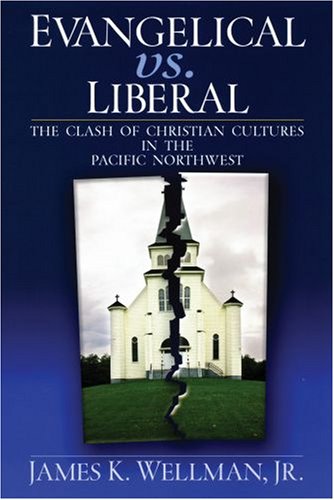
Those of you who know Matt Sutton may think he deserves his own separate listing on the "America Repent" sign in the post below this one. That being said, the man writes fun and outstanding books, articles, and reviews. In the latter category is his piece today "Evangelical V. Liberal: A Report from the Pacific Northwest," reviewing a new book entitled Evangelical vs. Liberal: The Clash of Christian Cultures in the Pacific Northwest. Most reports on the regional variations in American religious expression emphasize the Pacific Northwest as an outlier in terms of relative religious indifference. Evidently, that is changing, at least in certain sectors of the region. And, unlike the evangelicals that I grew up with, these Christian Reformed Church folks don't have any problem with gustatory sybaritic pleasures, including French cuisine and cigar lounges (bringing to mind a conversation with Peggy Bendroth years ago, where she reminisced on growing up with cigar-smoking Dutch Calvinists puffing away all around her).

He concludes:

Evangelical vs. Liberal is a balanced and engaging exploration of religious difference in the most unchurched region of the country. Perhaps the most interesting aspect of this study was Wellman's reflection on how his research had influenced him as a Presbyterian minister and professor of religion. "I began by sharing some of the biases of liberals toward evangelicals," he writes. "But through my research I have come not to agree with evangelicals but to respect the power of their convictions and the perseverance by which they serve one another, their communities, and their world. Evangelicals, in this study, put their feet and their resources where their mouth is." This is not to say that liberals don't. However, evangelicals have a far clearer sense of community and mission. And in Moscow, Idaho, they also serve good coffee and know how to make really tasty French food. For all of these reasons, evangelicals are winning the clash of Christian civilizations, not just across the nation, but even in the Pacific Northwest.

Jumat, 09 Oktober 2009

The Other Side of Evangelical Politics

Seth Dowland

This semester I’m supervising an independent study for James Lambert, a senior religion major at Duke. James is working on an article about progressive evangelicals and the debate over nuclear weapons in the early 1980s. Recently we read portions of dissertations by Brantley Gasaway (Ph.D., Religious Studies, UNC 2008) and David Swartz (Ph.D., History, Notre Dame 2008). Gasaway’s dissertation, “An Alternative Soul of Politics: The Rise of Contemporary Progressive Evangelicalism,” argues that progressive evangelicals like Jim Wallis and Ron Sider privileged an emphasis on the common good and in so doing provided evangelicalism with an “alternative soul” of political engagement. Gasaway is currently revising the book manuscript for publication. Swartz’s work, “Left Behind: The Evangelical Left and the Limits of Evangelical Politics, 1965-1988,” points to the fact that a discernible evangelical left emerged almost a decade before the Christian right and contends that its absolutist rhetoric and contentious tactics actually prefigured the religious right. Swartz is working on a manuscript under contract with the University of Pennsylvania Press.

After reading these dissertations, James formulated the following questions for the two authors. We sent these to Gasaway, now assistant professor of religious studies at Bucknell University, and Swartz, now a postdoctoral fellow at Notre Dame. I thought it would be interesting for Religion & American History readers to see their responses.

1. I think there is a rhetorical difference between progressive and conservative evangelicals. Progressives talk more about the "common good" whereas conservatives talk more about individual rights. Does this characterization seem accurate, and if so, do you think this rhetoric makes it hard for progressive evangelicals to connect with an individual-focused American culture?

BG: Yes, your characterization seems accurate. In promoting their public theologies, progressive evangelicals have adopted the language of “the common good” as a way of emphasizing that people have not only individual rights but also collective responsibilities. “Because our communal nature demands attention to the common good,” Ron Sider has written, “individual rights, whether of freedom of speech or private property, cannot be absolute.” He has thus argued that we must “balance personal rights with the common good.” Likewise Jim Wallis has insisted that “individual rights are always seen in the context of promoting the spirit of community.” Indeed, progressive evangelicals’ promotion of justice as the highest ideal of public life stems from their attempts to balance individual rights and the common good. “Justice identifies what is essential for life together in community and specifies the rights and responsibilities of individuals and institutions,” Sider has declared.

Progressive evangelical leaders themselves have regularly acknowledged that their ideals and rhetoric of community clash with the individualistic ethos of American culture. And, while their difficulty in “connecting” is hard to measure, public agendas prioritizing individual rights surely appear more winsome to most Americans than those promoting communal responsibilities.

2. What has hindered progressive evangelicals politically? Where (and when) have they found political success?

DS: With the possible exception of some political influence on issues such as anti-nuclear proliferation in the 1980s and school vouchers in the 1990s—which Ron Sider and the Reformed-oriented Association for Public Justice endorsed—progressive evangelicals have enjoyed very little political success. The “consistent life” ethic, borrowed from Cardinal Joseph Bernadin and many American Catholics, held the most promise for resonance with a broader coalition. It linked nuclear proliferation, human rights, and abortion in a “seamless garment” of life. But by the time the evangelical left began to champion this approach, the Right had already co-opted pro-life rhetoric solely for abortion. The religious right, also politicizing in the 1970s, enjoyed more success with a growing cadre of televangelists than the evangelical left did with its more cerebral style. The religious right’s populist style, aided by a receptive Republican Party, rapidly evolved from an apolitical to an activist conservatism, a process catalyzed by the issue of abortion. By the time folks like Sider, Jim Wallis, and others got around to embracing a pro-life stance in the early 1980s, they had been left behind by the Right.

The political Left, suspicious of the new coalition’s conservative theology, remained unimpressed and indifferent toward the evangelical left. Progressives in the postwar era, despite precedents of links between conservative religion and progressive politics, failed to recognize the diversity in evangelical politics. Met with apathy and hostility, when they were recognized at all, the evangelical left was held at arms length from the progressive coalition, which refused to make a case for progressive politics in the combination of moral and religious terms that would have appealed to evangelicals. The liberal coalition in fact seemed to go to great lengths—by promoting a libertine sexuality and giving a very prominent voice to activist secularists—to alienate a potentially helpful segment of theological conservatives. By the early 1980s pro-life Catholics and Protestants such as Ted Kennedy, John Kerry, and Jesse Jackson were forced into endorsing Roe v. Wade. Others were forced out of the Democratic Party altogether. Progressive evangelicals were left politically homeless, fitting neither in the Democratic or Republican parties.

BG: While agreeing with David that progressive evangelicals have had little direct political success, I want to suggest that they have nevertheless had a significant influence upon the broader evangelical movement over the past four decades. They have consistently challenged all evangelicals to think about issues of injustice, inequality, and suffering. To be sure, conservative evangelicals continue to disagree with progressives about both political priorities and the means for creating a just society. But few evangelicals still dispute that they have a religious responsibility to address issues such as poverty, racism, and hunger. Evangelical organizations ranging from World Vision and Compassion International to countless local ministries and faith-based organizations work to address social needs. Mainstream leaders such as Rick Warren and Bill Hybels have championed campaigns to address poverty and HIV/AIDS. In 2004, the National Association of Evangelicals issued a document that urged evangelicals to address a broad range of issues that transcend partisan politics: “We call all Christians to a renewed political engagement that aims to protect the vulnerable and poor, to guard the sanctity of human life, to further racial reconciliation and justice, to renew the family, to care for creation, and to promote justice, freedom, and peace for all.”

Nevertheless, several factors have hindered progressive evangelicals’ political success. As David outlines, their devotion to a “completely pro-life” and multi-issue agenda has placed them on the margins of partisan politics. But on a practical level, progressive evangelicals have failed to build prominent institutions, promote popular spokespersons, and develop perceptible media. As a result, they have struggled to compete with the more conspicuous representatives of the Christian Right. How many evangelicals knew that Jim Wallis and Sojourners were offering an alternative public theology to that Jerry Falwell and the Moral Majority? How many encountered the political priorities of James Dobson while remaining oblivious to those of Ron Sider? One need only compare the organizations and publications of Sojourners or the even smaller Evangelicals for Social Action (ESA) to those of Focus on the Family to see how progressive evangelicals have struggled to match the institutional development of evangelical conservatism. While I agree with David (in his answer to question 3) that “significant cleavages within the movement” played a role in “subvert[ing] the potency of a coherent alternative” to the Christian Right, I also think that there is a yet untold story behind the greater financial resources of Christian Right organizations. Some scholar needs to take Deep Throat’s advice and “follow the money.”

DS: In addition to money, the religious right's promotional techniques have been much more effective than the evangelical non-right. So many in the evangelical left have been academics making their case in a nuanced, cerebral style. This print culture, while vibrant and influential in its own corner of the evangelical ghetto, simply hasn't fared well in broader circles when pitted against the media-savvy televangelists and radio kings of the right.

3. What major differences do you see between Jim Wallis and Ron Sider (and other leaders of progressive evangelicalism)? Is it problematic to lump them into the same movement?

DS: That’s a great question. It’s very problematic to lump them together, especially in the 1960s and 1970s. Jim Wallis, a veteran of Students for a Democratic Society, has felt more comfortable with the prophetic posture and radical language of the New Left. Sider has always embodied a more liberal, centrist political approach. He read American history critically but less negatively than evangelical New Leftists. Holding policy positions in the mainstream of Democratic politics, he nurtured an instinct of reform rather than revolution. Most importantly, Sider spoke the language of mainstream evangelicalism. That’s why Sider, in many ways, was an ideal leader for the emerging evangelical left in the early 1970s.

Things have changed since then. Back in 1976 he was a virulent critic of Jimmy Carter for being a liberal sell-out. Now he’s a centrist and good buddies with Carter, Obama, and the Democratic mainstream.

There’s a larger point here about diversity within the evangelical left. In addition to the progressive-radical dichotomy, there were several other significant cleavages within the movement. Rifts between men and women, black and white, Anabaptist and Calvinist—and countless permutations—subverted the potency of a coherent alternative to the coming religious right. By the late 1970s women were cordoned off in the Evangelical Women’s Caucus, African-Americans in the National Black Evangelical Association, Anabaptist progressives in Evangelicals for Social Action, Anabaptist radicals in Sojourners, and Calvinists in the Association for Public Justice. Identity politics, a powerful impulse in American society more broadly, profoundly damaged the progressive coalition. Evangelicals’ engagement of diverse politics—including New Left, progressive New Deal, and right-wing politics, all since the early 1970s—suggest the volatility of evangelical politics and its susceptibility to co-optation, sudden shifts, and identity politics.

BG: Here is one area where it appears that David and I disagree a bit. I find it less problematic to see Wallis and Sider as part of the same movement, especially in the late 1960s and 1970s. To be sure, David rightly notes their very different backgrounds and Wallis’s more strident criticism of the United States. Yet the two became the most visible leaders of the movement to forge and to promote an evangelical public engagement that prioritized peace and justice. For more than thirty-five years, Wallis and Sider have supported each other’s organization, efforts, and writings. While they have not always agreed on particulars, they have consistently sung from the same hymnal.

Yet Wallis and Sider have developed very different styles and strategies. Perhaps this is what David had in mind by emphasizing how Wallis embraced a “prophetic posture” and “radical language” while the more irenic Sider “spoke the language of mainstream evangelicalism.” Wallis has preferred to work from the margins of evangelicalism, denouncing the perceived failures of the Christian Right and the calling the wayward (indifferent?) back to “faithful” public engagement. As a result, Wallis and Sojourners found allies among Catholic social activists and mainline Christians who agreed with their political agendas if not necessarily their theology. The publications of Wallis and Sojourners tend to mute evangelical distinctives in favor of more ecumenical and politicized messages. In contrast, Sider has intentionally sought to work from within the evangelical movement and to shepherd participants to embrace social justice as a biblical imperative (he and other leaders have consciously retained the name Evangelicals for Social Action).

I agree that there has always been diversity within the progressive evangelical movement. In addition to the “rifts” noted by David, fissures especially occurred as Sojourners, ESA, and The Other Side (the earliest progressive evangelical magazine that folded in 2004) wrestled with how to respond to abortion and homosexuality. Sojourners and ESA both adopted a “completely pro-life” position, though they differed with respect to criminalizing abortion. Likewise, both differentiated homosexual orientation from same-sex behavior, concluding on biblical grounds that God did not condone the latter. (Sojourners retreated a bit on this stance without renouncing it in reaction to the outcry among their constituency.) The Other Side, however, declared abortion a matter of deep ambiguity and refused the pro-life and pro-choice label. In addition, they welcomed and affirmed gays and lesbian Christians. While the progressive evangelical movement readily united against issues of racism, sexism, economic injustice, and violence, it could not escape the divisiveness caused by the “culture wars” issues of abortion and homosexuality.

DS: Brantley caught me overstating their differences. Sider and Wallis both clearly viewed themselves as part of the same evangelical left. That said, they also nurtured different political sensibilities in the early 1970s--in fact different enough that they and other evangelical left leaders had trouble keeping their nascent movement together. Sider has always felt comfortable calling himself a progressive. Wallis, however, most certainly would not have in the 1970s, though now he engages the Democratic mainstream.

4. How do progressive evangelicals explain the Old Testament in light of their strong anti-war stance? Do they ignore it or say everything changed with Jesus?

DS:
Interestingly, antiwar evangelicals did not address this question often in the 1970s. Mostly because they were preoccupied with the specific case of Vietnam, which evangelicals of all stripes could denounce on just-war grounds.

Principled pacifists generally argued that Christians cannot kill because Jesus instituted a new ethic of love, which precludes killing someone. Theologian John Howard Yoder would have agreed that “everything changed with Jesus,” that the example of Jesus ought to be central to Christian social ethics. Typically though Anabaptist evangelicals argued in universal terms that could appeal beyond their hermeneutic style. Sider—and Reformed evangelicals such as Richard Mouw, Richard Wolterstorff, and Jim Skillen—also opposed Vietnam (and many, if not most, American wars) on the grounds that it violated just cause, proportionality, and last resort demands of classic Augustine theory. Mark Noll for instance has suggested that even the American Revolution is nearly impossible to justify.

5. What is your perception of the scholarly literature on the evangelical left? How does your work fit into existing scholarship? And are there facets of the movement that you'd like to see other scholars explore?

DS: In the 1970s several works noted the emergence of a politicized evangelicalism on the left and center. Richard Quebedeaux’s Young Evangelicals and Robert Fowler’s New Engagement, while helpful and suggestive, mostly gossiped and blandly catalogued its parts.

For good reasons, scholarship coming out of the New Left or liberal academia has utterly ignored their evangelical “allies.” There weren’t enough evangelical progressives for them to notice. In addition, the chronology was disordered. Evangelicals on the left—from groups like Sojourners and the Christian World Liberation Front—didn’t really emerge until the late 1960s and early 1970s. And then they were bitingly critical of the contemporaneous New Left. They objected to its new openness to violence. They thought that SDS had abandoned participatory democracy in favor of the enforcement of an ideological conformity not unlike the “fascist right.” In short, there was some chagrin on the part of radical evangelicals, a wistfulness that they couldn’t join the earlier New Left represented by the 1962 Port Huron Statement. Just as some evangelicals began to adopt New Left critiques of “the man,” the New Left had abandoned its ideals of nonviolence and participatory democracy, both ideals that the evangelical left was unwilling to discard.

Brantley Gasaway’s forthcoming book (which you’ve read, I hear) about evangelical progressives and the “common good” should do a lot to fill the historiographic void.

BG: In addition to the works mentioned by David, Jason Bivins devoted a chapter to Sojourners in The Fracture of Good Order (2003) to demonstrate how progressive evangelicals—like the Christian Right— rejected the assumptions of classic political liberalism that religion must remain in the private sphere.

I hope that my and David’s complementary projects provide good starting points for future work on progressive evangelicals. While David’s work assesses the place of the evangelical left within the broader evangelical movement and the questions it raises about evangelical identity, I attempt to analyze the ways in which progressive evangelicals have translated their public theology into political agendas over the past four decades. Yet our focus on prominent leaders leaves unexplored questions about how “ordinary evangelicals” (in the language of Christian Smith in Christian America?) responded to and participated in the movement.
Senin, 04 Mei 2009

God's Work: What Can Faith-Based Activism Do For Labor?

Paul Harvey

A few days ago we put up a couple of posts about Jon Shields's important new book Democratic Virtues of the Christian Right. In the interests of being fair and balanced, and in the spirit of Dorothy Day, today we're moving on to rewnewed hopes for a recognition in public policy of the democratic virtues of the Christian Left.

Nancy MacLean (author of the great book Freedom is Not Enough) has posted a compelling piece at the Boston Review -- "God's Work: What can Faith-Based Activism Do For Labor"? She begins,

“I came to Washington to work for God, FDR, and the millions of forgotten, plain, common workingmen,” recalled Frances Perkins. And so she did. From 1933 to 1945, Perkins helped create the core features of the New Deal state: minimum wage and maximum hours laws, legal guarantees for workers’ rights to organize and join unions, prohibition of child labor, Social Security, unemployment compensation, and fair labor standards. For all of the New Deal’s limitations, its laws and programs tamed Upton Sinclair’s “Jungle,” encouraged broad economic security and prosperity, and created, in economic terms, the most equitable America in history. And it was promoted and protected not only by strong unions but also by religious leaders, thanks to the prominence of a social gospel in the Catholic, Protestant, and Jewish traditions at mid-century. During her twelve years as secretary of labor, Perkins herself spent one day a month in contemplative retreat at a convent. For her, the reference to God was not simply a rhetorical flourish.

Since the 1970s economic inequality has surged to levels not seen since the 1920s, Dickensian abuses of workers have returned, and deregulation has enabled the worst economic catastrophe since the Great Depression. President Obama’s Secretary of Labor, Hilda Solis, faces challenges not unlike Perkins’s. Yet today, as in the 1930s, crisis also creates the opportunity for a bold new direction—a New New Deal, potentially more inclusive of the nation’s diverse labor force than Perkins could have imagined. Might the nation’s churches, synagogues, mosques, and temples again have a role in rescuing a wayward economy?

In addressing this question, Solis can learn much from Kim Bobo, founder and Executive Director of Interfaith Worker Justice (IWJ). Bobo’s goal is to revive America’s justice-seeking prophetic tradition, with a particular focus on economic justice. In her new book, Wage Theft in America, Bobo argues powerfully for the importance of community allies in improving struggling workers’ lives. She aims to rouse believers from all faith traditions to a new sense of social mission. Her starting point, and the focus of her book, is to address a more specific challenge: “why millions of working Americans are not getting paid and what we can do about it.” The charge is not an exaggeration. Using Department of Labor settlements (which her organization has done much to win), Bobo documents how companies steal literally billions of dollars from millions of workers each year.

Bobo, MacLean explains, "understands that wage theft is a strategic issue that could jumpstart an overhaul of the Department of Labor, help to shut down the low road, and importantly, reanimate progressive politics with the social-gospel spirit." Bobo and groups such as IWJ come from a long tradition of


commitment to social justice in the Catholic and Jewish traditions and the Protestant social gospel that drove so much Progressive Era and New Deal reform. . . . 'We have always known that heedless self-interest was bad morals,' FDR noted in 1937, 'we now know that it is bad economics.' ” We have relearned the truth that it is bad economics, but we still await the moral awakening.

Jumat, 03 Oktober 2008

"Left" Out: Faith and Politics

by Phillip Luke Sinitiere


In July 2007 Nancy Gibbs and Michael Duffy famously wrote about the Democratic Party and religion, and religion scholars in recent years have started to tell us about the history of the religious left.

So, to use the title of the Gibbs and Duffy article, have Democrats "got religion"? And who are the "party faithful"? Here are some answers.

The award-winning radio program Speaking of Faith aired a show yesterday on the "faith history" of the political left. It is the first in a series on religion and the major political parties during election season. The SOF website states:

This program is the first of a two-part conversation on politics and religion below the surface of the 2008 U.S. presidential campaign. The religious right has gotten a fair amount of coverage in recent years, while the political left has rarely been represented with a religious sensibility.


This show is a good conversation piece (pardon the pun) for a number of recent books that examine religion and the Democratic Party and/or political progressives, including Amy Sullivan's book The Party Faithful: How and Why Democrats are Closing the God Gap (interviewed on the show), E.J. Dionne's , Souled Out: Reclaiming Faith and Politics after the Religious Right, and David Gushee's The Future of Faith in American Politics: The Public Witness of the Evangelical Center, among others.

(Paul Harvey also posted on some of these books early this year).

Selasa, 24 Juni 2008

Stop the Presses! Or Not.

Darren Grem

How much of a role younger, white evangelicals will play in the November elections remains to be seen, but they're certainly flying around in pre-season reports. Reporters seem devoted to the notion that younger, white evangelicals are either apolitical or now ready to slap Obama stickers right next to the magnet Jesus fish donning their vehicular posteriors. To be sure, there's some Pew research to back these notions up in a very basic, general way, although it comes with some big caveats. Often overlooked in fly-over accounts was that the Pew Center concluded that younger, white evangelicals were "Less Republican, [But] Still Conservative," noting that they weren't much different than most conservatives (or Americans, for that matter) who are fed up with the Bushies. In turn, they remained more conservative than counterparts their age on questions concerning Iraq, law and order, abortion, and (I would proffer) free market capitalism. As such, though the opportunity is there, Obama probably shouldn't expect a windfall of younger, white evangelicals falling into his camp. John Green said as much, pointing out: ". . . Relatively few of the evangelicals who have moved away from the Republican Party have become Democratic, most have become independents." The numbers don't lie. In 2001, 55% of young, white evangelicals held Republican affiliations and, in 2007, only 40% do (still, that's a decently large minority). In the same period, Democrats only picked up a measly three percentage points while independent affiliations rose by six percentage points. I guess that means that if I ran as, say, a Bulldawg Party candidate, I'd be getting more younger, white evangelical votes than Obama.

What does this all mean come November? I'm willing to bet a case of Milwaukee's finest that it won't be an election maker or breaker since Bush has handily alienated more Republican constituencies than just plus-30 evangelicals and more swing voters than their Facebooking counterparts. Try as he might, McCain probably won't be able to overcome that fact. I'm also willing to argue that, in the long run, it won't be the cultural shift that some folks think it will be. To be sure, younger evangelicals might not jump in as short-list, "issues voters" as fervently as their parents' generation, but whether they will continue a drift leftward or middle-ward remains to be seen, especially as they get into their thirty and forty-somethings, have families, get corner offices, and start paying property taxes. As I believe John Turner has mentioned on this blog before, in four to eight years, we might be seeing report after report about the "revival of the Religious Right."

Meanwhile, James Dobson has officially thrown his two-cents in. I'll see your hermeneutics and raise you, sir!

Sabtu, 10 Mei 2008

"Evangelicalism Rebounds in Academe"

BY KATHRYN LOFTON

Another day, another breathless report of the evangelical incursion. This time, our journalistic source is an admirable one: Rice University sociologist D. Michael Lindsay (author of Faith in the Halls of Power: How Evangelicals Joined the American Elite) writing for the May 9, 2008 issue of The Chronicle Review. Of familiar pitch is the exclamatory that “evangelicalism is rebounding,” the statistical joy at evangelical Ivy League elitism, and the inevitable ethnic revelation (“I found that 90 percent of the members of the Yale chapter of Campus Crusade for Christ are Asian-American”).

After five paragraphs of such rehearsal, the article transitions to a narrative useful for any students of evangelicalism and fundamentalism seeking quotations on the mind(s) of those Christian men (and women, though fewer of those are imagined) pressing into hallowed halls. Lindsey serves up a summation of “evangelical scholarship” and its meeting of the “intellectual mainstream.” Included in the primer is an exuberant presentation of evangelical scholars, scholarship on evangelicals, and evangelical scholarship. The piece presumes an anxious readership, liberal and loathing of the menace that seems to have more money, more organizational power, and more disregard for plural postulates than the dominant academic mainstream. To that cohort, Lindsay supplies a comforting reminder and some clarification. His point is quelling: most of the evangelicals who have invaded liberal arts lands are of a cosmopolitan bent, and eager to keep the apple cart (his metaphor) upright. The question is whether the apple cart, frightened of its new handler, may collapse under the weight of presumptive infection. Lindsay says, rightly: probably not.

Sabtu, 16 Februari 2008

Rumors of the Death of the Culture War

PAUL HARVEY

Those rumors are exaggerated, according to Peter Steinfels, who asks "what will this retreat of the religious right mean for the future of the culture wars?," and answers "Combat may wane, at least a little, at least for a while. But there are good reasons to doubt any lasting truce, let alone a real peace."

Also, John Wilson issues the first of a promised two-part series reflecting on a few of the worthier (amidst a pile of unworthy) titles treating Christians and Politics. He calls attention to a forthcoming work of which I was unaware: Steven Waldman's Founding Faith: Providence, Politics, and the Birth of Religious Freedom in America -- with more discussion of that to follow in a future post.

Sabtu, 09 Februari 2008

Son of Power, Faith, Fantasy; or Leveling the Praying Field


PAUL HARVEY

Princeton Univ. Press recently was kind enough to send me a copy of E. J. Dionne, Souled Out: Reclaiming Faith and Politics After the Religious Right. Many readers here likely will recognize Dionne as a fine political journalist and frequent talking head and NPR commentator.

My perusal of it has been too brief to comment further except to note this review by Scott Appleby of Souled Out together with Amy Sullivan, Party Faithful: How and Why Democrats are Closing the God Gap (the source of "leveling the praying field" above). Appleby overplays (to my mind) the alleged scorn in which the Democrats formerly held faith, but that's a quibble.
A brief excerpt:

Strikingly, both authors announce the demise of the religious right and proclaim the advent of a new era of religious engagement in the direction of what might be called faith-friendly liberalism. “American politics is at a turning point,” Dionne asserts. “Evangelical Christians are an increasingly diverse group,” broadening their political agenda to include environmental issues and a commitment to international human and religious rights, as well as to economic policies that address poverty. . . . This would indeed be a marked departure from the recent past, when, in Sullivan’s words, “a showdown between the religious left and religious right was like a tricycle going up against a Mack truck.” The disparity reflected a three-decade head start by religious conservatives flush with cash, coupled with the Republicans’ “incredibly sophisticated methods of reaching religious voters.” Meanwhile, according to several veteran Democratic operatives cited by Sullivan, “the only method the party had for identifying Catholics was to guess based on surnames.”

Are Sullivan and Dionne to be believed, or is this the triumph of wishful thinking over political reality? Sullivan admits to setting out to prove her Dem-dissing pastor wrong, and Dionne, burdened by what he poignantly describes as “the agony of liberal Catholicism,” could be forgiven for mistaking the creativity of a few Catholic politicians and the enthusiasms of younger Catholics as benevolent signs of more liberal times to come.


The "decline and fall" narrative here, as well as the "rise of" story, both leave me a little skeptical, perhaps as a result of my location in C. Springs as well as the enormous evangelical turnout for Huck last week. Nonetheless, Dionne appears particularly worthy of further reading and thought because, unlike most of the writing of this genre, he deals seriously with Catholicism. Note especially Chapter 6: "What Happened to the Seamless Garment: The Agony of Liberal Catholicism," a question we've discussed here before in reference to Dorothy Day, the evidently missing Catholic version of Jim Wallis, et al.

I welcome responses from any readers of this latest from Dionne -- feel free to send here.

Kamis, 07 Februari 2008

You Say Goodbye, I Say Hello

PAUL HARVEY

Spiritual Politics, from the Greenberg Center, covers the latest developments on religion and the presidential race. Mitt says goodbye (with blasts such as "The attack on religion and faith is no less relentless" -- umm, no less relentless than what, exactly?), and Huck says hello, hello hello. Meanwhile, Obama's got a Catholic problem, and Dobson blasts McCain (while also taking a shot at Obama's and Clinton's "anti-family policy positions" -- I guess wanting more families to be able actually to have health insurance is anti-family -- or something. Whatever).

Sabtu, 02 Februari 2008

Exit Polls, Trees Falling in the Forest, and Southern Baptists


PAUL HARVEY


What if they didn't give an exit poll when everybody came? In today's New York Times, Peter Steinfels asks, "If a tree falls in the forest and no one is there to hear it, does it make a sound? If a born-again Christian votes in a Democratic primary and no exit poll records it, does it matter?"
Meanwhile, moderate Baptists of all stripes are trying to get their groove back -- this time in the New Baptist Covenant. My college buddy Bill Underwood, current president of Mercer University, was there, along with notable recent Baptist presidents Clinton and Carter and representatives from a variety of black Baptist denominations and the North American Baptist fellowship. See also 30 Baptist Groups Build Bridge Toward Unity.

In recent years, moderate Baptists have been like the scrawny kid at school who keeps getting beaten up by the big boys. This one appears to have more promise, as "recovering" Southern Baptists seemed to have moved on from an obsession with "the controversy" and gotten on with the business of creating coalitions beyond the historic divisions:

Historian Walter Shurden, recently retired director of the Center for Baptist Studies at Mercer University and one of the early organizers of the convocation, said the event could become "a major step in racial reconciliation and gender recognition of Baptists in North America."

"It's the most significant Baptist meeting in my life, after playing in the Baptist yard 55 years or so," he said. "I've never been to a Baptist meeting where there was the equality as well as the presence" of multi-racial, multi-gender participation. "It bears the marks of the ministry of Jesus."

Kamis, 24 Januari 2008

The Contemporary Catholic Left? or, Will the Catholic Jim Wallis Please Get Noticed?

BY ART REMILLARD

When people picked up Time magazine’s December 12, 1960 edition, they saw the penetrating eyes of Jesuit John Courtney Murray looking back at them. The feature article, “U.S. Catholics and the State,” centered on his book, We Hold These Truths. “In months to come,” the article’s author predicted, “serious Americans of all sorts of conditions—in pin-stripes and laboratory gowns, space suits and housecoats—will be discussing [Murray’s] hopes and fears for American democracy.” Murray was one of a handful of highly visible American Catholics—such as Thomas Merton, Dorothy Day, and Fulton Sheen—who helped bring the faithful from margins to the mainstream. Murray in particular was, indeed, a thinker and theologian who “serious Americans” took seriously.

This leads me to Randall’s mention of Jim Wallis. For the sake of argument, let me suggest that Wallis is something of a current evangelical version of John Courtney Murray. In their respective times, both earned fame and attention for their ability to clearly articulate their faith and relate it to prominent political concerns. But I wonder: Is there a Catholic version of Murray today? Sociologist, author, and political commentator Andrew Greeley may fit the mold. Consider his recent book, A Stupid, Unjust and Criminal War: Iraq, 2001-2007 (“Now tell us what you really think, Father?”). While I haven’t read it, the book appears to be a timely rebuke of the war and a challenge to Catholics to forthrightly oppose it. Despite his prolific writings, I don’t know that Greeley is as recognizable as Wallis, or for that matter, his conservative counterparts Pat Robertson and James Dobson. Do presidential candidates court Greeley in an attempt to secure the “Catholic vote”? Perhaps they do. But I haven’t seen it. The only other examples I have come from the realm of popular culture. In a Frontline documentary on the AIDS crisis, U2 front-man Bono discussed the relationship between his faith and activism. “I put Catholic guilt to work,” he quipped. Speaking to Rolling Stone, however, Bono called himself a “Christian,” but offered the following qualifier. “I don't use the label, because it is so very hard to live up to. I feel like I'm the worst example of it, so I just kinda keep my mouth shut.” His humility is refreshing. But unlike many noteworthy religious figures, Bono isn’t tossing tons of theology into the public mix. How about Martin Sheen? Having been arrested over 60 times at various protests, the actor often expresses admiration for Catholic social teaching. He once speculated, “I don't think you can be Catholic and not have some frame of reference for social justice.” I suspect, though, that more people know Sheen for his acting than his activism. So I’m going to withhold his “J.C. Murray Trophy” for the time being.

From Newsweek to Comedy Central to this blog, Jim Wallis et al. are hard to avoid. Yet, the Catholic equivalent is nowhere in sight. I’ll admit that I don’t closely follow trends in contemporary Catholicism. So I might simply be out of the loop. But I also don’t spend prodigious amounts of time following the evangelicals either. So please, dear blog readers, educate and correct me. Who is the current John Courtney Murray and/or Catholic version of Jim Wallis? And if there isn’t one, what does this say about American Catholicism today?

Rabu, 23 Januari 2008

Jim Wallis on Jon Stewart


BY RANDALL STEPHENS

On Tuesday night, January 22nd, Jim Wallis, evangelical author and editor of Sojourners, appeared on "A" Daily Show with Jon Stewart. Wallis plugged his new book The Great Awakening. He emphasized the role of social ethics in forming a new moral consensus. "God's Politics called on people to take back their faith after it had been 'hijacked' by the Religious Right" writes Wallis. "Millions of Christ­ians have done just that, and now the question is what are we going to do with our faith, now that we have it back? My new book, The Great Awakening: Reviving Faith and Politics in a Post-Religious Right America, addresses that question."

The bubbling up of a new Christian politics is not just the wishful thinking of a few blue-state evangelicals. It's evident in the emerging church movement, the recent pronouncements of Rick Warren, and in publications geared toward born again twenty somethings like Relevant Magazine. The politics of personal and sexual morality are not exciting the masses like they used to.

Stewart questioned Wallis on the prospects of the "religious Left." There may be some who fear that a hegemonic religious Left will be as off-putting as the much pilloried Christian Right is now. (This is a point that historian Stephen Prothero has recently made.) With so much attention being paid to the evangelical crackup, the future of evangelicalism, Left and Right, seems surprisingly uncertain.

Jumat, 12 Oktober 2007

Weekend Reading

Pastor Bob Cornwall notes and comments on Garry Wills's American Christianities, and reprints Martin Marty's commentary on the same (focusing on Wills's treatment of abortion in Catholic theological history). Alan Wolfe reviews Wills in The New Republic (subscription required). Here is the precis of Wills's book, from the Seminary Coop book website. Further blog entries here and comments are welcome, it'll be a while before I can have a look at the book.

A landmark examination of Christianity's place in American life across the broad sweep of this country's history, from the Puritans to the presidential administration of George W. Bush. The struggle within American Christianity, Garry Wills argues, now and throughout our country's history, is between the head and the heart: between reason and emotion, Enlightenment and Evangelism. Why has this been so? How has the tension between the two poles played out, and with what consequences, over the past 400 years? How "Christian" is America, after all? Garry Wills brings a lifetime's worth of thought about these questions to bear on a magnificent historical reckoning that offers much needed perspective on some of the most contentious issues of our time. A religious revolution occurred in America in the 18th century, one that saw the emergence of an Enlightenment religious culture whose hallmarks were tolerance for other faiths and a belief that religion was a matter best divorced from political institutions-the proverbial "separation of church and state." Wills shows us just how incredibly radical a departure this separation was: there was simply no precedent for it. To put this leap in perspective, Wills provides a grounding in the pre-Enlightenment religion that preceded it, beginning with the early Puritans. He then provides a thrillingly clear unpacking of the steps, particularly Madison's and Jefferson's, by which church-state separation was enshrined in the Constitution, and reveals the great irony of the efforts of today's Religious Right to blur the lines between the two. In fact, it is precisely that separation that has allowed religion inAmerica to flourish since the disestablishment of religion created a free market, as it were, and competition for souls led to the profusion of denominations across the length and breadth of the land. As Wills examines the key movements and personalities that have transformed America's religious landscape, we see again and again the same pattern emerge: a cooling of popular religious fervor followed by a grassroots explosion in evangelical activity, generally at a time of great social transformation and anxiety. But such forces inevitably go too far, provoking a backlash as is happening right now with the forces of Creationism and the anti-abortion fundamentalists. Garry Wills closes with a penetrating dissection of the Religious Right's current machinations and the threat they pose to the enlightened religion that has proved to be such a fertile and enduring force throughout American history. But in the end, Wills's abiding message is to be vigilant against the triumph of emotions over reason, but to know that the tension between the two is in fact necessary, inevitable, and unending.

Sabtu, 15 September 2007

The Religious Right is Still Not Dead (John Turner)

John Turner sends the following on our discussion of the religious left/right, and on America as a Christian Nation:

Building on John Fea's fine post, I've noticed since last year's midterm elections obituaries not just of key figures in the Religious Right, but of the Religious Right itself.

Earlier this year in TIME, Jim Wallis proclaimed that "The Era of the Religious Right Is Over." Wallis argued that evangelicals are deserting conservative politics in droves, driven by progressive issues like global warming, HIV/AIDS, and Darfur.

The deaths of Jerry Falwell and D. James Kennedy provide further evidence for such obituaries. Pat Robertson's influence continues to slowly wane. Ted Haggard fell from grace. Even Jim Dobson doesn't seem quite as formidable as he did only a few years ago. It is, perhaps, the end of an era.

This is not, however, the first time that pundits have proclaimed the passing of the Religious Right. This usually occurs in conjunction with Democratic electoral victories, such as those in 1992, 1996, and 2006. Ironically, as recently as 2004, the Religious Right looked stronger than ever by mobilizing opposition to gay marriage. The Religious Right's perceived strength seems to wax and wane in tandem with that of political conservatism more broadly. If the Democrats do indeed win a convincing victory in 2008, the Religious Right will seem like the relic of a bygone era.

There have been predictions of the rise of the Evangelical Left since the early 1970s – perhaps it will truly come to fruition. And perhaps young evangelicals will continue to move in progressive directions on issues like abortion and homosexuality. Progressive evangelicals, however, are still a long way from constituting anything approaching a mass movement.

It's hard to predict the future, but even without Falwell and Kennedy, prognostications of the Religious Right's permanent decline seem premature. Religious Right organizations remain well-organized, wealthy, and dedicated. When organizations fade or implode, they are quickly replaced. The Christian Coalition replaced the Moral Majority; Focus on the Family filled the vacuum when the Christian Coalition lost its momentum. I wouldn't be surprised to read about the resurgence of the Religious Right in 2010.

Minggu, 15 Juli 2007

Barack DuBois

And those DuBois hits just keep on coming -- Edward J. Blum asks What Barack Obama (and the Democratic Party) Can Learn About Religion From W. E. B. DuBois? Ed's answer: more than you think! Here's a snippet, click on the link for the full piece:

Barack Obama and W. E. B. Du Bois have a lot in common. Both had absent
fathers whom they likened to dreamers; both relied on their mothers; both earned
advanced degrees from Harvard University; both traveled extensively throughout
the world; both ran for United States Senate (Du Bois lost his bid as a labor
candidate from New York in 1950); both elicited questions of racial
authenticity, of whether they could represent African Americans since they had
mixed-ancestries and were highly educated; and both shared a desire to wrestle
religious ideas and language away from conservatives. Perhaps, as Barack Obama
and more broadly the Democratic Party attempt to engage religious issues, it
will behoove them not only to look back to what Du Bois had to say about faith,
but also to create a pantheon of spiritual liberals to revere as part of the
quest to demonstrate historical and religious legitimacy.

Sabtu, 07 Juli 2007

Religion and the Common Good

The RELIGION AND AMERICAN HISTORY blog welcomes its first contribution by our first contributing editor, John Fea of Messiah College. John is an historian of early American history whose best-known work thus far is a fine piece: "The Way of Improvement Leads Home: Philip Vickers Fithian's Rural Enlightenment." The Journal of American History (September, 2003), 462-490. He's completing a book for the University of Pennsylania Press about Philip Vickers and the Enlightenment in rural America, and is also working on an edited volume entitled Christian Faith and the Historian's Vocation for Notre Dame University Press. John was in the Lilly Fellows Program in Humanities and the Arts from 2000-2002; I'm an alum of the same program, 1993-95. In 2002 he joined the History Department of Messiah College in Grantham, Pennsylvania. John has also been very active in public presentations, op-ed pieces, and speaking engagements, listed here. Most recently we spent an enjoyable weekend together at the Lilly Fellows Program reunion, held in Indianapolis, where John gave a presentation about the relationship of the evangelical scholar to the academy.

John will be sending along contributions as the spirit moves--and I hope it will move often! His first post concerns an issue I took up a few days ago, and that is current discussions of religion and the common good, especially those coming from a possibly (big IF there) renascent evangelical center/left.

---------------------------------------------------

7-7-07: Our lucky day!

Religion and the Common Good

I want to thank Paul H. for inviting me to contribute to his blog. I look forward to the conversation.

I have noticed of late that the “common good” seems to be making a comeback in American political discourse, especially among Democratic presidential candidates. Edwards, Obama, and Clinton are calling people to sacrifice their interests for the larger national community and they are using religious discourse to do it. This was certainly evident among all three candidates last month at the CNN/Sojourners “Presidential Forum on Faith, Values, and Poverty” and it has been a staple of the Obama campaign ever since he announced he was running.

A few weeks ago I made a modest case in an op-ed piece that the Democrats are tapping into the longstanding relationship between Christianity and civic humanism in American history. They were returning to the “small r” republicanism of the revolutionary era and doing a better job than their Republican rivals of reflecting the Founders’ understanding of the relationship between religion and the citizen’s role in public life.

This idea has been developed in Lew Daly’s excellent essay in the recent Boston Review, “In Search of the Common Good: The Catholic Roots of American Liberalism.” Daly makes a compelling case that New Deal liberalism was the product of Catholic social teaching, particularly the views of Leo XIII as channeled through the Catholic progressivism of Father John Ryan. Catholics of Ryan’s stripe, Daly reminds us, were responsible for bringing immigrant Catholics into Democratic fold, a shift in loyalty that began with the populism of William Jennings Bryan and reached its height, of course, with Franklin D. Roosevelt. His essay is worth a look.

None of the current Democratic frontrunners are Catholic, but it seems that Father Ryan’s understanding of a “common good” rooted in the dignity of workers, a critique of what John Paul II used to call “savage capitalism,” the defense of the family, and the importance of the “moral law” as a check to autonomous individualism just might resonate with values voters in 2008 and provide a much needed theological and intellectual boost to their religious rhetoric.